
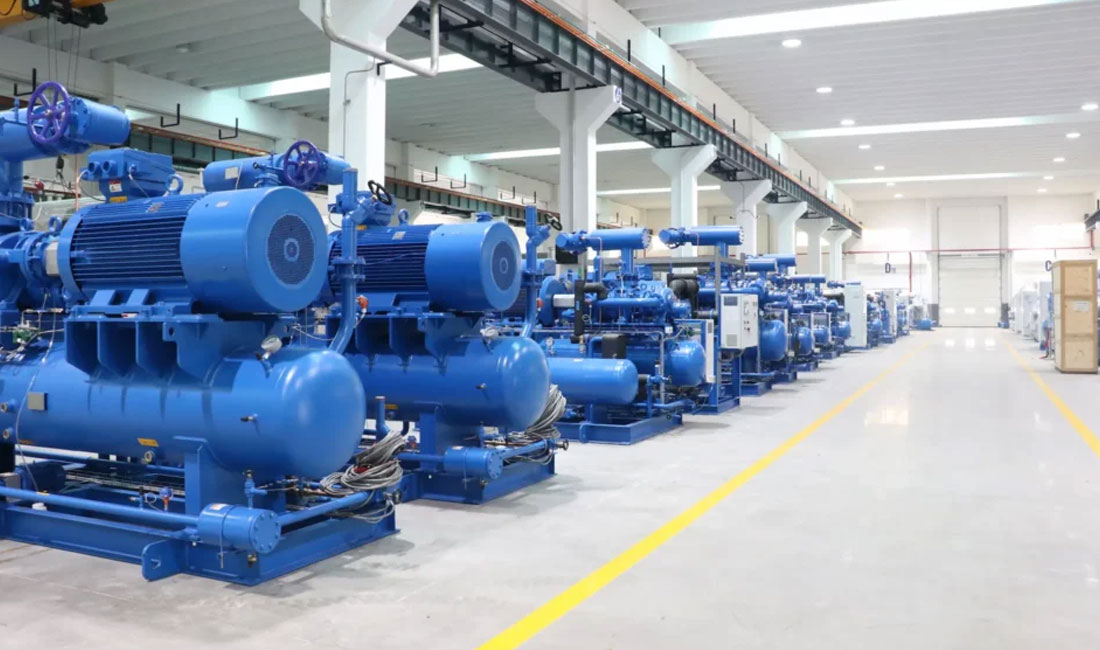
Marine refrigeration systems keep seafood and other perishable goods cold on vessels by removing heat from storage areas, tanks, or freezers. They help slow bacterial growth, reduce spoilage, and protect product quality during fishing, onboard processing, and transport.
Based on marine refrigeration and seafood processing system experience, this guide explains how these systems work and how different setups fit different vessel needs. It covers the refrigeration cycle, compressors, condensers, evaporators, RSW systems, chilled process seawater, plate freezers, tunnel freezers, spiral freezers, and IQF freezers. It also explains how vessel conditions, seafood type, power limits, hygiene, and processing goals affect system choice.
What Is a Marine Refrigeration System?
A marine refrigeration system is a cooling setup built to keep perishable goods safe and temperatures steady on ships and boats. These systems pull heat out of insulated storage areas and dump it into the air or seawater using special heat exchangers.
The Refrigeration Cycle Explained
Marine refrigeration runs on a continuous four-stage cycle. The compressor squeezes refrigerant gas, which heats it up. The condenser cools this hot gas into liquid by letting it shed heat to the air or water. Next, the expansion device drops the pressure, making the refrigerant super cold. The evaporator draws heat out of the storage compartment, turning the refrigerant back into gas and starting the whole loop over.
Key System Components
| Component | Function |
| Compressor | Pressurizes and circulates refrigerant |
| Condenser | Rejects heat to air or seawater |
| Évaporateur | Absorbs heat from storage area |
| Pumps & Fans | Move air or water through heat exchangers |
| Controls | Regulate temperature and cycling |
| Insulated Storage | Contains cooled space and minimizes heat gain |
Differences from Land-Based Systems
Marine refrigeration comes with a set of challenges that land-based systems just don’t have to deal with:
- Salt spray eats away at electrical terminals and metal parts
- The constant rocking and engine vibration can shake compressor mounts and refrigerant lines loose
- Space is always at a premium
- Airflow is often restricted
- Power is often limited to what batteries or generators can provide
- Maintenance isn’t easy
Still, these systems run nonstop in tough conditions, supporting critical needs like seafood preservation, crew meals, and temperature-sensitive cargo.
What are the Main Types of Marine Refrigeration Systems?
At-sea processors commonly use four refrigeration setups:
- RSW systems for bulk chilling
- chilled process seawater for washing and transfer
- plate freezers for block products
- tunnel, spiral, or IQF freezers for individually frozen seafood
Refrigerated Sea Water (RSW) Systems
RSW systems chill seawater and circulate it through insulated tanks to cool the bulk catch quickly after harvesting. They help slow bacterial growth and preserve freshness before processing or landing. RSW does not fully freeze seafood, so it is best for high-volume operations that need fast chilling, gentle handling, and short-term holding.
Chilled Process Seawater Systems
Chilled process seawater is used in washing, sorting, transfer, and processing areas to keep seafood cold during handling. It helps maintain product temperature between catch reception and final freezing or packing. Stable water flow, filtration, and hygiene control are important for protecting seafood quality during onboard processing.
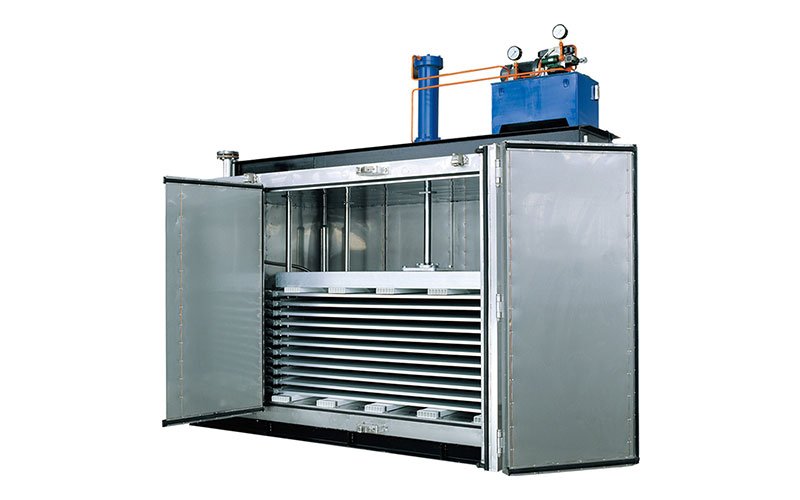
Congélateurs à plaques
Plate freezers freeze seafood between chilled metal plates, making them ideal for block products such as fish, fillets, and shrimp cartons. Direct contact freezing helps achieve fast and uniform results. These systems are space-efficient and suitable for vessels that need reliable frozen storage during long trips.
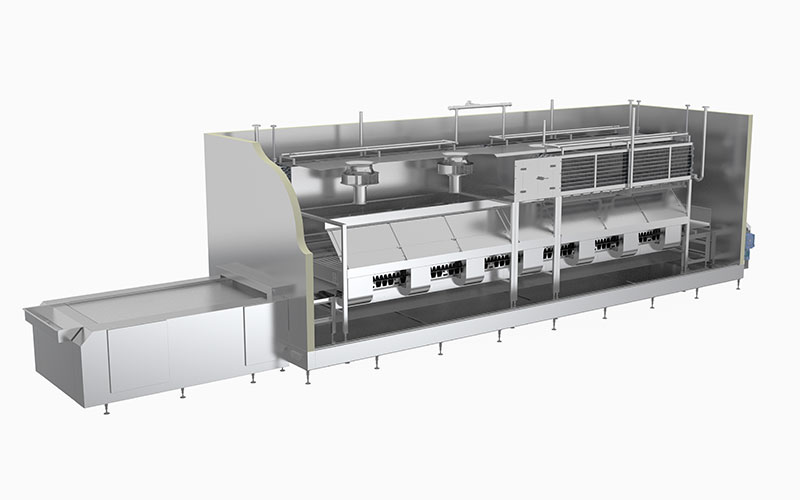
Tunnel Freezers
Tunnel freezers move seafood through a cold-air chamber on a conveyor belt. They are suitable for fish portions, shrimp, and other products that need continuous freezing. Their straight-through design works well when vessels or processing lines have enough length for conveyor-based production.
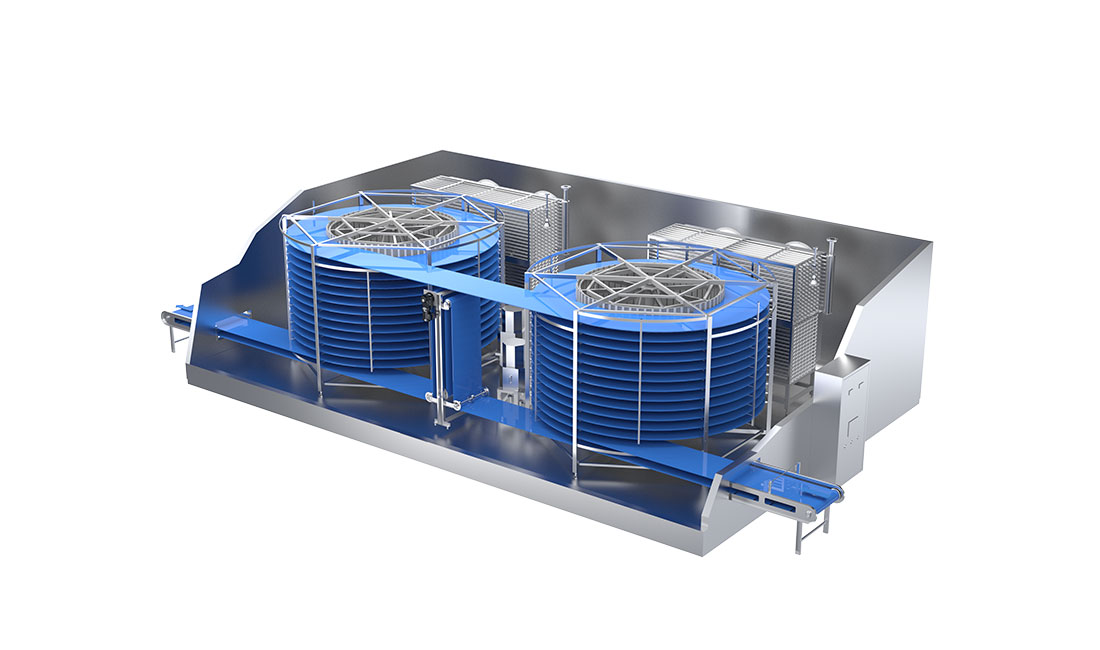
Congélateurs en spirale
Spiral freezers use a stacked spiral conveyor to freeze seafood in a compact footprint. They are useful when onboard space is limited but continuous freezing is required. This design is often suitable for value-added seafood products that need consistent freezing and stable throughput.
Congélateurs IQF
IQF freezers freeze individual seafood pieces quickly so they remain separate after freezing. They are ideal for shrimp, scallops, fish portions, and other retail-ready products. IQF freezing helps prevent clumping, protect texture, and improve product appearance for export or packaged seafood markets.
What are Quality Factors That Make or Break Seafood at Sea?
How fast a system can chill seafood really decides if it stays top quality or turns into a loss. Marine refrigeration often needs to bring seafood close to 0°C as quickly as possible to stop bacteria and enzymes from taking over.
Critical Performance Factors:
- Pull-down speed: The system should hit target temp in within the required processing window
- Temperature stability: Letting temps swing more than 2°C can cause partial thawing and refreezing—never good for texture
- Airflow uniformity: If air doesn’t circulate evenly, warm spots pop up and bacteria thrive
The type of refrigeration system changes these factors. Vapor compression setups chill fastest but need steady power.
ammonia systems are commonly used in large industrial refrigeration applications since ammonia’s a natural refrigerant with great heat transfer. These setups hold temps between -40°C and 0°C, depending on what’s being stored. Natural refrigerants like ammonia and CO2 generally beat synthetics for speed and efficiency.
Loading density matters. If you cram too much into a hold, airflow drops and temps can vary by several degrees. Proper spacing lets cold air reach every surface.
Moisture retention is a big deal. Fish can lose 2-3% of its weight if humidity isn’t controlled, wrecking texture and appearance. Systems with controlled atmospheres keep moisture in and prevent ice crystal formation that ruins cell walls.
Hygiene impacts both food safety and system performance. Refrigeration systems need daily cleaning access points to avoid biofilm buildup, which can cut cooling efficiency by a whopping 15-20%.
What are Marine Conditions That Change the System Design?
Marine refrigeration systems work in environments that land-based units just don’t see. Salt air, constant shaking, heavy humidity, and shaky power supplies force engineers to rethink standard refrigeration designs.
Below are the marine conditions that change the system design:
- Salt corrosion: Marine systems need stainless steel, copper-nickel, or coated components to protect condensers, evaporators, and piping.
- Constant vibration: Engines and waves can loosen fittings, so systems require reinforced mounts, flexible hoses, and vibration dampers.
- High engine-room temperatures: Condensers may need larger capacity or dedicated ventilation to maintain stable cooling performance.
- Limited electrical capacity: Compressor size and operating time must match the vessel’s generator capacity and onboard power demand.
- Space constraints: Equipment must be compact, accessible, and easy to service in tight engine rooms or processing areas.
- Long voyages: Backup compressors or redundant systems help prevent catch loss if one refrigeration unit fails offshore.
How to Choose the Right System by Processing Goal?
Processing goals should guide the choice of marine refrigeration system. A vessel that only needs short-term freshness requires a different setup from one that must freeze seafood for long offshore voyages or export markets.
- Keep seafood fresh before landing: Use an RSW system to chill seawater and hold the catch near freezing for short trips before onshore processing.
- Freeze whole fish or seafood blocks: Use a plate freezer for fast, uniform block freezing of fish, fillets, or shrimp cartons.
- Freeze individual seafood pieces: Use an IQF freezer for shrimp, fillets, scallops, or small portions that need to stay separate after freezing.
- Build a full onboard processing line: Combine chilled seawater, freezers, cold storage, and refrigeration components to support sorting, washing, freezing, and storage.
- Reduce energy demand: Consider absorption or hybrid refrigeration if the vessel can use engine waste heat or needs flexible power management.
- Handle high-value seafood: Choose faster freezing and more stable low-temperature systems to better protect texture, appearance, and market value.
What is the Best System by Vessel or Seafood Type?
The best marine refrigeration system depends on the vessel type, catch volume, seafood species, and whether the product needs short-term chilling, block freezing, or individual quick freezing. Matching the system to the actual onboard workflow helps protect quality, reduce waste, and improve processing efficiency.
Below are vessel types and suitable systems:
| Vessel Type | Primary Refrigeration System |
| Trawlers | RSW + plate/tunnel freezers |
| Shrimp vessels | Plate or IQF freezers |
| Tuna/pelagic | RSW + blast freezing |
| Factory vessels | Integrated vapor compression + freezing |
What are Common Mistakes When Selecting Marine Refrigeration Equipment?
Selecting marine refrigeration equipment is not only about capacity. Vessel conditions, product type, cooling speed, energy use, and maintenance access all affect long-term performance.
Avoiding these common mistakes helps protect seafood quality and reduce operating risks:
| Common Mistake | Impact | Solution |
| Capacity-only selection | System overrun | Calculate heat load with ambient conditions |
| No redundancy | Total failure risk | Install dual compressors or backup holding plates |
| Poor insulation | 40-60% longer run cycles | Specify marine-grade foam with vapor barriers |
| Inaccessible components | Deferred maintenance | ensure accessible service points in specifications |
How to Build an Integrated At-Sea Processing Line?
Building an integrated at-sea processing line means connecting refrigeration directly to each piece of processing equipment in a logical sequence. The line kicks off with refrigerated seawater tanks to chill fish right after the catch, moves through cutting and packing, and ends with blast freezers and cold storage.
Core Equipment Requirements
- Refrigerated seawater tanks for initial cooling
- Processing tables with chilled surfaces
- Blast freezers or brine freezing units
- Insulated cold storage rooms
- Water cooling systems for cleaning
Most vessels stick with vapor compression systems—they’re reliable at sea. Ammonia refrigeration has more punch but takes up more space and needs stricter safety rules.
Every stage needs a cold. Workers sort and receive fish in chilled spaces at 32°F to 40°F. Processing stations stay cool to keep product below 40°F during cutting and filleting.
Hybrid systems can juggle different cooling methods throughout the day. Vapor compression handles steady loads. Ammonia is great for big vessels, but smaller boats often pick synthetics for easier upkeep.
Power and Layout Planning
Compact, self-contained refrigeration units make life easier on cramped vessels. Each unit links up to freezers, cold storage, and chilled work surfaces through insulated pipes. With ammonia refrigeration, it’s important to plan for proper ventilation and safety gear in the engine room or dedicated machinery spaces.
FAQs
What temperature should seafood be kept at on a vessel?
Seafood should be kept at 0°C to 4°C for chilled storage or below -18°C for frozen storage. Chilling slows bacterial growth for short-term holding, while freezing preserves quality for long voyages and export requirements.
What is the difference between RSW and plate freezing?
RSW cools seafood in refrigerated seawater, while plate freezing freezes it into solid blocks.
RSW is used for rapid chilling after catch, whereas plate freezers provide fast, uniform freezing for long-term preservation.
Which marine refrigeration system is best for shrimp?
The best system for shrimp is a plate freezer or an IQF/spiral freezer depending on processing needs. Plate freezers suit block products, while IQF or spiral systems preserve individual shrimp quality and appearance.
Why is fast cooling important after catch?
Fast cooling is essential because it quickly reduces product temperature and slows bacterial growth. Immediate cooling helps maintain texture, freshness, and shelf life, especially during extended fishing operations.
Can marine refrigeration systems be customized for different vessels?
Yes, marine refrigeration systems can be customized to match different vessel requirements. System design depends on vessel size, catch volume, processing workflow, available space, and onboard power capacity.