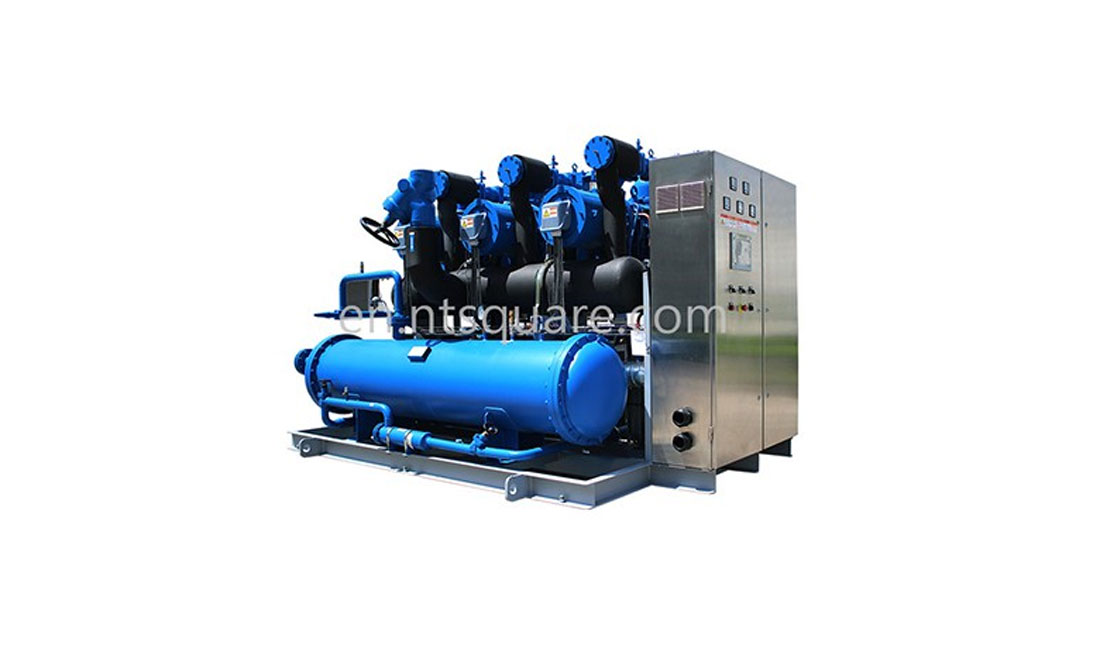
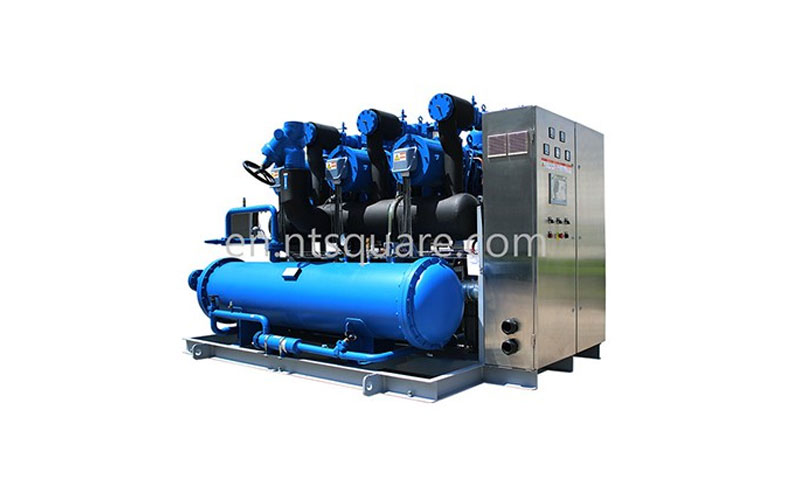
Modern ammonia refrigeration system design focuses on safe cooling, strong energy performance, and lower environmental impact for large food plants and cold storage facilities. Ammonia, also called R-717, is widely used in industrial refrigeration because it moves heat efficiently and has zero ozone depletion potential and zero global warming potential.
Based on industrial refrigeration and food processing project experience, this guide explains the main design choices behind an ammonia refrigeration system. It covers system types, compressors, heat exchangers, defrost methods, machine room safety, leak detection, charge reduction, energy-saving controls, automation, food processing needs, and commissioning steps. The goal is to help engineers and facility teams evaluate ammonia systems more clearly.
Why Does Ammonia Outperform Synthetic Refrigerants In Large-Scale Industrial Refrigeration?
Ammonia moves more heat per kilogram of refrigerant than HFCs or CO₂. Its latent heat of vaporization reaches 1,371 kJ/kg at -33°C. That means compressors do less work to achieve the same cooling output.
The table below compares ammonia against the two most common alternatives across key performance and regulatory factors:
| Property | Ammonia (R-717) | HFCs | CO₂ (R-744) |
| GWP | 0 | 1,000–3,900 | 1 |
| ODP | 0 | 0 | 0 |
| Typical Industrial COP | 4.0–6.0 | 3.0–4.5 | 2.5–4.0 |
| Efficiency vs. HFC | +15% | Baseline | Variable |
| Phase-Down Risk | None | High | None |
A 100-ton ammonia system costs 15–20% more upfront than an equivalent HFC system. However, annual operating costs run 20–30% lower. Over a 20-year lifespan, the total cost of ownership favors ammonia for most industrial facilities.
What System Architecture Should Be Selected For An Ammonia Refrigeration Design?
Four main system types exist for ammonia refrigeration: direct expansion (DX), flooded, overfeed, and NH₃/CO₂ cascade. The right choice depends on cooling capacity, target temperature, how much ammonia can be stored on-site, and local regulations.
The list below describes each type and where it fits best:
- Direct Expansion (DX): Keeps ammonia charge low. Works well for systems below 500 kW. Efficiency drops at large scale.
- Flooded Systems: High COP. Best for systems above 500 kW. Needs liquid separators and oil management equipment.
- Overfeed (Pump Recirculation): Pumps refrigerant at 2–4 times the evaporation rate. Improves heat transfer at the evaporator. Common in IQF spiral freezer circuits.
- NH₃/CO₂ Cascade: Ammonia handles the warm side. CO₂ handles the cold side. Cuts on-site ammonia charge by 60–80%.
The NH₃/CO₂ cascade design is increasingly specified for new food processing facilities, particularly in markets with strict on-site charge regulations. It keeps ammonia’s efficiency benefits while cutting on-site inventory by 60–80%. In regions where charge limits are less restrictive, direct ammonia systems remain the dominant choice. Both approaches can help facilities stay below the OSHA PSM threshold of 10,000 lbs (4,536 kg).
How Do Compressor And Heat Exchanger Specifications Affect Ammonia System Performance?
Compressor type and heat exchanger design control COP, how often defrost cycles run, and total refrigerant charge. These decisions must be made during the design phase — changing them later is expensive.
Compressor Selection And Staging
Screw compressors with variable frequency drives (VFDs) are the standard for large ammonia systems. They run efficiently between 40–100% of rated capacity. Below -30°C, two-stage compression cuts the compression ratio per stage. This improves COP by 8–12% over single-stage designs. Running multiple compressors in parallel adds backup capacity and lets operators match output to the actual process load.
Heat Exchanger Design
Hydraulic tube expansion gives a tighter fit between the tube and fin than mechanical expansion. This means more consistent heat transfer across the whole coil. Variable fin pitch slows down frost buildup on coil surfaces. It can extend the time between defrost cycles by up to 30%. Leading manufacturers use heat exchanger simulation software to fine-tune evaporator geometry for each specific application.
Defrost Method Selection
The defrost method affects energy use, cycle length, and how stable product temperatures stay. The three main options are listed below:
- Hot-Gas Defrost: Most energy-efficient. Best for food processing environments where defrost happens often.
- Water Defrost: Fast cycle time. Works well when product loads are heavy.
- Electric Defrost: Uses the most energy. Only practical for small systems or low-defrost-frequency applications.
How Should Safety Be Embedded Into Ammonia Refrigeration System Design?
Safety must be built into the system from the start of the design process. Ammonia’s odor becomes detectable at concentrations as low as 5 ppm — well below the OSHA permissible exposure limit of 50 ppm. This gives workers a natural early warning before exposure reaches dangerous levels. This gives workers an early natural warning that odorless synthetic refrigerants cannot provide.
Engineered safety layers reinforce this natural property. The table below shows each layer and what it requires at the design stage:
| Safety Layer | Design Specification |
| Machine Room Ventilation | Sized to clear dangerous concentrations within 4 minutes |
| Leak Detection Sensors | Alarms at 25 ppm (warning), 150 ppm (alarm), 300 ppm (shutdown) |
| Automatic Isolation Valves | Close automatically when an alarm triggers |
| Emergency Relief | Vents to a water absorption pit |
| Charge Minimization | Cascade design cuts on-site inventory by 60–80% |
Reducing ammonia charge through architecture selection is the single most effective risk-reduction strategy available at design time. Lower on-site inventory also reduces insurance costs and simplifies compliance paperwork under OSHA PSM and equivalent national frameworks.
What Energy Efficiency Strategies Apply Specifically To Ammonia Refrigeration System Design?
Four design-stage strategies drive efficiency in ammonia systems: floating head pressure control, two-stage compression, VFD integration, and discharge gas heat recovery. Each one targets a different point in the refrigeration cycle.
Floating head pressure control adjusts condensing pressure based on the outdoor wet-bulb temperature instead of holding a fixed value. This single change improves seasonal COP by 8–15%. VFDs on compressors, pumps, and fans cut energy use during part-load hours. Part-load conditions make up 60–70% of annual operating hours in most food processing plants.
Heat recovery pulls thermal energy from compressor discharge gas at 70°C–90°C. Plants can use this heat for space heating, hot water, or defrost circuits. A well-designed heat recovery system offsets 15–25% of total facility thermal energy demand.
How Do Control Systems And Automation Requirements Shape Ammonia Refrigeration Design?
Control system architecture must be decided before construction starts. Sensor placement, valve selection, and electrical infrastructure all depend on it. Adding or changing control systems after commissioning increases project costs by 30–50%.
Modern designs use PLC-based controllers to monitor multiple temperature zones in real time. Operators can see equipment status, zone temperatures, and fault alerts on a single screen. Preset programs let systems switch freezing parameters automatically when the product type changes. SCADA integration connects the system to a remote monitoring platform, so engineers can diagnose faults without traveling to the site. Understanding common freezer faults helps teams act faster when an alarm triggers.
IoT-based predictive maintenance watches vibration, pressure drop, and motor current. Systems using active predictive maintenance reduce unplanned downtime by 25–40% compared to fixed maintenance schedules.
What Design Parameters Change When Ammonia Refrigeration Serves Food Processing Applications?
Food processing systems need hygienic evaporator surfaces, defrost strategies matched to humidity levels, and refrigeration capacity sized to specific product freezing rates. These are different from the needs of a standard cold storage warehouse.
IQF Spiral Freezer Systems
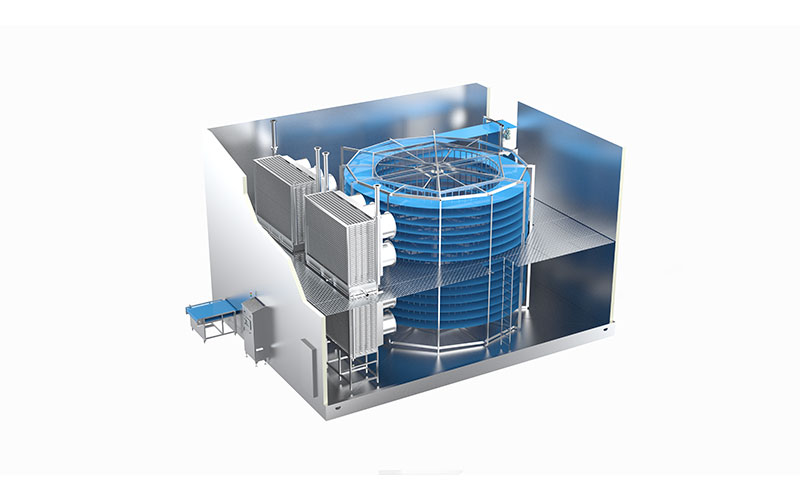
IQF congélateurs en spirale need evaporating temperatures between -35°C and -40°C. They run continuously at throughputs of 1–7 tons per hour. Overfeed ammonia circuits are widely used in IQF spiral freezer applications. They keep coil surfaces fully wetted and hold product temperatures stable across the full belt path. Flooded systems serve a similar function in larger installations. Airflow design determines how evenly cold air reaches the product. Industrial spiral freezers use different airflow patterns — horizontal, vertical, or hybrid — depending on the product type and belt width. The goal is to minimize temperature variation across the belt path and reduce product dehydration during the freezing cycle.
Application-Specific Parameters By Food Category
Each food category sets different temperature, humidity, and hygiene requirements. The table below shows the main design parameters for common food processing applications:
| Application | System/Storage Temperature | Primary Design Requirement |
| Seafood IQF | -18°C (evaporator: -35°C to -40°C) | Corrosion-resistant coatings; frequent defrost cycles |
| Bakery Spiral Cooling | +2°C to +10°C | Humidity control; low-velocity airflow |
| Meat Processing | -18°C to -25°C | Hygienic evaporator design; HACCP zone separation |
| Produits laitiers | +2°C to +4°C | Temperature stability within ±0.5°C |
| Multi-Temperature Cold Storage | -25°C to +10°C | Separate refrigerant circuits for each temperature zone |
What Commissioning Steps Verify That An Ammonia Refrigeration System Performs As Designed?
Commissioning confirms the installed system matches the original design before it handles any product. Skipping steps creates regulatory compliance gaps and cancels manufacturer warranties.
The required sequence includes pressure testing to 1.5 times the design pressure, controlled ammonia charging, multi-zone setpoint calibration, and leak sensor verification at each alarm threshold. Operators must hold current certifications before startup begins. All test records must be kept on file for regulatory inspections and insurance audits.
FAQs
What Is The Minimum Ammonia Charge For A PSM-Compliant System?
OSHA PSM regulations apply when a facility holds 10,000 lbs (4,536 kg) or more of ammonia on-site. NH₃/CO₂ cascade designs reduce on-site charge by 60–80%, which keeps many food processing facilities below this threshold and outside full PSM requirements.
How Does NH₃/CO₂ Cascade Reduce On-Site Ammonia Inventory?
In a cascade system, ammonia stays in the high-temperature machine room circuit only. CO₂ handles refrigerant distribution across the plant floor. This keeps ammonia confined to one controlled space, eliminating refrigerant piping through production and storage areas.
What IIAR Standards Govern Ammonia Refrigeration Machine Room Design?
IIAR 2 sets the equipment, design, and installation standards for closed-circuit ammonia systems. IIAR 6 covers inspection, testing, and maintenance. Both specify ventilation rates, sensor placement, and emergency system requirements for machine rooms.
What COP Does A Modern Ammonia Spiral Freezer System Achieve At -35°C?
A two-stage ammonia system serving a spiral freezer at -35°C evaporating temperature achieves a COP of 2.0–2.8. VFDs and floating head pressure control keep performance near the upper end of this range across changing ambient conditions.
Can Ammonia Systems Supply Heat For Facility Space Heating?
Compressor discharge gas in ammonia systems reaches 70°C–90°C. This heat can supply space heating, process hot water, and defrost circuits. A properly designed heat recovery system offsets 15–25% of total facility thermal energy demand.