Keeping freezer systems reliable is one of the toughest challenges in food processing plants. When these units fail, production stops, food safety risks rise, and costs climb fast.
Food processing plants tackle freezer equipment issues by blending data-driven monitoring, routine inspections, and targeted maintenance. This stops small faults from turning into full shutdowns.
They depend on steady airflow, accurate temperature sensors, and good insulation to keep products within safe temperature ranges. When equipment performance shifts, maintenance teams use diagnostic tools to track pressure, airflow, and energy patterns to find the problem.
Technicians can spot blocked ducts, damaged door seals, or malfunctioning defrost cycles before product temperatures drift out of compliance. Plants that stick to structured upkeep schedules—cleaning coils, verifying airflow, and checking refrigerant levels—keep freezers efficient and compliant.
What Types of Freezers Do Food Processing Plants Use?
Food processing plants use several types of industrial freezers to maintain consistent temperature control. Each type uses a distinct freezing method, based on the product’s shape, size, and moisture content.
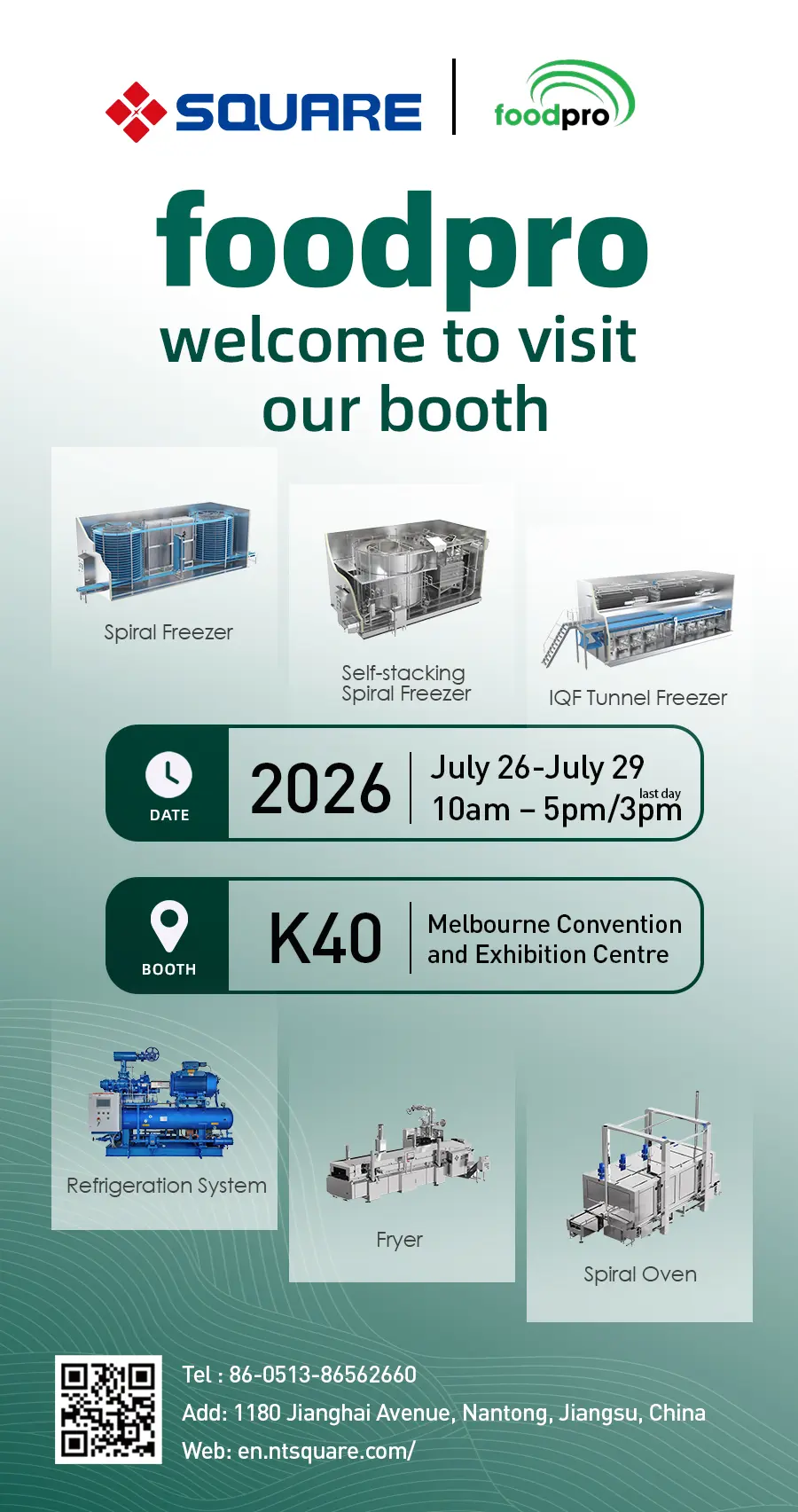
- IQF Freezers (Fluidized Bed, Mechanical & Cryogenic): These units freeze individual pieces like shrimp, peas, and diced fruit by suspending them in cold air or cryogenic gas. Operators check fan balance and nozzle alignment to prevent clumping or partial freezing.
- Spiral Freezers: A spiral conveyor moves food through a continuous cold airflow. Its compact design saves space while maximizing dwell time. Engineers watch belt tension and frost buildup, since excess ice on coils increases energy use and causes uneven cooling.
- Tunnel Freezers: Products like fish fillets or burger patties pass through a long chamber with controlled airflow. Cleaning fans and coils regularly helps maintain uniform performance and prevents temperature swings.
- Plate and Contact Freezers: These systems press products between refrigerant‑cooled plates for rapid, uniform freezing. Keeping plates aligned and hydraulic pressure steady ensures fast freezing and safe product handling.
Why Do Industrial Freezers Fail During Production?
Industrial freezers fail during production when the refrigeration system or its critical components develop imbalances, blockages, or wear that disrupt the cooling cycle.
- Refrigeration Load Changes (Too Many Warm Products) — When too many warm items enter at once, compressors and evaporators have to remove more heat than they’re built for. This temperature surge raises coil temperatures and extends freezing time, which slows throughput and hurts product quality.
- Airflow Blockages & Frost Accumulation — Ice on fans or coils restricts air movement. Since stable airflow keeps temperatures even, any obstruction leads to uneven freezing and wasted energy. This often happens when doors open too often or defrost cycles are too short.
- Mechanical Wear (Belts, Chains, Gearboxes) — Friction from continuous operation wears down moving parts. When gearboxes or belts lose tension, conveyors slow or stop, leading to unplanned downtime.
- Sensor Failure (Temperature, Pressure, Airflow) — Faulty or miscalibrated sensors send incorrect data to controls. That can cause overcooling, undercooling, or bad defrost cycles.
- Refrigerant Problems (Ammonia / Freon) — Leaks, low refrigerant, or pressure imbalance reduce cooling efficiency. Even small losses can trigger alarms or force a full shutdown.
How Do You Diagnose Freezer Temperature Issues?
Diagnosing freezer temperature issues means finding what keeps the system from holding a stable, uniform temperature. Technicians do this through tests and inspections of key components.
- Thermostat Accuracy: Technicians compare the thermostat sensor reading to a calibrated thermometer. If readings don’t match, the control may send the wrong cooling signals, leading to inconsistent freezing or spoilage.
- Airflow Inspection: They check for blocked vents, ice buildup, or poorly arranged products that restrict circulation. Clearing these obstructions quickly restores uniform cooling.
- Condenser Coil Condition: Dirty coils lose heat-transfer efficiency because dust and grease act like insulation. Cleaning them with a brush or vacuum improves heat rejection and lowers compressor strain.
- Evaporator and Fan Testing: The evaporator fan motor and coil frost pattern show system health. Uneven frost or no airflow can point to defective fans or refrigerant flow issues.
- Product Temperature Verification: Monitoring the core temperature of stored goods confirms whether the freezer keeps the right level. Any deviation signals a process or equipment fault that needs fixing.

What Causes Frost and Ice Build-Up in Industrial Freezers?
Frost and ice build-up happen when warm, moist air meets cold surfaces. The humidity turns into solid ice, which messes with performance, storage, and safety.
- Damaged Door Seals and Insulation – Weak or cracked door seals let moist air in. As that air cools, vapor turns into frost on walls and coils. Replacing worn gaskets stops leaks and keeps the internal temperature steady.
- Frequent Door Opening or Faulty Air Curtains – Open doors or failed air curtains cause temperature swings and let in moisture, which increases ice buildup. This means more maintenance and higher energy costs for staff.
- Improper or Missed Defrost Cycles – If defrost timers or heaters fail, frost piles up on evaporator coils. Frozen coils block airflow and force compressors to run longer. Regular defrost checks restore normal heat exchange and save power.
- Blocked Drain Lines and Standing Water – Bad drainage traps meltwater, which refreezes into slippery ice sheets. Keeping drains clear avoids refreezing that can disrupt belts, fans, and safety.
- Cleaning and Sanitation Residue – After washdowns, leftover moisture freezes fast. Making sure everything dries after cleaning cuts down on icing and protects freezer mechanisms from corrosion.
Why Does Production Capacity Suddenly Drop?
Production capacity drops suddenly when freezer performance, product flow, or environmental control fall outside their intended limits.
- Incorrect Belt Speed or Residence Time – If the conveyor runs too fast, products don’t spend enough time in the freezing zone to hit –18°C. Partially frozen goods need reprocessing, which delays output and wastes energy.
- Evaporator Efficiency Decline – Frost or debris on evaporator coils restricts air circulation. Blocked surface area slows heat transfer, so the freezer can’t keep stable temperatures.
- Overloading the Freezer – Adding too many warm products at once pushes the refrigeration load too high. The system compensates by running compressors longer, which raises energy use and cuts daily throughput.
- Coil Surface Fouling and Hygiene Issues – Layers of dust, oil, or protein insulate coil fins and lower thermal conductivity. Fans and compressors have to work harder, driving up energy use and causing more temperature deviations.
How to Troubleshoot Mechanical Failures?
Troubleshooting mechanical failures means finding and fixing the root cause of equipment problems. Technicians use inspection, testing, and adjustment to get things running smoothly again.
- Inspection: Technicians visually check compressors, fans, and moving parts for wear, corrosion, or loose bolts. Spotting oil leaks near compressor seals or ice around fans helps locate issues early and avoid long stoppages.
- Temperature and Overheating Checks: Overheating happens when airflow is blocked or the compressor’s cycle runs too long. Measuring coil surface temperatures with an infrared thermometer shows if the heat exchange system works as it should.
- Vibration and Noise Analysis: Odd vibration usually means misalignment or worn bearings. Using a handheld vibration meter helps find which fan or gearbox is out of balance, so repairs can be scheduled without stopping everything.
- Electrical and Control Testing: Voltage measurements and continuity tests make sure motors and sensors get the right power. If readings are off, maintenance teams track down the shorted circuit or bad relay.
- Lubrication and Movement Checks: Moving assemblies like drive chains and fan shafts need the right lubricant. When lubrication points run dry, friction goes up and parts wear out faster. Regular lubrication keeps things running smoothly.
How Do You Solve Refrigerant-Related Issues?
Solving refrigerant-related issues means finding leaks, restoring the right refrigerant charge, and fixing flow or oil-return problems that hurt efficiency and equipment life.
- Leak Detection: Operators use electronic sensors or halide torches to find refrigerant leaks. Escaping gas drops system pressure and cooling power, so finding and sealing leaks quickly matters. Recharging to the right pressure keeps things stable and avoids waste.
- Low Refrigerant Charge: A low charge causes long freezing times, uneven frost, and high compressor duty. Technicians check levels with pressure gauges and add refrigerant until sight glass bubbles clear.
- Oil Accumulation: Oil can move from the compressor into the evaporator, coating heat transfer surfaces. This often happens when bearings wear out or separation fails. Draining trapped oil during maintenance brings coil efficiency back and keeps temperatures even.
- Expansion Valve Problems: A stuck thermostatic expansion valve restricts or floods the evaporator. Adjusting valve superheat or cleaning blocked filters fine-tunes refrigerant flow. A properly tuned valve means steady cooling, without constant compressor cycling or frost buildup.
What Preventive Practices Keep Freezers Running Efficiently?
Preventive practices keep freezers running efficiently through a mix of routine inspections, planned maintenance, and thoughtful operation. These steps help cut energy use and stretch the life of your equipment.
- Planned Maintenance Schedule: A structured maintenance program keeps each freezer component on a regular checkup cycle. Inspecting compressors, fans, and sensors at set times helps operators spot wear or drift before it turns into a bigger problem. In practice, this limits downtime and helps keep temperature control steady.
- Daily Inspection Checklist: Operators check door seals, frost levels, airflow, and control panel alarms at the start of each shift. Spotting a cracked gasket or blocked vent early can prevent cold air leaks and stops compressors from working overtime. This keeps energy use where it should be.
- Proper Startup and Shutdown Procedures: Following the right sequence avoids refrigerant floods and pressure spikes. For example, starting circulation fans before the compressor balances internal pressures. This simple habit cuts down on mechanical stress and helps avoid costly repairs.
- Optimizing Defrost Cycles: Adjusting defrost frequency based on production loads keeps coil icing to a minimum without wasting electricity. A well-tuned cycle boosts heat exchange and keeps product temperatures steady.

How Should Plants Handle Emergency Freezer Downtime?
Emergency freezer downtime means an unplanned stoppage that threatens product safety and workflow in food plants. It’s never fun, but it happens.
- Rapid Response Protocol: Teams quickly identify which batches are affected and isolate them using HACCP procedures. Since temperature abuse can lead to bacterial growth, staff document each lot’s time out of temperature to decide if it needs rework or discarding.
- Backup Freezing Solutions: Many plants keep auxiliary IQF lines or portable blast freezers on hand, usually rated below −18 °C. Using these backups lets products stabilize before spoilage sets in.
- Temporary Product Storage: If freezing can’t resume right away, products move to chilled rooms (usually 0–4 °C). This slows down microbes and keeps texture intact until freezing starts again. Staff log temperatures every 30 minutes to stay within food safety rules.
- Communication with Quality Control and Production Teams: Keeping maintenance, quality, and production folks in the loop cuts down on confusion. With everyone informed, the plant can trace products and get back to normal faster.
Foire aux questions
What is the most common freezer problem?
The biggest headache? Temperature inconsistency. It often comes from blocked airflow, busted door gaskets, or ice on the evaporator coils.
If airflow gets blocked, warm air can mix with cold zones, so you’ll get frost in one spot and thawing in another.
Cleaning coils with non-corrosive tools and checking gaskets monthly helps keep cooling even. That means steadier product temps and fewer batches getting tossed.
How to diagnose freezer problems?
Technicians usually start by checking electrical supply, sensor calibration, and refrigerant pressure. A digital manifold gauge lets them see if the system’s undercharged or working too hard.
Then they check evaporator fans and defrost timers. If a fan motor’s out or a timer’s stuck, cold air stops moving right.
Having a consistent diagnostic routine helps workers fix the real issue, not just guess.
What is the first step when troubleshooting a malfunction in a packaged refrigeration unit?
The first move is to check the power source and control circuit. Make sure breakers are set, fuses are good, and control signals reach the compressor contactor.
Since plenty of shutdowns are just electrical hiccups, confirming power first saves time and parts.
For operators, this means the system gets back up faster and you skip unnecessary repairs.
How to troubleshoot a commercial freezer?
Troubleshooting usually starts with measuring system pressures and temperatures. This helps figure out if the problem sits on the high or low side of the refrigeration cycle.
If pressures are low, technicians grab an electronic detector that’s rated for the type of gas in the unit. They’ll check for refrigerant leaks, since that’s a common culprit.
Once they’ve confirmed the refrigerant charge, the next step is to test the defrost heaters and thermostats. If the freezer won’t defrost, ice can block the evaporator coil and mess with cooling.
Honestly, keeping a log of all your test data—pressure, temperature, amperage—can make a big difference. Over time, it helps spot repeated faults and makes long-term reliability a lot more manageable.