
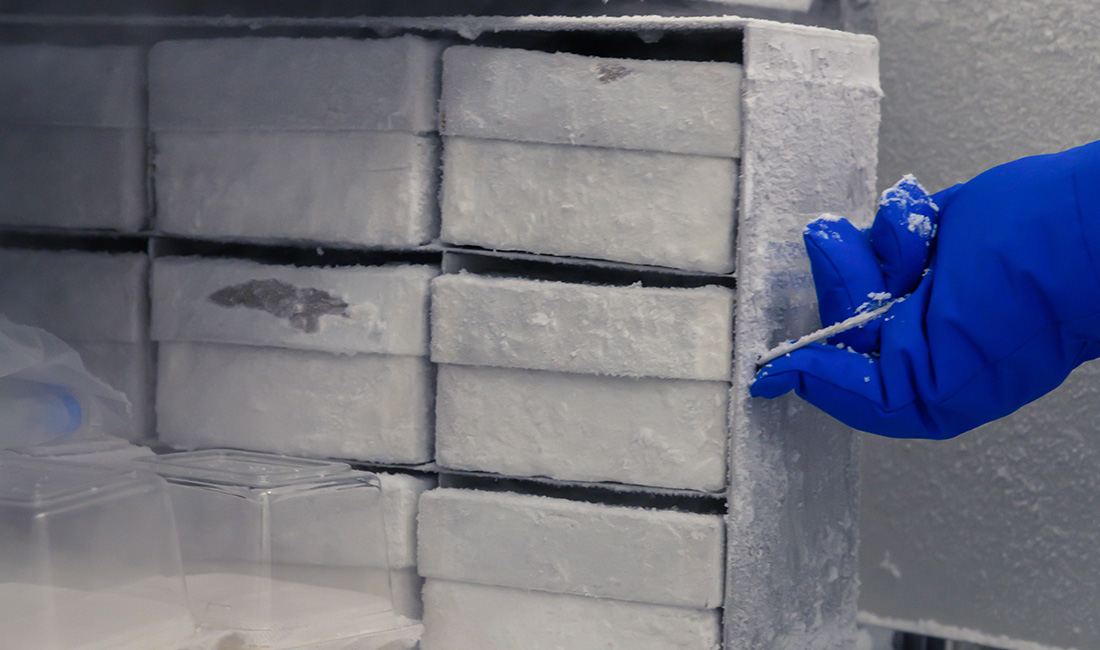
In industries like food production, pharmaceuticals, and biotechnology, freezing is more than just a preservation method — it’s a precision process that determines product quality, safety, and shelf life. Among the many freezing technologies available today, mechanical freezing and cryogenic freezing are the two most dominant systems.
While both methods achieve the same ultimate goal — reducing product temperature below its freezing point — they do so using vas
In this article, we’ll break down how each freezing method works, the science behind their differences, industry applications, and how to choose the right method based on your operational and product needs.
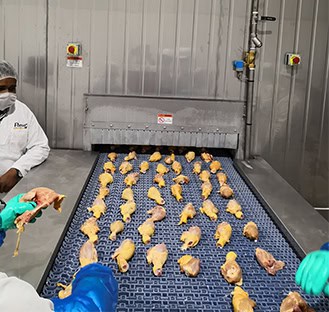
1. Understanding Mechanical Freezing
Mechanical freezing is the traditional and most widely used freezing technology. It relivapor-compression refrigeration cycle, a system that uses a refrigerant (commonly ammonia, R-404A, or CO₂) to absorb heat from products and expel it to
In simple terms, mechanical systems cool air — or sometimes a liquid medium — that circulates around the product. Over time, the product’s internal temperature decreases until it reaches the target frozen state.
How Mechanical Freezing Works
- The refrigerant absorbs heat from the product inside evaporators.
- Compressors pressurize the vaporized refrigerant.
- The condenser releases this heat to the external environment.
- The refrigerant cools again and cycles back through.
Types of Mechanical Freezing Systems
- Blast Freezers – Use high-velocity air to rapidly remove heat.
- Plate Freezers – Press products between metal plates for efficient conduction.
- Spiral & Tunnel Freezers – Designed for continuous, large-scale operations.
In industrial freezing systems, ammonia and mechanical refrigerant gases are the two main types of cooling agents used to achieve and maintain temperatures between -18°C and -40°C. These low temperatures are required to effectively inhibit microbial growth and enzymatic activity in food products, ensuring food safety and extending shelf life.
Electricity powers both compressors and circulation fans, which are critical components of the freezing process. The compressors generate cold air, while the fans distribute it evenly throughout the storage or processing area. The duration of the freezing cycle varies, typically ranging from several minutes to a few hours, depending on product volume and type.
Industrial freezing solutions are designed for high-capacity applications, making them an essential technology in bulk food production, such as in meat processing plants and bakery manufacturing facilities. These systems ensure consistent product quality, maximize food safety, and support longer shelf life for perishable goods.
For example:
- Ammonia (subject) enables (predicate) rapid and efficient cooling (object).
- Mechanical refrigerant gases (subject) maintain (predicate) industrial freezing temperatures (object).
- Industrial freezers (subject) extend (predicate) shelf life of meat and bakery products (object).
Types oA peer-reviewed study published in 2020 by Li et al. in the Journal of Food Engineering investigated the efficiency of ammonia-based freezing systems for commercial meat processing. The research found that maintaining temperatures between -20°C and -35°C significantly reduced the risk of microbial contamination, supporting industry standards for food safety (Li et al., 2020, Journal of Food Engineering).f Mechanical Freezing Systems
Advantages
- Scalable for high-throughput operations
- Lower long-term operating costs
- Excellent for large product volumes
- Can integrate with heat recovery for energy efficiency
Limitations
- High initial setup costs for compressors and evaporators
- Slower freezing rates, leading to larger ice crystals
- May cause cell rupture or texture degradation in sensitive foods
Mechanical freezing, while efficient for mass production, sometimes compromises microstructure quality — a crucial factor for delicate or premium products.
2. Understanding Cryogenic Freezing
In contrast, cryogenic freezing leverages the physics of liquefied gases — primarily liquid nitrogen (−196°C) or liquid carbon dioxide (−78.5°C) — to achieve ultra-rapid freezing.
Rather than using mechanical compression and evaporators, cryogenic systems rely on the latent heat of vaporization of these gases. When a cryogen contacts the product, it instantly a
How Cryogenic Freezing Works
- The product enters a tunnel or immersion freezer.
- It’s exposed to liquid nitrogen or CO₂ vapors.
- Heat transfers from the product to the gas through direct contact.
- The cryogen evaporates, and the product is quickly frozen.
Advantages
- Rapid freezing prevents large ice crystal formation, maintaining texture integrity.
- Minimal dehydration due to short exposure times.
- Requires less floor space and no heavy mechanical installation.
- Flexible — ideal for small-batch or variable production.
Limitations
- Higher operational cost (ongoing gas consumption).
- Requires reliable gas supply and handling safety protocols.
- Can be less energy-efficient in continuous, high-volume environments.
Cryogenic freezing shines when product quality and speed are critical — particularly in premium food production, biotech, and pharmaceutical applications where precision matters more than throughput.
3.Comparing Mechanical and Cryogenic Freezing
| Paramètres | Mechanical Freezing | Cryogenic Freezing |
| Freezing Medium | Refrigerant gas | Liquid nitrogen / CO₂ |
| Temperature Range | -18°C to -40°C | -60°C to -196°C |
| Freezing Rate | Slow (gradual) | Ultra-fast |
| Ice Crystal Formation | Larger crystals | Microcrystalline (minimal damage) |
| Dehydration Risk | Higher | Very low |
| Initial Investment | High | Low |
| Operating Cost | Low (steady) | High (consumables) |
| Empreinte | Grandes dimensions | Compact |
| Maintenance | Regular mechanical servicing | Minimal mechanical wear |
| Ideal For | Large-scale, continuous production | Delicate, high-value products |
From a semantic perspective, both methods represent distinct knowledge domains under the entity “Freezing Technologies.” Mechanical freezing emphasizes efficiency, scale, and infrastructure, while cryogenic freezing highlights speed, preservation quality, and adaptability.
The contextual border between them is drawn through freezing speed, thermal transfer method, and product type — ensuring topical differentiation while maintaining relevance under the shared macro-context of industrial freezing systems.
4.Industry Applications and Suitability
Industrie alimentaire
- Mechanical freezing dominates large-scale processing plants (e.g., frozen vegetables, meat, poultry, bakery lines).
- Cryogenic freezing is preferred for premium products that are texture- or flavor-sensitive (e.g., seafood, gourmet meals, pastries).
Because cryogenic systems prevent cellular rupture, they help maintain natural color, taste, and aroma — especially valuable in ready-to-eat meals or premium frozen desserts.
Pharmaceuticals and Biotechnology
Cryogenic freezing ensures cell viability, protein stability, and enzyme preservation — essential for:
- Vaccine storage
- Biological sample preservation
- Cryopreservation of stem cells and tissues
Cold Chain and Logistics
Cryogenic systems, being portable and modular, serve well in transport and storage phases. They can
Mechanical systems, while stationary, remain the workhorses of centralized distribution facilities where capacity and efficiency are paramount.
5.Cost Analysis and ROI
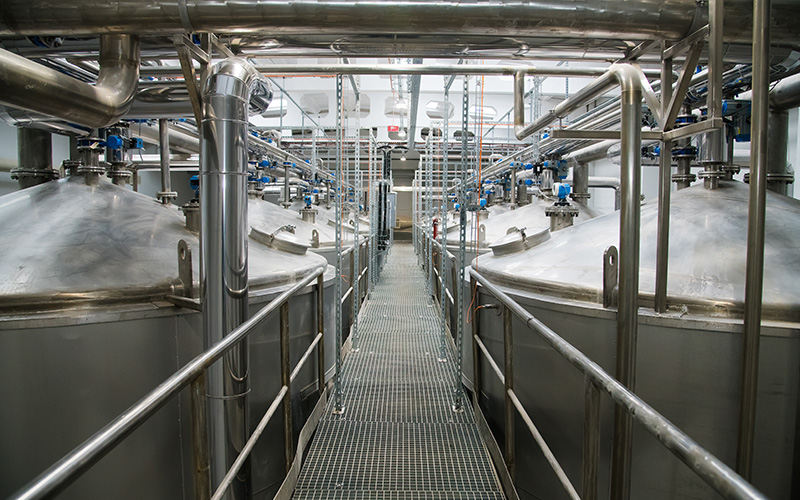
The cost factor is where many businesses make their final decision. While mechanical systems demand heavy CAPEX (Capital Expenditure), they offeOPEX (Operating Expenditure) once installed.
Cryogenic systems, conversely, have low startup costs but incur ongoing expenses due to gas consumption.
| Cost Factor | Mechanical | Cryogenic |
| Initial Investment | High (infrastructure-heavy) | Low (simple installation) |
| Operating Cost | Lower over time | High, recurring |
| Maintenance | Frequent but predictable | Minimal mechanical upkeep |
| Scalability | Excellent for large production | Limited by gas availability |
| ROI | Long-term (steady production) | Short-term (flexible or premium products) |
The best ROI model depends on production scale and product value.
A food processing giant may prefer mechanical freezing for its economies of scale, wherbiotech firm or gourmet producer benefits more from cryogenic flexibility.
Which Freezing Method Should You Choose?
To make the best decision, align your choice with product characteristics, production volume, budget, and quality priorities:
| Criteria | Méthode recommandée |
| High production volume | Mechanical |
| Delicate or high-value products | Cryogenic |
| Limited space | Cryogenic |
| Energy efficiency focus | Mechanical |
| Rapid production cycles | Cryogenic |
| Long-term cost savings | Mechanical |
| Need for product texture preservation | Cryogenic |
A growing trend among modern manufacturers is hybrid freezing — starting with cryogenic flash freezing to lock texture and then finishing with mechanical storage to minimize costs. This approach leverages both technologies’ strengths, optimizing speed, quality, and cost simultaneously.
Supplementary Considerations
Flash Freezing and Its Role
Flash freezing, often achieved through cryogenic methods, ensures microcrystalline ice formation. This prevents cell damage, allowing products to maintain fresh-like quality upon thawing.
For food producers, this means better color, less drip loss, and enhanced flavor retention — particularly vital for seafood, fruits, and pastries.
Is Cryogenic Freezing Safe for Food?
Yes — both liquid nitrogen and carbon dioxide are FDA-approved for food contact. These gases evaporate harmlessly, leaving no residue. In fact, nitrogen, which constitutes 78% of Earth’s atmosphere, is entirely inert and food-safe.
Sustainability and Environmental Impact
- Mechanical systems can be made eco-friendly with natural refrigerants and heat recovery systems.
- Cryogenic systems are cleaner at point of use but depend on the energy source used to liquefy gases upstream.
Companies increasingly evaluate carbon footprints holistically, factoring in not only operational efficiency but upstream production of cryogens and end-to-end lifecycle emissions.
Innovations and Future Outlook
Emerging trends include:
- Hybrid mechanical-cryogenic systems for energy optimization.
- AI-driven temperature monitoring for predictive maintenance.
- New refrigerants with low Global Warming Potential (GWP).
- Closed-loop nitrogen recovery systems to minimize waste.
As sustainability and cost efficiency become core to industrial decision-making, innovation continues to blur the boundaries between mechanical and cryogenic technologies.
Final Thoughts: Finding the Balance Between Cost, Quality, and Speed
In the end, there’s no one-size-fits-all solution. The right freezing technology depends on your product’s sensitivity, throughput goals, and operational strategy.
- Mechanical freezing provides a solid foundation for large-scale, continuous operations.
- Cryogenic freezing delivers superior quality preservation for high-value products where speed matters most.
Conclusion
Freezing isn’t just about cold — it’s about control. The method you choose determines how your product behaves, tastes, and performs after thawing.
Mechanical freezing gives you stability, scalability, and lower long-term costs. Cryogenic freezing offers precision, quality, and adaptability. The smartest producers understand both — and design their production systems around the balance of science, speed, and sustainability.