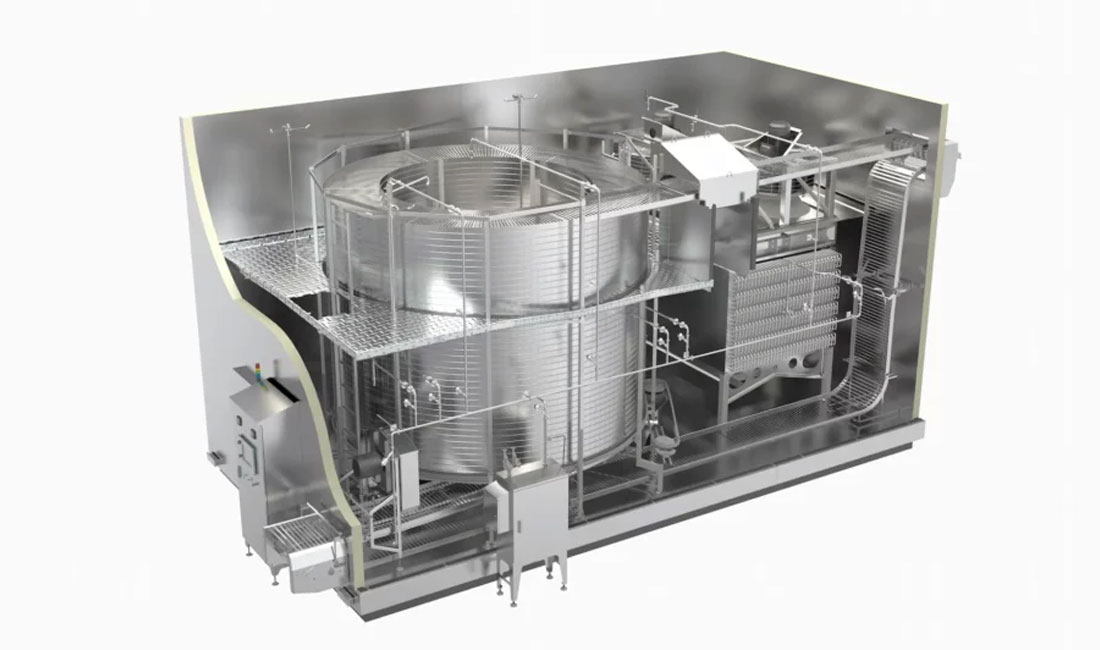
Um congelador em espiral autoempilhável é ideal quando uma unidade de produção alimentar necessita de maior capacidade de congelação, mas dispõe de espaço útil limitado. A sua correia empilha-se sobre si própria, pelo que o congelador aproveita a altura vertical em vez de ocupar uma grande extensão no chão. Isto pode ajudar os transformadores a aumentar a produção, facilitar o acesso para limpeza e manter as linhas de congelação contínuas em funcionamento.
Com base na conceção dos congeladores em espiral e na experiência em projetos de congelação de alimentos, este guia explica como o sistema funciona e em que situações faz sentido utilizá-lo. Aborda a poupança de espaço, a conceção da correia transportadora, a adaptação do produto, a higiene, a gama de capacidades, a altura do teto, o acesso para manutenção e as necessidades de refrigeração. Explica também em que situações um congelador de túnel ou um congelador em espiral tradicional pode ser a melhor opção.
O que é um congelador em espiral autoempilhável?
Um congelador em espiral autoempilhável utiliza uma correia que se sustenta a si própria, eliminando os trilhos de suporte da correia e a estrutura tradicional em tambor. A correia empilha camada por camada num padrão em espiral para congelar produtos alimentares à medida que estes se deslocam pela zona de congelação.
A correia autoempilhável elimina a necessidade de calhas de suporte, exigidas pelos congeladores em espiral tradicionais. Esta alteração de design permite aumentar a capacidade de congelação em até 50% no mesmo espaço ocupado. A correia utiliza elos interligados que se empilham uns sobre os outros, com os elos laterais a empilharem-se para formar uma estrutura em espiral estável.
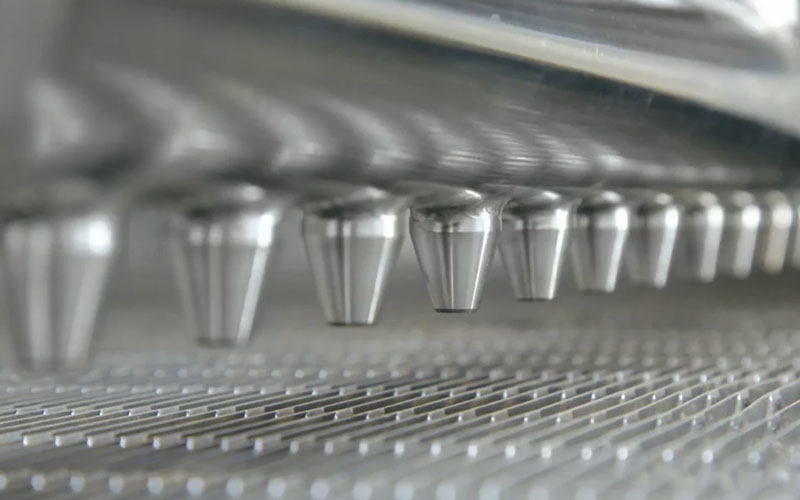
Os componentes principais incluem:
- Correia de malha de aço inoxidável com elos laterais autoportantes
- Sistema de correias transportadoras autoempilháveis
- Zona de congelação compacta com camadas de correias sobrepostas e invólucro isolado
- Sistema de fluxo de ar vertical
O design da correia elimina a necessidade de tiras deslizantes que guiam as correias tradicionais ao longo de calhas de suporte. Sem estas tiras e calhas, o congelador tem menos peças onde se acumulam resíduos e bactérias. O transportador fica quase 100% acessível para limpeza.
A correia espiral autoempilhável transporta os produtos através de vários níveis num espaço vertical compacto. Os produtos entram num nível e saem noutro após percorrerem a espiral. Os níveis empilhados criam canais de ar naturais que direcionam o ar frio através da zona de congelação.
Os fabricantes produzem estes congeladores com larguras de correia que podem ser personalizadas. A capacidade de congelação varia entre 300 kg/h e 5000 kg/h, dependendo do produto e da configuração. O design é adequado para produtos como refeições preparadas, nuggets, hambúrgueres e produtos frescos.
Como é que a correia autoempilhável poupa espaço no chão?
A correia empilha-se nas suas próprias articulações laterais, sem necessidade dos tradicionais trilhos de suporte. Cada secção da correia suporta a camada acima dela através de articulações laterais interligadas que se encaixam à medida que a correia se move num padrão espiral. Este design elimina a necessidade da estrutura de trilhos exigida pelos congeladores em espiral tradicionais.
Principais características que poupam espaço:
- Sem trilhos de suporte da correia nem estruturas de suporte
- Elimina a estrutura tradicional de correia, calha e tambor
- O empilhamento vertical substitui a disposição horizontal
- Correia autoempilhável com acionamento por corrente e movimento de esferas rolantes, dependendo do modelo
O congelador autoempilhável pode proporcionar até 50% mais capacidade de congelação na mesma área ocupada do que um congelador em espiral tradicional. Isto significa que uma fábrica pode congelar mais produto na mesma área útil. O design vertical aproveita a altura do edifício para aumentar o comprimento da correia e o tempo de congelação num espaço compacto.
Os congeladores em túnel requerem frequentemente uma disposição do piso longa e reta para proporcionar aos produtos tempo de congelação suficiente. Em contrapartida, um congelador em espiral com empilhamento automático utiliza um percurso vertical dos produtos. Os produtos deslocam-se através de vários níveis de correias enquanto o ar frio circula pela zona de congelação.
Esta solução de pegada reduzida funciona bem em fábricas com espaço limitado. Os fabricantes de produtos alimentares podem aumentar a capacidade de congelação sem terem de ampliar o edifício. É também útil para projetos de remodelação em que o equipamento antigo tem de ser substituído, mas a disposição do espaço não pode sofrer grandes alterações.
A correia sustenta-se a si própria, à medida que cada nível se empilha sobre o nível inferior. O número de níveis da correia pode ser ajustado com base na altura do teto, no tipo de produto e nas necessidades de congelação.
Quando utilizar um congelador em espiral autoempilhável?
Um congelador em espiral autoempilhável é a escolha certa quando o espaço disponível limita a capacidade de produção. Estes sistemas eliminam os carris e as calhas de deslizamento, o que permite aumentar a capacidade de congelação em até 50% no mesmo espaço ocupado, em comparação com os modelos tradicionais de baixa tensão.
As fábricas com área de construção limitada são as que mais beneficiam. O design de empilhamento vertical aproveita a altura em vez do comprimento, permitindo que os processadores congelem mais produto sem ter de ampliar a área útil do edifício.
Situações em que os designs de empilhamento automático apresentam melhor desempenho:
- Instalações com colunas fixas no edifício ou linhas de serviços públicos
- Projetos de reabilitação em que a disposição existente não pode ser alterada
- Linhas de produção que requerem congelação contínua em vez de processamento por lotes
- Operações que necessitam de capacidade de congelação personalizada, normalmente entre 300 e 5000 kg/h, dependendo do produto e da configuração
- Fábricas que equilibram várias zonas de processamento em espaços reduzidos
As operações sensíveis à higiene também podem beneficiar do design aberto e acessível. Sem tiras deslizantes, há menos superfícies onde se possam acumular resíduos e bactérias. A correia é mais fácil de alcançar para limpeza, o que pode ajudar a reduzir o risco de contaminação durante a higienização.
Os sistemas de empilhamento automático também funcionam bem para produtos que necessitam de um congelamento uniforme. O fluxo de ar frio vertical ajuda a distribuir o ar ao longo do percurso da correia. Quando o carregamento dos produtos e o fluxo de ar são concebidos corretamente, os produtos podem congelar de forma mais uniforme.
Este projeto é adequado para fábricas de média a alta produção que não dispõem de espaço adicional para ampliação. É frequentemente utilizado para aves, marisco, produtos de padaria, frutas, legumes e refeições prontas, quando é necessária uma maior produção, mas a expansão não é possível.
Um congelador em espiral autoempilhável é uma boa opção quando o espaço disponível é limitado, é necessário melhorar o acesso para limpeza ou quando a fábrica necessita de um congelamento constante sem alterar todo o layout de produção.
Quais são as melhores aplicações dos congeladores em espiral autoempilháveis?
Os congeladores em espiral autoempilháveis são adequados para produtos de pequeno a médio porte que necessitam de um congelamento rápido em espaços limitados. São frequentemente utilizados em linhas contínuas de congelamento rápido, onde um layout compacto, um fluxo de ar estável e fácil acesso para limpeza são importantes.
Produtos avícolas e de carne
Nuggets de frango, cubos de frango, almôndegas e hambúrgueres congelam bem em sistemas de empilhamento automático. O design de correia aberta permite que o ar frio atinja todas as superfícies do produto ao mesmo tempo. Isto cria peças congeladas rapidamente e individualmente, que não se aglomeram.
Pedaços de carne mais pequenos, como tiras de fajita ou pedaços de bacon, são adequados porque requerem tempos de permanência curtos. O espaçamento entre as correias na maioria dos congeladores IQF autoempilháveis permite o processamento de produtos com até 50 mm de espessura.
Principais produtos:
- Nuggets e tiras de frango
- Hambúrgueres
- Almôndegas
- Pedaços de carne cortados em cubos ou em fatias
As unidades de processamento utilizam estes sistemas antes do armazenamento a frio para maximizar o rendimento. As linhas com capacidade de 2 000 a 5 000 kg por hora adaptam-se bem às configurações padrão de empilhamento automático.
Alimentos preparados e refeições prontas
Refeições individuais, massas recheadas e pratos principal em porções requerem um manuseamento cuidadoso durante o congelamento IQF. As correias autoempilháveis minimizam os danos nos produtos, uma vez que os artigos não são transferidos entre várias correias transportadoras. As refeições prontas com molhos ou coberturas permanecem intactas ao longo do percurso em espiral.
O tamanho das bandejas, a altura do produto e a largura da correia devem ser verificados antes de selecionar o modelo de congelador. O fluxo contínuo evita as paragens e arranques que podem alterar a disposição dos produtos. As linhas IQF para alimentos preparados ligam-se frequentemente diretamente ao equipamento de embalagem.
Melhores aplicações:
- Portções individuais de pizza
- Massas recheadas (ravioli, tortellini)
- Pratos principais em porções individuais
- Refeições com porções controladas
O espaço reduzido que ocupa é importante para instalações com área útil limitada. Uma unidade autoempilhável pode reduzir a área ocupada em comparação com um sistema de túnel, quando o produto e a carga de refrigeração forem adequados.
Produtos de padaria e massa
O pão pré-cozido, as porções de massa para bolachas e os produtos de pastelaria necessitam de um congelamento controlado para preservar a textura. Os congeladores IQF autoempilháveis impedem que os produtos fiquem colados uns aos outros durante a descida da temperatura. O design da correia permite uma circulação de ar adequada à volta dos pedaços de massa.
Os biscoitos não cozidos, os croissants e as porções de massa moldadas entre 20 e 100 gramas são os que apresentam melhores resultados. O sistema processa produtos pegajosos, uma vez que a correia tem pontos de contacto mínimos. Os produtos podem ser congelados até à temperatura de saída necessária antes do armazenamento a frio ou da embalagem.
Produtos típicos:
- Porções de massa de bolachas
- Pãezinhos e bolos pré-cozidos
- Pedaços de pastelaria
- Produtos de massa moldada
As operações de panificação beneficiam do design higiénico. A estrutura aberta permite uma limpeza rápida entre as mudanças de produto ou entre diferentes tipos de massa.
Marisco e pedaços pequenos
Camarões, vieiras, filetes de peixe e porções de marisco necessitam de um congelamento rápido para manter a qualidade. O congelamento IQF em espirais autoempilháveis cria peças congeladas individualmente que se despejam livremente. Isto é importante para o marisco vendido a peso ou utilizado em processos de transformação posteriores.
Os produtos, desde 5 gramas (camarões pequenos) até 250 gramas (porções de peixe), são congelados de forma eficaz. O espaçamento da correia adapta-se às formas irregulares comuns nos produtos do mar. Os tempos de congelação rápidos, entre 15 e 40 minutos, preservam a estrutura celular e reduzem a perda de humidade.
Aplicações comuns:
- Camarões individuais (todos os tamanhos)
- Vieiras
- Filetes e porções de peixe
- Anéis e pedaços de lula
- Carne de marisco
As empresas de transformação de marisco optam por sistemas de empilhamento automático porque reduzem o espaço necessário junto às áreas de transformação. As linhas IQF podem integrar-se com equipamento de panagem ou revestimento antes da fase de congelação.
Quando não se deve utilizar um congelador em espiral autoempilhável?
Um congelador em espiral autoempilhável nem sempre é a melhor escolha. Se o tamanho do produto, o volume de produção, o orçamento ou a capacidade de refrigeração não corresponderem ao projeto do congelador, outra solução de congelação poderá ser mais prática.
- Produtos muito grandes ou altos: Perus inteiros, peixes de grande porte ou produtos de panificação de altura elevada podem exceder a altura livre da correia transportadora e funcionam melhor num congelador de túnel ou num congelador em espiral de maiores dimensões.
- Produtos que requerem espaçamento alargado: Os artigos que requerem separação especial ou manuseamento com correias planas podem não ser adequados para percursos em espiral compactos.
- Fábricas com área útil suficiente: Se houver espaço linear disponível e o orçamento for limitado, um congelador de túnel poderá ser mais económico.
- Produtos extremamente delicados: Frutos macios, pastelaria fina ou artigos frágeis podem necessitar de um manuseamento mais cuidadoso através de um congelador de correia plana ou de impacto.
- Produção em lotes de baixo volume: Os congeladores em espiral autoempilháveis são mais adequados para a produção contínua, e não para lotes pequenos ou sazonais.
- Capacidade de refrigeração insuficiente: O sistema de refrigeração deve suportar os requisitos de carga de refrigeração concentrada, fluxo de ar e temperatura alvo.
Quais são os fatores-chave a ter em conta antes de escolher um congelador em espiral autoempilhável?
A área útil é o primeiro aspeto a verificar. Os operadores devem medir a área útil disponível, a altura do teto e o espaço para as correias transportadoras de entrada e saída antes de escolherem um congelador em espiral autoempilhável.
A capacidade horária também influencia o tamanho do congelador. As linhas de produção com rendimentos diferentes, tais como 300 a 5000 kg/h, requerem larguras de correia e números de níveis de correia diferentes.
O tamanho dos produtos é outro fator fundamental. Os operadores devem verificar a altura e a largura de produtos como nuggets de frango, pastelaria ou refeições prontas. Isto ajuda a garantir que os produtos não toquem na correia situada acima deles.
A aderência dos produtos também é importante. Os alimentos húmidos ou pegajosos podem necessitar de uma correia de malha especial e de um fluxo de ar mais forte para evitar que os produtos fiquem colados durante o congelamento.
A temperatura final pretendida afeta o tempo de congelação e a carga de refrigeração. Os produtos que necessitam de uma temperatura final mais baixa requerem, normalmente, mais tempo de congelação e maior potência de refrigeração.
As necessidades de limpeza dependem do tipo de produto e das normas de higiene. Os operadores devem verificar o acesso às correias, a drenagem do pavimento e as opções de CIP para reduzir o tempo de limpeza manual e o tempo de inatividade.
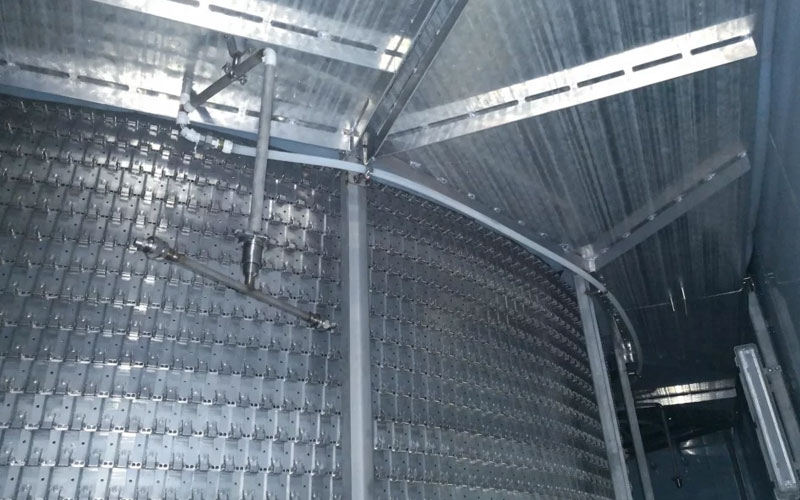
Sistemas de refrigeração deve corresponder à carga térmica do congelador. As opções mais comuns incluem:
- Sistemas de freon para aplicações padrão
- Sistemas de CO₂ para projetos que exijam opções de refrigerantes naturais e desempenho a baixas temperaturas
- Sistemas de amoníaco para operações em grande escala
A escolha do refrigerante afeta o dimensionamento do compressor, o projeto do evaporador e custos operacionais. O método de descongelação deve também ser adaptado ao calendário de produção, às necessidades de higiene e à conceção do sistema de refrigeração.
Perguntas frequentes
Como devo escolher a capacidade de um congelador em espiral autoempilhável?
A capacidade depende do tipo de produto, do rendimento pretendido e do tempo de congelação. Os operadores devem verificar os kg por hora, o tamanho do produto, a temperatura de entrada, a temperatura de saída e a quantidade carregada na correia transportadora. O sistema de refrigeração deve também corresponder à carga térmica, para que o congelador possa atingir a temperatura no centro do produto exigida.
Que produtos podem ser congelados num congelador em espiral com empilhamento automático?
Os congeladores em espiral autoempilháveis podem congelar aves, marisco, alimentos preparados, produtos de padaria e alimentos fritos. São adequados para produtos de pequeno a médio porte que necessitam de congelação contínua. Exemplos comuns incluem nuggets de frango, camarão, porções de peixe, bolinhos e refeições prontas.
Qual é a diferença entre um congelador em espiral autoempilhável e um congelador de túnel?
A principal diferença reside na utilização do espaço. Um congelador em espiral autoempilhável utiliza o empilhamento vertical, pelo que necessita de menos área útil. Um congelador em túnel utiliza um transportador linear, pelo que necessita de mais comprimento de piso. Os congeladores em espiral são mais adequados para instalações com espaço limitado. Os congeladores em túnel podem ser mais adequados quando existe espaço suficiente para uma linha de produção mais longa.