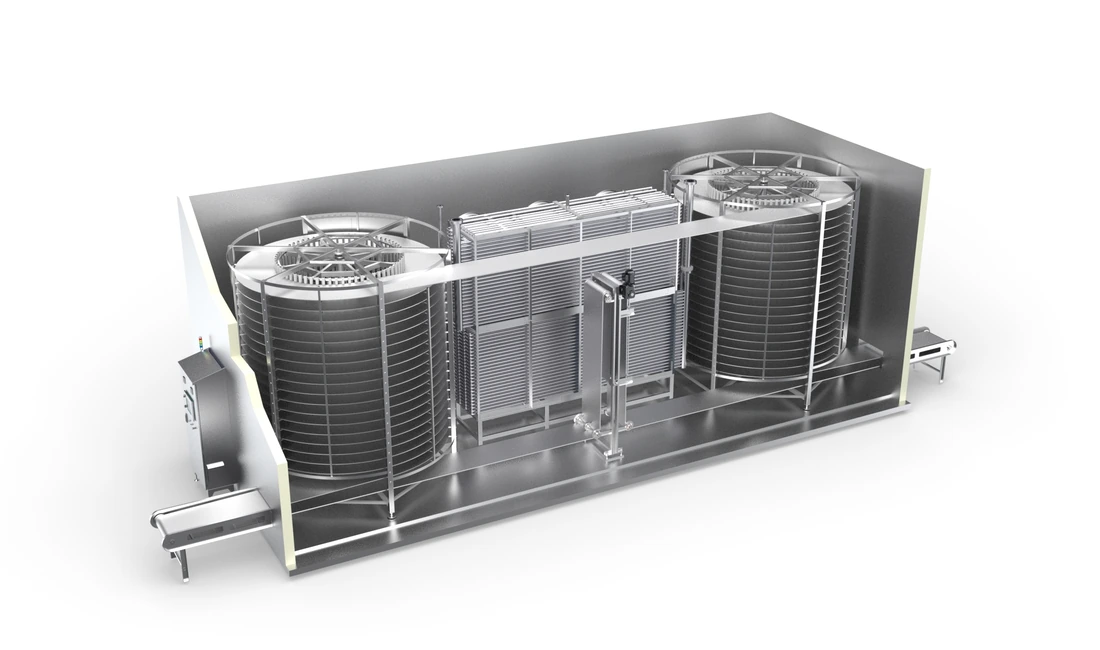
Cleaning a spiral freezer belt is more complex than rinsing a standard food conveyor. The belt follows a long path around the drum, passes through different temperature zones, and contains joints, edges, rods, or hinges where food residue can collect.
Manual cleaning may also take considerable time. Results can vary between operators, especially when parts of the belt are difficult to reach.
A spiral freezer belt washer can make this work more consistent. It cleans the belt while the conveyor moves through a controlled washing cycle. However, not every belt washer has the same cleaning range. Some systems clean only the belt surface, while others include detergent dosing, rinsing, sanitizing, or drying.
Before selecting a system, buyers need to understand what it cleans, what remains outside its scope, and how it will fit the freezer, product, sanitation program, and factory utilities.
What Is a Spiral Freezer Belt Washer?
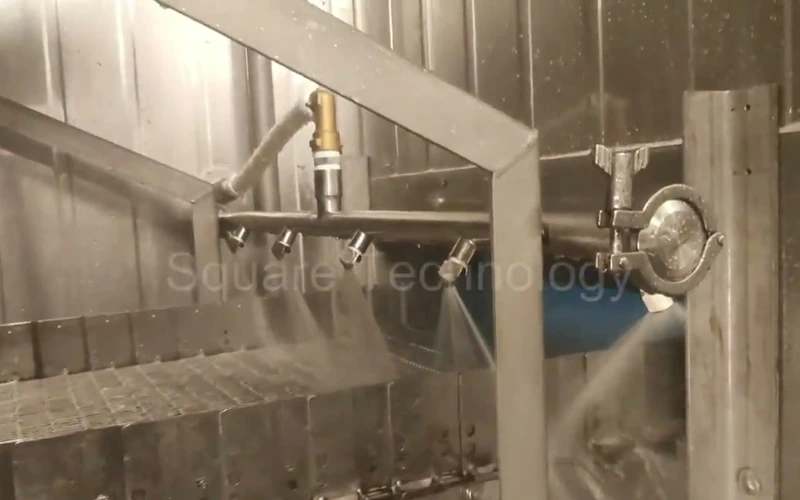
A spiral freezer belt washer is a dedicated system designed to clean the conveyor belt of a spiral freezing line.
It is usually installed at an accessible section of the belt path. During cleaning, the belt moves through the washing area at a controlled speed. Spray nozzles direct water or cleaning solution onto selected belt surfaces.
Depending on the design, a belt washer may provide:
- Pre-rinsing
- Detergent washing
- Final rinsing
- Optional sanitizing
- Optional water removal or air drying
- Automatic recipe and cycle control
A belt washer can be integrated into a new freezer or considered as part of an upgrade project. Its actual cleaning scope depends on the belt design, freezer layout, nozzle arrangement, and selected options.
What Parts of the Belt and Return Path Can It Clean?
A well-designed system may clean several belt areas:
- Product-contact surface
- Belt underside
- Left and right edges
- Cross rods, joints, or hinge areas
- Side links
- Accessible sections of the return path
These areas should be confirmed during the design stage. A spray manifold aimed at the top surface does not automatically clean the underside or belt joints.
Coverage can also be affected by belt pitch, open area, side guards, supports, and the distance between the nozzle and belt. For this reason, buyers should ask for a clear cleaning-zone drawing instead of relying only on the term “belt washer.”
The cleaning boundary is equally important. A belt-focused washer may not clean the drum, rails, supports, enclosure walls, evaporator, or freezer floor. These surfaces may require manual cleaning or a wider CIP system.
What Components Are Usually Included?
The exact configuration varies, but a spiral freezer belt washer commonly includes:
- Spray manifolds and nozzles
- Water supply and pressure control
- Pumps where additional pressure is required
- Filters or strainers
- Splash guards
- Water collection and drainage
- Control valves and piping
- Electrical controls and safety interlocks
Optional components may include:
- Detergent or sanitizer dosing
- Chemical concentration monitoring
- Water heating
- Recirculation and filtration
- Multiple washing zones
- Air knives or blow-off devices
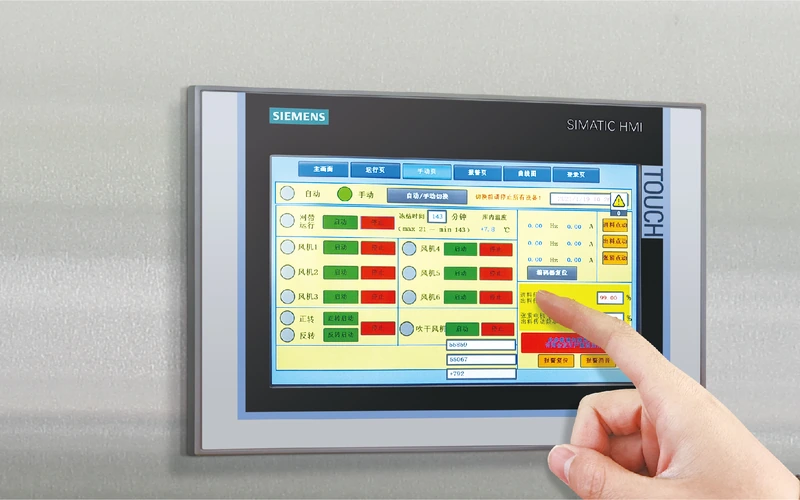
- HMI cleaning recipes
- Flow, pressure, temperature, or tank-level alarms
Not every application needs every option. The system should be selected according to the soil, product risk, belt structure, sanitation target, and available utilities.
How Does a Spiral Freezer Belt Washer Work?
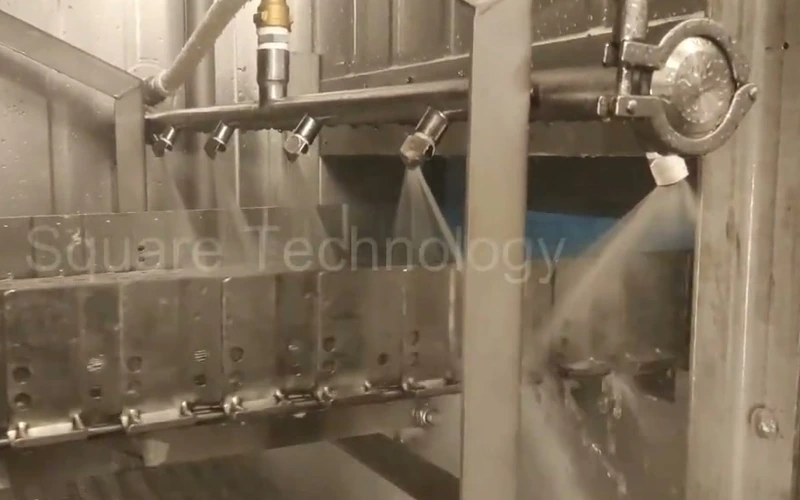
A typical washing cycle moves the entire belt through one or more cleaning zones. The belt may complete several rotations before the cycle is finished.
The process is more effective when cleaning speed, water flow, chemical concentration, spray coverage, and contact time are controlled together.
Belt Circulation and Pre-Cleaning
Production must stop before the cleaning cycle begins. All products and loose packaging materials should be removed from the freezer.
Loose food particles may need to be collected before water is introduced. This is especially important for dry powders, flour, crumbs, and similar soils. Adding water too early can turn these materials into a paste and spread them into belt joints or drains.
The belt then runs at a defined cleaning speed. This speed may be different from the normal production speed. It must give each belt section enough time to pass through the spray zone.
A pre-rinse can remove loose and water-soluble residue. However, water pressure alone does not determine cleaning performance. Nozzle angle, distance, flow rate, spray pattern, belt geometry, and drainage are also important.
Excessive pressure may create aerosols or move soil into difficult areas. The objective is controlled coverage and soil removal, not simply the highest possible pressure.
Washing, Rinsing, and Optional Sanitizing
During the main washing stage, water and an approved detergent are applied to the belt. The detergent must match the type of soil and be compatible with the belt, seals, piping, and other exposed materials.
Por exemplo:
- Protein and fat may require a different cleaning method from sugar or starch.
- Sticky coatings may need more contact time or mechanical spray action.
- Allergen changeovers may require a specifically validated procedure.
- Mineral deposits may need a separate periodic treatment.
After washing, the belt is rinsed to remove loosened soil and chemical residue.
If sanitizing is required, it normally takes place after effective cleaning and rinsing. Sanitizer cannot compensate for food residue that remains on the belt. Concentration, contact time, temperature, and rinsing requirements should follow the plant sanitation program and the chemical supplier’s instructions.
Drainage and Drying Before Production Restarts
Used water, chemicals, and removed soil must leave the washing area efficiently. Poor drainage can allow contaminated water to collect below the belt or move into other freezer areas.
Drain design should account for:
- Peak washing flow
- Food solids
- Fat or oil
- Chemical compatibility
- Effluent temperature
- Local wastewater requirements
After the final rinse, remaining water should be controlled before freezing resumes. Water trapped in hinges, joints, or low points may freeze and interfere with belt movement. It may also create ice on the floor or other freezer surfaces.
Some systems use air knives or blow-off devices to remove water. Other applications rely on drainage time, belt circulation, or a controlled restart procedure. Drying is therefore an application-specific option rather than a standard feature of every belt washer.
Spiral Freezer Belt Washer vs Full CIP: What Is the Difference?
A belt washer and a full clean-in-place system do not always have the same purpose.
| Comparison | Spiral Freezer Belt Washer | Full Spiral Freezer CIP |
| Primary scope | Correia transportadora | Multiple internal freezer zones |
| Typical surfaces | Belt top, underside, edges, joints, and return section, depending on design | Belt, drum, rails, supports, enclosure, floor, and other selected surfaces |
| Cycle complexity | Usually simpler and shorter | Usually involves more zones, steps, and controls |
| Chemical system | Optional | Commonly included |
| Main benefit | Repeatable belt cleaning with less manual work | Broader automated cleaning of the freezer interior |
| Manual cleaning | Still required outside the washer’s coverage | May still be required in shadow areas or for inspection |
| Installation requirement | Focused on belt access, utilities, drainage, and controls | Requires wider nozzle coverage, piping, drainage, controls, and zoning |
| Best suited to | Plants that need regular, controlled belt cleaning | Plants requiring broader and more automated freezer sanitation |
Equipment terminology is not always consistent. One manufacturer may call a system a “belt washer,” while another may call a similar arrangement “belt CIP” or “two-zone CIP.”
The name alone does not define the cleaning result. Buyers should compare the actual surfaces covered, the cleaning stages included, and the parameters controlled.
Plants that require cleaning beyond the conveyor can review the wider design considerations in this guide to CIP for spiral freezers.
What Are the Benefits and Limits of a Spiral Freezer Belt Washer?
A belt washer can improve sanitation efficiency, but its benefits depend on correct design and operation.
Where It Can Reduce Manual Cleaning and Downtime
A suitable system can provide several advantages.
More consistent cleaning
The same belt speed, spray sequence, and cycle time can be repeated for each cleaning program. This reduces variation between operators.
Less manual work
Operators spend less time spraying long sections of moving belt by hand. Manual work can then focus on inspection, difficult areas, and parts outside the automatic cleaning zone.
Improved access and operator safety
Automated cleaning can reduce the need to reach into narrow or elevated areas. Proper guarding, door interlocks, and lockout procedures are still required.
Better use of the sanitation window
Cleaning stages can be programmed and coordinated. This can make production restart more predictable when the complete sanitation process is properly planned.
Controlled use of water and chemicals
Defined spray zones and cleaning recipes may reduce unnecessary consumption compared with uncontrolled manual spraying. However, savings are not automatic. They depend on nozzle selection, cycle settings, soil load, recirculation design, and maintenance.
Useful cleaning records
Where the control system supports it, the plant may record cycle time, belt movement, temperature, pressure, chemical dosing, and alarms. These records support process review, although they do not prove that a surface is microbiologically clean.
What It Cannot Clean Without Manual Work or Full CIP
A belt washer has clear limits.
It may not clean:
- Drum surfaces
- Belt support rails
- Drive components
- Internal frames
- Enclosure walls and ceiling
- Evaporator surfaces
- Freezer floor and drains
- Areas hidden behind guards
- Transfer points outside the spray zone
Heavy or dried residue may also need pre-cleaning, foaming, brushing, or manual removal.
Spray shadowing is another concern. A nozzle can appear correctly positioned while supports, belt overlaps, or side components prevent the spray from reaching the target surface.
Automatic cleaning therefore does not remove the need for:
- Visual inspection
- Manual cleaning of excluded areas
- Hygiene verification
- Nozzle and filter maintenance
- Periodic review of the cleaning program
Automation makes the process more repeatable. It does not transfer sanitation responsibility from the food processor to the machine.
Which Spiral Freezer Belt Washer Fits the Production Process?
The correct system is defined by the product and contamination risk, not only by belt width.
Packed vs Unpacked Products and Different Soil Loads
A spiral freezer handling sealed packages has a different cleaning requirement from one carrying unpacked food directly on the belt.
For packed products, common concerns may include:
- Leaking packages
- Labels and plastic fragments
- Oil or product residue from damaged packs
- Dust and debris around transfer points
- Condensation and standing water
For unpacked products, the belt may have direct contact with meat, seafood, bakery products, prepared foods, or other materials. Soil may include protein, fat, starch, sugar, batter, crumbs, sauces, or allergens.
Each soil behaves differently. A bakery line with dry flour should not automatically use the same pre-cleaning method as a seafood line with wet protein residue.
The buyer should therefore provide the equipment supplier with actual product and soil information. A generic description such as “food residue” is not enough for detailed cleaning design.
Stainless Steel Mesh Belts vs Modular Plastic Belts
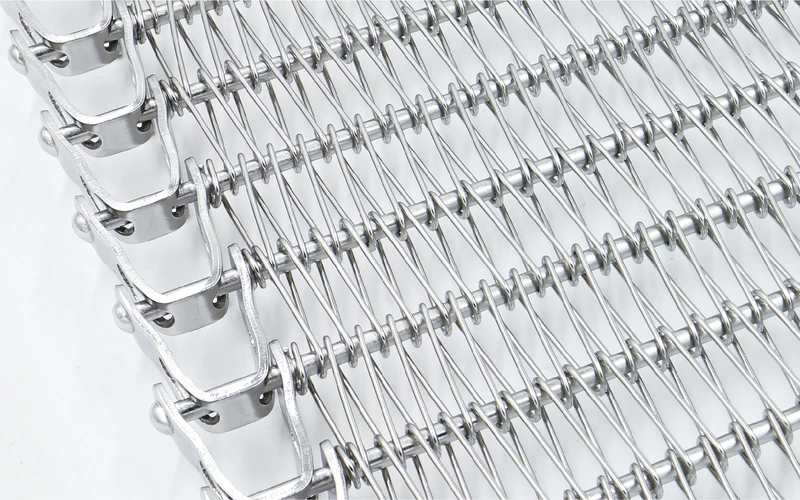
Stainless steel mesh belts often have an open structure that allows spray to pass through. However, side links, cross rods, overlapping wires, and repair joints can still create difficult cleaning points.
Modular plastic belts may contain hinges, rods, cavities, and underside features that require spray from several directions. The belt material may also have specific limits for water temperature, chemicals, and mechanical impact.
Compatibility should be checked for:
- Belt material
- Belt pitch and open area
- Joint and hinge structure
- Edge and side-link design
- Maximum permitted temperature
- Chemical resistance
- Nozzle distance and spray pressure
The system must be designed around the exact belt model. Selecting a washer only from a nominal belt width can lead to incomplete coverage.
Single-Drum vs Double-Drum Spiral Freezers
Both single-drum and double-drum freezers can use belt washing systems, but their layouts create different integration conditions.
The design team should examine:
- Total belt length
- Belt direction
- Return-path location
- Available space near the belt
- Access to the top and underside
- Transfer points
- Required number of belt rotations
- Drain location
- Maintenance clearance
Drum quantity alone does not determine washer capacity. The complete belt route and the available cleaning position are more important.
New Equipment Integration vs Retrofit Installation
A new freezer project provides more freedom to plan nozzle locations, drainage, utility connections, guards, access doors, and control integration.
For example, a new congelador em espiral can be configured around manual cleaning, a belt washer, or a broader CIP concept according to the plant’s sanitation needs.
A retrofit may also be possible, but it requires a detailed site survey. The supplier should verify:
- Available installation space
- Belt path and structure
- Existing guards
- Water, power, chemicals, and compressed air
- Drain capacity
- Freezer enclosure penetrations
- Control-system compatibility
- Safe access for inspection and maintenance
Retrofit feasibility should be confirmed before the plant sets a target installation date or cleaning-cycle time.
What Should Buyers Confirm Before Ordering a Spiral Freezer Belt Washer?
A clear request for quotation helps suppliers recommend comparable solutions. It also reduces the risk of discovering missing functions after installation.
Required Coverage on the Belt Top, Bottom, Edges, Joints, and Return Path
The buyer should request a written cleaning-scope drawing that identifies:
- Surfaces directly sprayed
- Surfaces reached indirectly
- Number and position of washing zones
- Belt areas outside the system
- Manual cleaning points
- Direction of water and soil movement
- Location of collection trays and drains
Special attention should be given to belt edges, joints, repairs, side links, and transfer sections. These areas are often more difficult to clean than the flat center of the belt.
Acceptance criteria should also be discussed. “Automatic belt cleaning” is not a measurable result. The supplier and processor need agreed conditions for coverage, cycle operation, and hygiene verification.
Belt Width, Speed, Length, and Available Installation Space
The supplier normally needs the following belt data:
- Manufacturer and model
- Material
- Usable and total width
- Pitch and open area
- Edge design
- Total length
- Production speed
- Proposed cleaning speed
- Direction of travel
The total belt length affects the time needed for one complete rotation. The cleaning speed and required number of rotations then influence the full cycle time.
Installation drawings should show the available envelope, nearby structures, drain position, access doors, and maintenance clearance.
Water, Pressure, Temperature, Chemicals, and Drainage
Utility requirements should be stated at the actual point of use, not only at the factory’s main supply.
Important information includes:
- Available water flow
- Dynamic water pressure
- Hot-water availability
- Water quality and hardness
- Electrical supply
- Approved cleaning chemicals
- Compressed-air availability
- Drain flow capacity
- Wastewater restrictions
A recirculation system may reduce fresh-water demand, but it adds tanks, filters, pumps, and cleaning requirements. It can also increase the risk of soil being returned to the belt if filtration and water management are inadequate.
The decision between single-pass and recirculated water should therefore consider hygiene, soil load, resource use, and maintenance together.
HMI Recipes, Interlocks, Alarms, and Cleaning Records
Modern cleaning systems increasingly focus on controlled and traceable operation.
Useful control functions may include:
- Product-specific cleaning recipes
- Adjustable belt speed
- Automatic stage sequencing
- Door and guard interlocks
- Low-flow or low-pressure alarms
- Chemical dosing alarms
- Tank-level monitoring
- Temperature monitoring
- Cycle-completion records
- Operator access levels
The records should match the parameters the system can actually measure. A completed timer confirms that a program ran, but it does not confirm correct chemical concentration or surface cleanliness unless those factors were separately measured and verified.
Access for Nozzle Inspection, Maintenance, and Spare Parts
A washer that is difficult to inspect will gradually lose performance.
Buyers should check whether operators can safely:
- View spray patterns
- Remove and clean nozzles
- Access filters and strainers
- Inspect pumps and seals
- Calibrate dosing units
- Clean collection trays
- Open and inspect drains
- Reach optional air knives
- Replace common wear parts
The supplier should also identify recommended spare nozzles, seals, filters, sensors, and dosing components. Safe isolation and lockout procedures must be considered during the layout review.
How Should a Spiral Freezer Belt Washer Be Verified and Maintained?
Commissioning should confirm more than whether water comes from the nozzles.
Checking Spray Coverage and Chemical Delivery During Commissioning
Factory testing can confirm mechanical operation and control sequences. Final site testing should then use the plant’s real water supply, drainage, chemicals, and belt.
Commissioning checks may include:
- Nozzle spray pattern and direction
- Coverage of belt edges and underside
- Flow and pressure at the washer
- Velocidade da correia
- Time for a full belt rotation
- Detergent concentration
- Water temperature where relevant
- Chemical contact time
- Rinse performance
- Drainage under peak flow
- Alarm and interlock operation
- Water remaining after the final stage
A visible or fluorescent test material may help identify missed or shadowed areas. Hygiene performance should then be checked under realistic production conditions, including a challenging product or soil load.
The plant should define acceptance criteria before site testing begins.
Routine Visual, ATP, and Risk-Based Microbiological Checks
Different verification methods answer different questions.
Visual inspection identifies visible food residue, foam, scale, standing water, ice, or physical damage.
ATP testing provides a rapid indication of remaining organic material. It can support routine cleaning checks, but it is not a direct test for a specific pathogen.
Microbiological sampling assesses selected organisms or hygiene indicators. Sampling points and frequency should be based on the plant’s hazard analysis and sanitation program.
Useful inspection locations may include:
- Belt underside
- Edges and side links
- Hinge or joint areas
- Return section
- Area immediately after the washer
- Transfer points
- Locations previously found difficult to clean
Verification should be repeated after major maintenance, belt repair, nozzle changes, chemical changes, or adjustments to the cleaning recipe.
Maintaining Nozzles, Filters, Pumps, Dosing Units, Drains, and Dryers
Nozzles can clog, wear, loosen, or move out of position. Filters may restrict flow, while pump wear can reduce pressure. Chemical dosing equipment may also drift from its original setting.
Routine maintenance should cover:
- Nozzle condition, alignment, and blockage
- Filter and strainer cleanliness
- Pump pressure and seal condition
- Valve operation
- Chemical line condition
- Dosing calibration
- Sensor function
- Drain and collection-tray cleanliness
- Air-knife alignment where fitted
- Guard and interlock operation
Plants should monitor trends rather than waiting for complete failure. A sudden change in pressure, water use, chemical consumption, or cleaning result may indicate a developing problem.
Maintenance frequency should be based on operating hours, water quality, soil load, and inspection results.
Frequently Asked Questions About Spiral Freezer Belt Washers
Does a belt washer replace full CIP?
Not usually. A belt washer focuses on selected belt surfaces. Full CIP can include the drum, supports, enclosure, floor, and other internal areas. The exact difference depends on the system’s defined cleaning zones.
Can the same washer clean both metal and plastic belts?
A washer can be designed for either belt type, but the configuration may not be identical. Nozzle positions, spray pressure, water temperature, and chemicals must match the belt structure and material limits.
Can a belt washer be added to an existing spiral freezer?
In many cases, an upgrade can be considered. Feasibility depends on space, belt access, drainage, utilities, guards, structural support, and control integration. A site survey is normally required.
How often should a spiral freezer belt be washed?
There is no universal frequency. The schedule should reflect the product, direct or indirect food contact, soil load, allergens, operating time, microbiological risk, plant SSOP, and local requirements.
Does a belt washer always reduce water consumption?
No. It can reduce uncontrolled manual spraying when correctly designed and programmed, but actual consumption depends on flow rate, cycle duration, nozzle condition, recirculation, and operating discipline.
What information should be sent to the manufacturer?
The supplier should receive product and soil information, belt specifications, freezer drawings, current cleaning method, available utilities, drainage data, target cleaning time, chemical restrictions, and hygiene acceptance criteria.
Conclusion: Define the Cleaning Scope Before Comparing Systems
A spiral freezer belt washer should be selected by cleaning scope rather than equipment name.
The decision starts with the product, soil, belt structure, and surfaces that need to be cleaned. Buyers can then compare spray coverage, washing stages, utilities, controls, drainage, access, and verification methods.
A properly matched system can reduce manual work and make belt cleaning more repeatable. It cannot replace good hygienic design, inspection, maintenance, or cleaning of areas outside its coverage.
Square Technology offers spiral freezer cleaning configurations ranging from manual cleaning and belt washing to broader CIP solutions. For a new project or proposed upgrade, the engineering team can review the belt type, freezer layout, product exposure, utilities, and sanitation targets before recommending a suitable cleaning concept.
Contacto Square Technology to discuss the required belt coverage, cleaning process, and integration conditions for a spiral freezing line.