
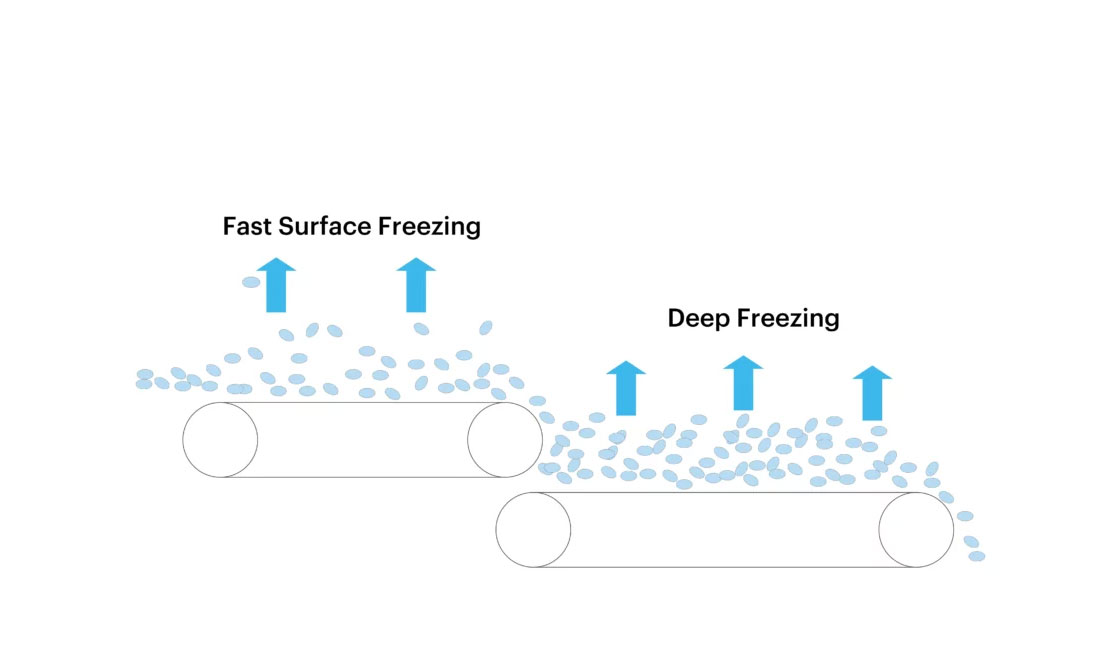
Rapid freezing helps food keep its texture because it forms small ice crystals quickly. These small crystals cause less damage to food cells. As a result, the food loses less water and holds its shape better after freezing and thawing.
Fast freezing also helps food keep its weight, moisture, and structure during storage. Slow freezing gives ice crystals more time to grow. Large crystals can break cell walls, which can make food dry, soft, or mushy after thawing.
Based on basic food science and cold chain practices, this guide explains how freezing speed affects ice crystals, drip loss, water retention, and freezer burn. It also explains which foods lose moisture easily and what freezing conditions help protect texture.
What Is Moisture Loss in Frozen Food?
Moisture loss in frozen food happens in two main ways. The first is sublimation. This happens when surface ice turns straight into vapor during freezing or storage. It can cause freezer burn. The second is drip loss. This happens when damaged food cells release water during thawing. The leaked water can make food lose weight, texture, and quality.
When food freezes, water inside forms ice crystals. The size of these crystals determines how much damage occurs to the food’s structure.
Large ice crystals form during slow freezing. They puncture cell walls and create channels for moisture to escape. When the food thaws, this results in drip loss—the liquid that pools on the plate or in the package.
Small ice crystals form during fast freezing. They cause less damage to cell structure and trap moisture inside the food more effectively.
How Moisture Loss Damages Food
The effects of moisture loss appear in several ways:
- Texture degradation: Food becomes dry, tough, or mushy
- Drip loss: Up to 8% of weight can be lost during thawing in slow-frozen meat
- Nutrient loss: Water-soluble vitamins escape with the liquid
- Oxidation: Exposed surfaces dry out and develop freezer burn
- Food quality decline: Flavor becomes weaker and less appealing
Moisture migration continues during frozen storage. Ice crystals grow larger over time through recrystallization. Water molecules move from smaller crystals to larger ones, which further damages cell structure.
Water activity affects how quickly these changes occur. Foods with higher water content experience more severe moisture loss. The rate of sublimation increases when storage temperatures fluctuate or packaging allows air exposure.
Flash freezing prevents most of these problems by creating crystals under 50 microns, allowing industrial IQF systems to keep in-process moisture loss below 1% of the product’s original weight.
How Does Fast Freezing Prevent Moisture Loss?
Fast freezing prevents moisture loss by forming small ice crystals quickly, which reduces cell damage and limits water migration to the food’s surface. The freezing rate determines ice crystal size, surface dehydration, and overall moisture retention.
What Is the “Maximum Ice Crystal Formation Zone”?
The maximum ice crystal formation zone spans from 32°F to 23°F (0°C to -5°C). Most water in food freezes within this temperature range. Food that remains in this zone for extended periods develops large ice crystals.
Large ice crystals puncture cell walls and membranes. When these damaged cells thaw, they release their internal moisture as drip loss. Conventional freezing moves food through this zone slowly, taking several hours. This extended exposure allows water molecules time to gather and form large, six-sided ice crystals.
Fast freezing methods like flash freezing and individual quick frozen (IQF) technology minimize time in this critical zone. The rapid temperature drop stops water molecules from organizing into large formations.
Why Must Fast Freezing Cross It in Under 30 Minutes?
Crossing the maximum ice crystal formation zone in under 30 minutes produces ice crystals too small to rupture cell structures. The 30-minute threshold prevents large crystal development that causes moisture loss. Fast freezing at 0°F (-18°C) or below accelerates this process.
Water molecules need time to arrange into crystalline structures. Rapid freezing interrupts this arrangement before large crystals form. Frozen berries and frozen fruits processed through IQF systems complete this transition in 10 to 20 minutes.
Slow conventional freezing takes 3 to 72 hours to reach final storage temperature. This extended period allows ice crystals to grow through a process called recrystallization. Smaller crystals merge into larger ones, which increases cell damage and drip loss during thawing. Fast freezing eliminates this growth phase by stabilizing the product quickly.
How Does Fast Freezing Stop Surface Dehydration and Freezer Burn?
Fast freezing locks moisture inside food cells before it can migrate to the surface. Surface dehydration happens when food freezes slowly and water moves toward the surface. Some surface ice can turn directly into vapor instead of melting first. This vapor leaves the food and may freeze again on the package or freezer wall. As the food loses surface moisture, the outside becomes dry, pale, tough, or freezer-burned.
Freezer burn causes texture loss, color fading, and flavor degradation. The damaged surface areas turn dry and discolored. Fast freezing rates prevent this migration by solidifying the entire product uniformly. The quick temperature drop creates a barrier that traps moisture in its original location.
Key differences between fast and slow freezing:
| Фактор | Fast Freezing | Conventional Freezing |
| Время замораживания | 10-30 minutes | 3-72 hours |
| Ice crystal size | 20-65 micrometers | up to 170 micrometers |
| Moisture loss | Below 1% (industrial IQF) | 5-10% |
| Freezer burn risk | Low | High |
Which Operating Parameters Determine Moisture Retention During Fast Freezing?
Temperature, air velocity, and contact method determine how effectively fast freezing preserves moisture. The freezer must maintain tunnel temperatures at or below −35 °C (−31 °F) for industrial fast freezing, with cryogenic systems going significantly lower . Lower temperatures increase the freezing rate and reduce ice crystal size.
Air velocity in blast freezers directly affects heat transfer speed. Systems operating at 3 to 6 meters per second remove heat efficiently while maintaining saturated airflow that protects against surface dehydration. Excessive air velocity above this range accelerates moisture loss instead of preventing it. This rapid heat removal accelerates the freezing process across the food’s entire surface.
Industrial fast freezing systems work in different ways. Fluidized bed IQF freezers are often used for small, similar-sized foods, such as berries, peas, and diced vegetables. These foods can often freeze in under 10 minutes.
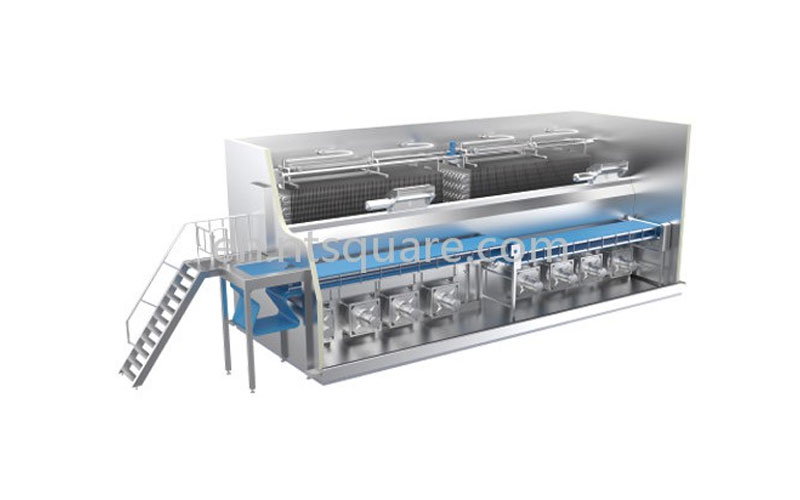
Spiral IQF freezers и tunnel IQF freezers can handle larger products. They are used for foods that weigh from about 10 g to 5 kg. Freezing time may range from 15 minutes to 3 hours, depending on the product.
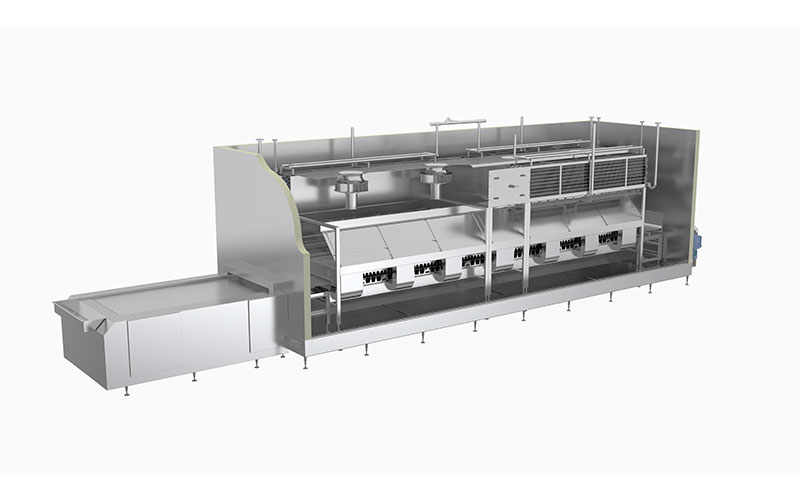
Product thickness also matters. Foods under 50 mm thick usually freeze more evenly. This helps prevent uneven moisture movement inside the food, which can lead to drip loss after thawing.
Why Does Slow Freezing Cause So Much Moisture Loss?
Slow freezing causes moisture loss because it forms large ice crystals. These crystals can break cell walls inside the food. When the food thaws, the damaged cells cannot hold the water, so the liquid leaks out as drip loss.
How Much Moisture Loss Does Fast Freezing Prevent Compared to Slow Freezing?
Fast freezing can reduce moisture loss by about 80–90% compared with slow freezing methods. Rapid methods, such as blast freezing and IQF freezing, form much smaller ice crystals. These crystals may measure about 20–65 micrometers wide.
Mechanical IQF systems freeze food quickly by using very cold air, fast airflow, and large cooling surfaces. Some systems can bring the product core below −18°C in 3–15 minutes. This fast process helps form small crystals that cause less damage to food cells.
Commercial systems, such as spiral freezers, tunnel freezers, and fluidized bed IQF freezers, often use air temperatures of −35°C or lower. IQF systems also help keep food pieces separate, so they do not freeze into one large block.
Foods frozen with industrial blast freezers or IQF systems often have less drip loss after thawing than foods frozen in home freezers. Home freezers usually operate at about 0°F, or −18°C, and freeze food more slowly.
FAQs
Why does rapid freezing preserve a food’s texture better than slow freezing?
Rapid freezing preserves texture better because it forms smaller ice crystals that cause less cell damage. These small crystals help maintain the food’s structure and reduce moisture loss after thawing. Slow freezing creates larger crystals that rupture cells, leading to mushy or dry textures.
How do ice crystal size and formation rate affect water retention in frozen foods?
Smaller ice crystals help frozen foods retain more water after thawing. Fast freezing limits crystal growth, so cell walls stay more intact. Slow freezing gives crystals more time to enlarge, which damages cells and allows liquid to leak out.
What temperatures and conditions are typically used for quick freezing?
Quick freezing typically uses temperatures of −18 °C (0 °F) or lower in home freezers, while industrial fast freezing systems operate at −35 °C (−31 °F) or below. Good air circulation and spacing between packages also help food freeze faster.
How does slow freezing cause drip loss when food is thawed?
Slow freezing causes drip loss by forming large ice crystals that damage cell membranes. When the food thaws, damaged cells cannot hold their liquid. The released moisture collects as drip, reducing juiciness and texture quality.
Which foods are most prone to moisture loss during freezing and thawing?
High-water foods are most prone to moisture loss during freezing and thawing. Fruits, vegetables, fish, and lean meats can lose liquid easily when cells are damaged. Berries and leafy vegetables are especially vulnerable because their cell walls are delicate.