
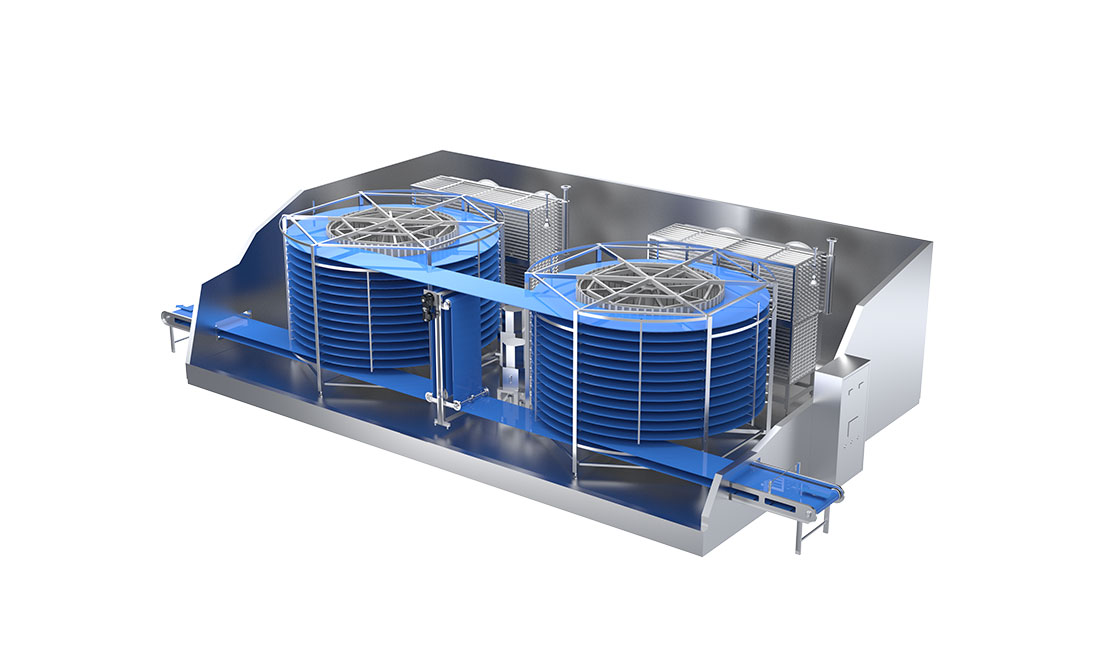
Advanced cold storage solutions for large-scale grocery distribution help keep frozen, chilled, and ambient goods in the right temperature zones. This helps reduce food spoilage, energy waste, and food safety risks.
This guide is based on experience with industrial refrigeration, freezing equipment, insulated panels, and turnkey cold storage projects. It explains how grocery distribution centers can choose systems for large daily volumes.
The guide covers temperature zones, PIR insulated panels, ammonia and CO₂ refrigeration, airflow, spiral freezers, tunnel freezers, plate freezers, loading docks, and energy-saving methods. It also explains how distributors can compare equipment partners by production ability, certifications, installation support, and after-sales service.
Why Does Grocery Distribution Require Multi-Temperature Cold Storage?
Grocery distribution moves products with different temperature needs through the same facility. A single warehouse serves frozen seafood at −25 °C, fresh dairy at 2 °C, and dry-chill items at 12 °C — all at the same time. Mixing these zones or allowing temperature overlap causes spoilage, quality loss, and regulatory violations.
Each temperature zone needs its own refrigeration circuit, insulation boundary, and monitoring system. Cross-contamination between zones — warm air leaking into a frozen area, for example — forces compressors to run harder and shortens product shelf life.
The following table shows the standard temperature zones used in grocery distribution cold storage:
| Temperature Zone | Range | Produtos | Primary Risk |
| Deep frozen | −25 °C to −18 °C | Seafood, meat, ice cream, frozen vegetables | Dehydration, ice crystal damage |
| Tempering / Thawing zone | −5 °C to −1 °C | Products undergoing controlled thawing before processing | |
| Chilled | 0 °C to 4 °C | Dairy, deli meats, salads, beverages | Bacterial growth |
| Dry-chill | 10 °C to 15 °C | Chocolate, certain fruits | Condensation |
Full-range grocery distribution facilities require at least three of these zones. Each zone must comply with HACCP and FSMA standards independently.
How Does Temperature Zone Separation Affect Facility Layout and Equipment Selection?
Zone separation directly affects equipment choice. The walls between zones often use PIR insulated sandwich panels. These panels help stop heat from leaking through joints into colder areas.
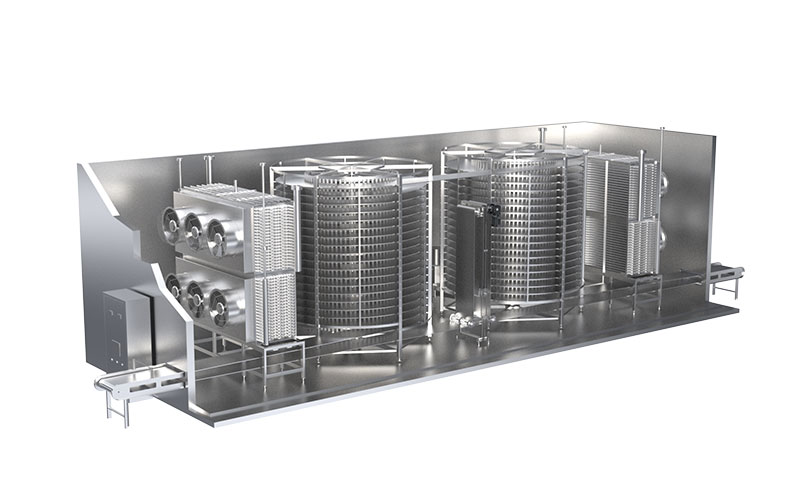
A facility with three or more temperature zones can benefit from a centralized rack refrigeration system with multiple suction groups. This setup can run more efficiently at partial load than using separate condensing units for each zone.
What Insulation and Refrigeration Technologies Do Grocery-Scale Facilities Need?
Two technologies form the foundation: insulated panels that create the thermal envelope, and industrial refrigeration systems that maintain stable temperatures under continuous load. These two components determine energy cost, temperature stability, and equipment lifespan.
How Do PIR Panels Reduce Energy Loss?
PIR panels have a thermal conductivity of approximately 0.022 W/m·K. This is 30–40% lower than traditional EPS alternatives. Lower conductivity means less heat penetration and reduced compressor runtime.
Panel performance depends on four factors:
- Espessura: 150 mm for chilled zones, 200 mm for frozen zones.
- Joint design: Tongue-and-groove or cam-lock joints eliminate thermal bridges at panel connections.
- Metal facing: Corrosion-resistant steel for high-humidity environments.
- Fire rating: Must meet local building code requirements.
Panel quality also affects dock door performance. Sectional sliding doors made with the same PIR panel system as the warehouse walls can help keep thermal protection consistent. This is especially important at the loading dock, where warm air often enters and temperature problems happen most often.
What Refrigeration Architecture Fits High-Throughput Distribution Centers?
Three system types dominate grocery-scale cold storage. Each balances efficiency, safety, and regulatory compliance differently:
- Ammonia (NH₃) centralized systems deliver the lowest operating cost per ton of refrigeration. They require specialized safety infrastructure and trained technicians.
- CO₂ cascade systems pair a low-charge ammonia high stage with CO₂ on the low stage. This reduces total ammonia volume — a requirement in facilities near populated areas.
- Synthetic refrigerant (HFC/HFO) systems cost less to install and need less specialized labor. They face increasing regulatory restriction as global phase-down rules tighten.
Grocery distributors planning a new facility or retrofit should first understand the difference between industrial and commercial refrigeration systems. Industrial systems are built for continuous, heavy-load operation. Compared with commercial-grade units, they usually offer different levels of performance, durability, and manufacturer support.
How Does Airflow Design Affect Freezing Performance?
Poor airflow creates warm spots. Products freeze unevenly or partially defrost during storage. Both outcomes cause quality loss and safety risk.
Effective airflow design follows three principles. Cold air must pass across the full product load — not just over pallet tops. Air velocity must extract heat without excessive fan energy consumption. Evaporator placement must eliminate recirculation dead zones.
Advanced cold storage projects use computational fluid dynamics (CFD) modeling to validate air distribution before construction. In freezing equipment, this principle goes further.Congeladores em espiral use dual horizontal airflow systems that direct cold air across every surface of each product piece. This 360-degree exposure reduces dehydration and delivers consistent core temperatures.
Which Freezing Equipment Serves Grocery Distribution Best?
Three freezing technologies handle most grocery distribution processing:
- spiral freezers for continuous IQF production
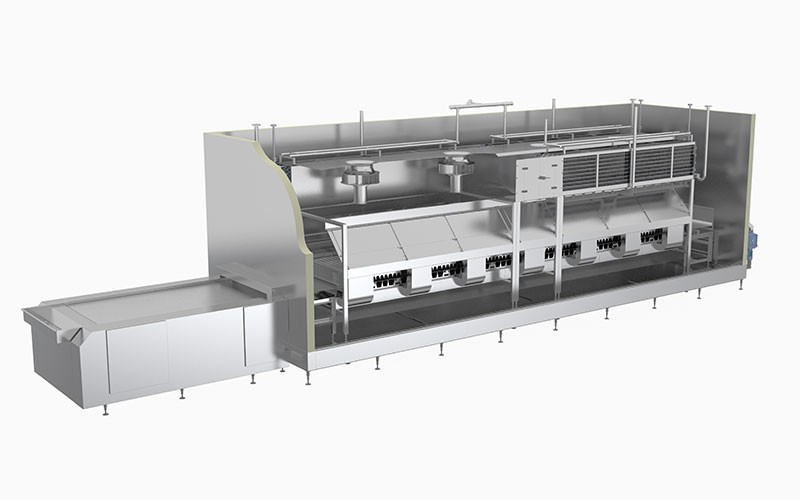
- tunnel freezers for rapid mixed-product throughput
- plate freezers for block-freezing bulk protein
The right choice depends on product type, production volume, and floor space.
When Are Spiral Freezers Better Than Tunnel Freezers?
Spiral freezers suit continuous, high-volume, multi-product operations. Tunnel freezers suit shorter runs of uniform products.
The following comparison covers the key decision factors:
| Attribute | Congelador em espiral | Congelador de túnel |
| Pegada | Compact vertical design, multi-tier | Linear layout, longer floor space |
| Capacity | 300–10,000 kg/hr | 300–5,000 kg/hr |
| Ideal products | Bakery, prepared meals, poultry, seafood | Vegetables, small items, flat products |
| Operation mode | Continuous | Batch or semi-continuous |
| Key strength | Space efficiency, 360° airflow | Simpler belt, easier cleaning access |
Grocery distribution centers processing multiple product types across extended shifts typically choose spiral freezers. Their vertical design uses less floor space per kilogram of throughput than linear alternatives.
How Does IQF Preserve Product Quality for Retail Packaging?
IQF freezes each piece of food independently and rapidly. This produces small ice crystals that cause minimal cell wall damage. Products retain original texture, moisture, and appearance after thawing.
Slow or bulk freezing produces large ice crystals. These rupture cell walls. The result is mushy texture and significant drip loss — unacceptable for retail-grade frozen products.
IQF capability supports retail packaging directly. Products exit the IQF line individually frozen and free-flowing. They can be portioned, weighed, and packed into consumer bags without a separation step. This eliminates one handling stage and reduces labor cost.
Typical IQF applications in grocery distribution include individually frozen shrimp, berry and fruit blends, diced vegetable mixes, and small poultry portions such as wings and tenders.
What Do Plate Freezers Handle That Other Freezers Cannot?
Plate freezers block-freeze products packed in cartons or molds. Refrigerated metal plates press against the package and transfer heat through direct contact. This achieves higher heat transfer rates than air-blast methods.
Plate freezers are the standard choice for fish blocks, shrimp bricks, surimi, bulk meat in cartons, and juice blocks. They excel when products are pre-packaged before freezing, when uniform block dimensions are needed for palletized storage, and when processing volumes require maximum daily capacity.
How Should a Grocery Cold Storage Facility Be Designed?
Facility design determines whether equipment performs to specification. Layout, dock configuration, and energy strategy must work together. A poorly designed facility consumes significantly more energy than an optimized one — even with identical equipment.
How Is Cold Storage Capacity Calculated for Grocery Distribution?
Capacity planning requires four inputs beyond raw square footage:
- SKU category mix: The ratio of frozen, chilled, and ambient storage determines zone sizing.
- Inventory turnover rate: Fast-moving products like dairy need less storage volume per unit of sales than slow-moving frozen items.
- Seasonal peak demand: Holiday and summer periods require buffer capacity above baseline.
- Delivery cadence: Daily store deliveries need more staging area than weekly bulk shipments.
Undersizing any zone creates bottlenecks. Oversizing wastes capital and energy. Accurate modeling of these four variables prevents both problems.
What Dock Systems Prevent Temperature Loss During Loading?
The loading dock is the highest-risk point in any cold storage facility. Each door opening introduces warm ambient air. This raises zone temperature, creates condensation, and increases compressor load.
Effective dock protection uses four layers:
- Insulated sectional sliding doors that seal completely when closed.
- Dock shelters or seals that form a tight fit around the trailer body.
- High-speed rapid-roll doors at internal zone transitions.
- Air curtains as secondary barriers during active loading.
What Strategies Reduce Energy Costs in Grocery Cold Storage?
Energy is the biggest operating cost after labor. Four methods can help reduce energy use: Variable frequency drives, or VFDs, can be used on evaporator fan motors. They adjust airflow based on actual cooling demand instead of running at full speed all the time.
LED lighting can be used in all cold zones to lower power use. Waste heat from the compressor can be reused for office heating or hot water. A solar-ready roof can help support future solar power and reduce daytime electricity costs.
High-performance insulated panels also help. In frozen zones, increasing panel thickness from 150 mm to 200 mm can reduce heat gain. This lowers the cooling load and helps cut compressor energy use.
What Should Grocery Distributors Look for in a Cold Storage Equipment Partner?
The strongest equipment partners manufacture panels, evaporators, conveyors, and pressure vessels in-house. This vertical integration provides single-source accountability. When one manufacturer produces every component, the system is engineered to work together from the outset. Coordination problems between separate suppliers are eliminated.
A complete turnkey project should cover the full process. This includes site assessment, feasibility study, facility layout, process flow design, equipment manufacturing, installation, commissioning, operator training, and ongoing technical support with spare parts.
Grocery distributors should also check three key points. The supplier should have installation experience in different climate zones, international certifications such as ASME, CE, and ISO, and experience working with large food processors.
FAQs
What is the ideal temperature for a grocery cold storage warehouse?
There is no single ideal temperature for a grocery cold storage warehouse. Frozen zones usually run from −25 °C to −18 °C. Chilled zones usually run from 0 °C to 4 °C. A grocery distribution center needs separate zones for different product types. Each zone should have its own refrigeration and temperature monitoring system.
What is the difference between blast freezing and IQF?
Blast freezing uses high-velocity cold air to freeze products in bulk or in cartons. IQF freezes each piece individually on a moving conveyor belt. IQF produces free-flowing, individually separated pieces suitable for retail bags. Blast freezing produces solid blocks or batches.
How much floor space does a spiral freezer require?
Floor space varies by capacity and belt configuration. Spiral freezers use a vertical multi-tier layout that requires less floor area per kilogram of throughput than linear tunnel freezers of equivalent capacity. Contact the manufacturer for project-specific dimensions. Exact dimensions vary by manufacturer and belt configuration.
What insulation thickness is recommended for frozen storage panels?
Frozen storage zones (−25 °C to −18 °C) require 200 mm PIR panels. Chilled zones (0 °C to 4 °C) require 150 mm PIR panels. Thinner panels in frozen zones result in excessive heat gain, higher energy costs, and condensation risk at panel surfaces.
How do you prevent temperature abuse at cold storage loading docks?
Four measures work together: insulated sectional doors, dock shelters or seals around trailers, high-speed internal doors at zone transitions, and air curtains during active loading. Dock operations should also follow timed door-opening protocols to minimize warm air intrusion.