
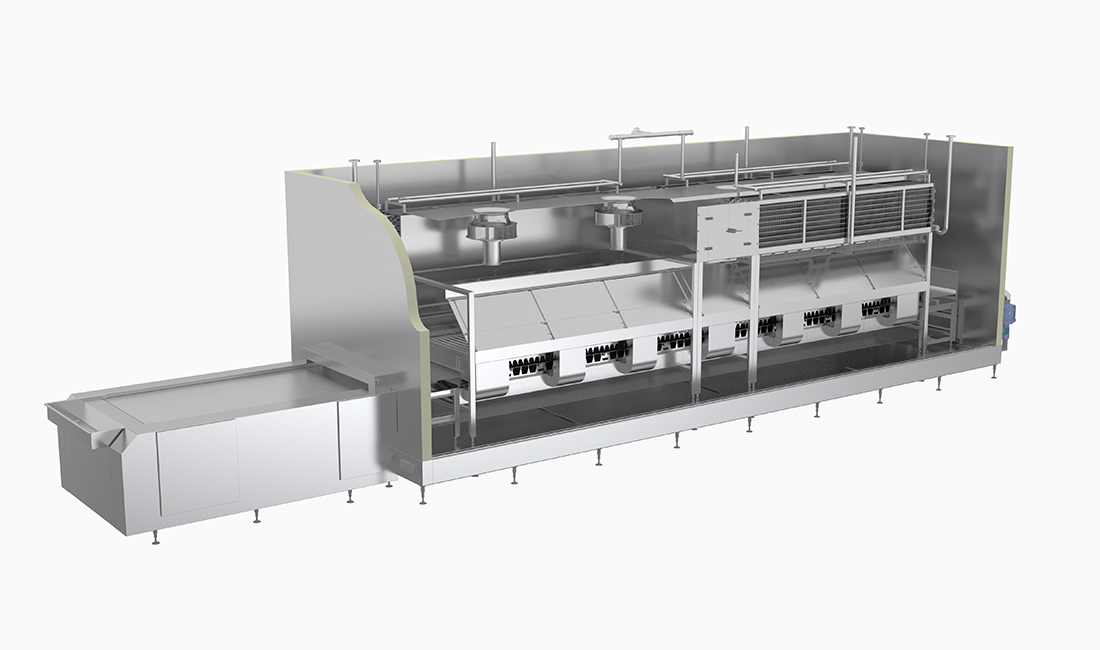
IQF tunnel freezers operate at temperatures between −30 °C and −40 °C to freeze individual food pieces quickly while preserving texture, color, and nutritional value. This temperature range allows the IQF process (congelação rápida individual) to create small ice crystals that prevent cell damage in products like shrimp, berries, vegetables, and seafood.
This guide explains what temperature an IQF freezer should run, why the standard range exists, how different temperature measurements work together, and which settings suit specific IQF products. Readers will learn to match freezer settings to their production needs based on established freezing principles and equipment capabilities.
What Is an IQF Tunnel Freezer?
An IQF tunnel freezer is an industrial machine that freezes individual food pieces separately at freezing temperatures of −30°C to −40°C. The equipment uses high-speed cold air blown through a conveyor belt system to freeze products in typically 3 to 12 minutes for small items, longer for dense products like meat
The tunnel works by moving food items through a chamber on a perforated or mesh belt. Cold air flows upward or across the product at high velocity, extracting heat rapidly. This ultra-fast freezing reduces the product temperature from ambient or pre-cooling levels down to a core temperature of −18°C or below.
Tunnel freezers move product in a straight line through the chamber. The two common tunnel designs are the straight belt (mesh-belt) tunnel, where product passes through on one or more conveyor passes, and the impingement tunnel, which drives high-velocity air at both faces for ultra-fast surface freezing. Spiral and fluidized-bed freezers are separate IQF freezer types, not tunnel designs.
What Is the Optimal Temperature for an IQF Tunnel Freezer?
The optimal temperature for an IQF tunnel freezer ranges from -30°C to -40°C. Most food products freeze effectively at -30°C to -35°C, while delicate items like berries require -35°C to -40°C.
The freezing temperature directly affects product quality by controlling ice crystal formation. Products must pass through the ice crystal formation zone (-1°C to -5°C) as fast as possible. Slow freezing creates large ice crystals that damage cell structure and increase drip loss after thawing.
Freezing temperatures vary by product type:
- Seafood (Shrimp & Fish): −30 °C to −35 °C
- Berries and Soft Fruits: −35 °C to −40 °C
- Vegetables (Peas, Diced): −30 °C to −35 °C
- Poultry and Meat: −35 °C to −40 °C
The target core temperature for all frozen products is -18°C. This marks the completion of the freezing process.
Product size and pre-cooling affect the required freezing time. Smaller products like peas or diced vegetables freeze in 3 to 12 minutes, and longer for dense products .
Pre-cooling products to 0°C to 4°C before freezing reduces the total freezing time. Products that enter the freezer at room temperature take longer to pass through the ice crystal formation zone. This extended time creates larger ice crystals and more cell damage.
Ultra-fast freezing at lower temperatures preserves texture and reduces drip loss. The faster the product temperature drops through the critical zone, the smaller the ice crystals. Smaller ice crystals mean less damage to cell walls and better quality after thawing.
Air velocity and product arrangement also impact freezing effectiveness, but the freezer temperature remains the primary factor.
Why Does an IQF Tunnel Freezer Run at −30 °C to −40 °C?
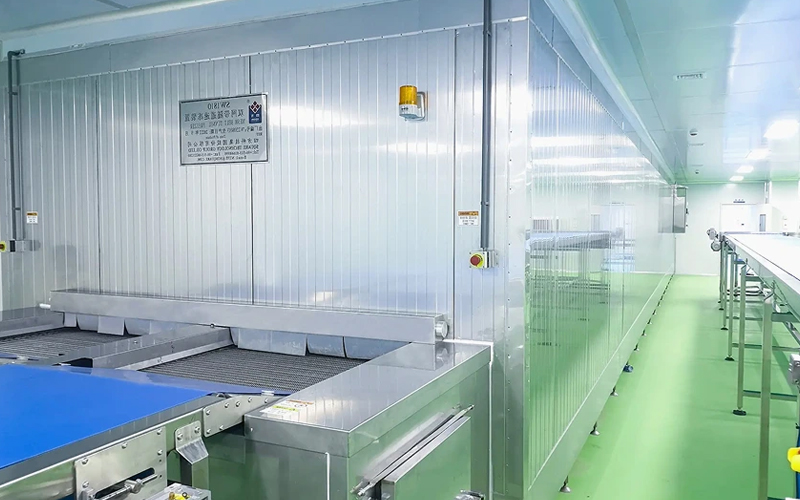
IQF tunnels operate at −30 °C to −40 °C because this temperature range freezes food fast enough to prevent large ice crystals from damaging cells. Water content in food starts freezing between −1 °C and −5 °C. Slow freezing at warmer temperatures forms large ice crystals that rupture cell walls and cause drip loss when thawed.
Fast freezing at −30 °C to −40 °C forces water to form tiny ice crystals inside cells instead of large ones between cells. This preserves the texture of frozen vegetables, frozen fruits, and fish fillets. Peas frozen at −35 °C retain their firm texture. Fish fillets frozen slowly become mushy.
Heat transfer speed determines freezing speed. Cold air at −40 °C pulls heat out of food faster than air at −20 °C. High-velocity airflow increases heat transfer by constantly replacing the warm boundary layer around each piece with cold air; the exact velocity depends on the freezer design and product.
Temperatures below −30 °C cost more in energy and equipment but deliver better quality. Temperatures above −30 °C save energy but risk partial clumping and lower product quality.
How Do Air, Core, and Storage Temperatures Differ?
Air temperature, core temperature, and storage temperature serve different roles in the cold chain. Air temperature is the surrounding environment inside the IQF tunnel freezer. Core temperature is the internal temperature at the center of the food product. Storage temperature is the holding temperature after freezing ends.
Temperatura do ar
Air temperature in an IQF tunnel freezer typically ranges from -30°C to -40°C. This temperature drives the freezing process. Higher air velocity at these temperatures speeds up heat removal from the product surface.
Core Temperature
A core temperature of −18 °C is the standard endpoint for quick-frozen food. The Codex Alimentarius code of practice for quick-frozen foods recommends that the product reach −18 °C at its thermal center and then be held at −18 °C or colder. This temperature ensures complete freezing through the entire product. Ready meals, frozen fruits, and juice products all target this core temperature. The time needed to reach -18°C depends on product thickness, moisture content, and air velocity.
Storage Temperature
Storage temperature maintains frozen food quality after the IQF process ends. Most frozen foods require storage at -18°C or lower. Individually quick frozen items like berries and seafood need consistent storage temperatures to prevent quality loss during distribution.
| Temperature Type | Typical Range | Purpose |
| Temperatura do ar | -30°C to -40°C | Drives freezing process |
| Core Temperature | Target: -18°C | Confirms complete freeze |
| Storage Temperature | -18°C or lower | Maintains quality long-term |
The difference between these three temperatures affects traceability in the cold chain. Operators monitor air temperature during production, verify core temperature before packaging, and track storage temperature during distribution. Each temperature point requires separate measurement and documentation for food safety compliance.
What Temperature Setting Suits Each Product in a Tunnel Freezer?
Different products need different temperature settings in IQF congeladores de túnel to achieve rapid freezing without quality loss. Most tunnel freezers operate between -30°C and -40°C air temperature to bring products down to a core temperature of -18°C.
Seafood products like shrimp and fish fillets freeze best at −30 °C to −35 °C air temperature. These delicate items need quick freezing to prevent large ice crystals from forming and damaging their cellular structure.
Frutas e legumes freeze at −30 °C to −40 °C, with the colder end used for small, high-moisture items; operators adjust belt speed for size rather than raising the air temperature.
Meat and poultry typically freeze at -35°C to -40°C air temperature. The lower temperature range ensures industrial freezing reaches the core temperature quickly, which preserves texture and halts microbial growth.
| Product Type | Temperatura do ar | Target Core |
| Shrimp & Fish | −30 °C to −35 °C | −18 °C |
| Berries & Soft Fruits | −35 °C to −40 °C | −18 °C |
| Vegetables (Peas, Diced) | −30 °C to −35 °C | −18 °C |
| Meat & Poultry | −35 °C to −40 °C | −18 °C |
Products entering pre-chilled at around 0–4 °C reach the −18 °C core sooner than those entering warm, which shortens dwell time and reduces load on the refrigeration system.
Belt speed works with temperature settings to control freezing time. Slower belt speeds give products more exposure to cold air, while faster speeds suit products that freeze quickly. Operators balance both factors to achieve optimal industrial freezing results while maintaining energy efficiency and production capacity.
FAQs
How Cold Does an IQF Tunnel Freezer Get?
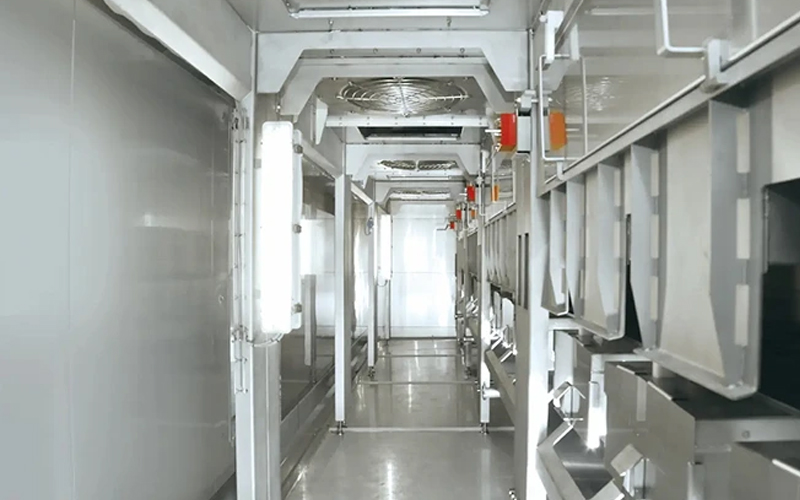
An IQF tunnel freezer runs its air at −30 °C to −40 °C. This is far colder than a home freezer and is what allows products to freeze in minutes, forming the small ice crystals that keep texture and separation intact.
What Core Temperature Confirms a Product Is Fully Frozen?
A core temperature of −18 °C confirms full freezing. The product must reach −18 °C at its center before leaving the tunnel; surface freezing alone is not enough, so belt speed is set so the core hits this target.
Can You Run an IQF Tunnel at Only −18 °C?
No. −18 °C is the product core and storage target, not the air setpoint. Running the tunnel air at −18 °C freezes too slowly, forming large ice crystals and clumping. The air must be −30 °C to −40 °C.
Does a Colder Tunnel Always Freeze Faster?
Up to a point. Colder air freezes faster, but below about −40 °C the speed gain is small while energy cost rises sharply. The optimal balance for most products stays within −30 °C to −40 °C.