Non-condensables in a refrigeration system are gases that do not turn into liquid during normal operation. They collect in the condenser and can cause five common problems: high head pressure, higher energy use, compressor stress, oil damage, condenser fouling, and unstable product temperature. These issues are especially important in industrial refrigeration and food freezing systems, where stable cooling affects both equipment life and product quality.
Based on industrial refrigeration maintenance and ammonia system service experience, this guide explains where non-condensable gases come from, how they affect system performance, how technicians can detect them, and how proper evacuation and automatic purging help remove them.
What Are Non-Condensable Gases, And Where Do They Come From?
Non-condensable gases are gases that stay in vapor form at all times inside a холодильная система. They never turn into liquid. Common examples include air, nitrogen, hydrogen, oxygen, and hydrocarbon vapors.
NCGs get into systems through three main sources. The list below describes each one:
- Incomplete evacuation: Air stays trapped in the system if the vacuum pull-down is not deep enough during installation or after service work.
- Low-pressure-side leaks: Systems that run below atmospheric pressure pull air in through worn valve stem packings, compressor shaft seals, and threaded connections.
- Internal breakdown: Ammonia breaks down over time into hydrogen and nitrogen. Lubricating oil breaks down under high heat and releases hydrocarbon gases. Both types build up as NCGs, even in a fully sealed system.
According to IIAR (2023), NCG buildup from ammonia and oil breakdown will happen in any ammonia system that runs continuously. NCGs are not the same as moisture or refrigerant fractionation. Moisture freezes inside the system. Fractionation only applies to blended refrigerants. NCGs stay as gas permanently, so they collect in the condenser and stay there.
Why Does Head Pressure Rise Above Normal Saturation Levels?
NCGs collect in the condenser and take up space on the heat transfer surface. They cannot condense, so they block the area that refrigerant needs to give off heat. The system responds by pushing condensing pressure higher.
The physics behind this is straightforward. Total condenser pressure equals refrigerant saturation pressure plus the pressure of all NCGs present. So when NCGs are in the system, measured head pressure is always higher than what the pressure-temperature chart shows for the current ambient temperature.
The energy cost adds up fast. According to IIAR (2023), every 4 lbs (1.8 kg) of extra head pressure from NCGs raises compressor energy use by 2% and cuts compressor output by 1%. On a large ammonia system running year-round, that loss grows continuously. One clear sign of NCGs is a high condenser split — the gap between condensing temperature and outdoor air temperature. When this gap is too wide and the coil is clean, NCGs are a likely cause.
What Happens To The Compressor When Head Pressure Stays Elevated?
High head pressure forces the compressor to work at a higher compression ratio than it was built for. This raises discharge temperature and puts extra stress on internal parts.
Three Ways Elevated Pressure Damages The Compressor
Higher discharge temperature harms the compressor through three connected problems:
- Oil film breakdown: Hotter oil gets thinner. A thinner oil film gives less protection between moving metal parts, so bearings, pistons, and valve plates wear faster.
- Valve stress: High-temperature compression cycles put repeated stress on valve parts. They wear out before their expected service life.
- Liquid slugging risk: NCG buildup throws off pressure balance in the system. This raises the chance of liquid refrigerant entering the compressor cylinder. A cylinder cannot compress liquid. The result can be bent connecting rods, cracked valve plates, or full mechanical failure.
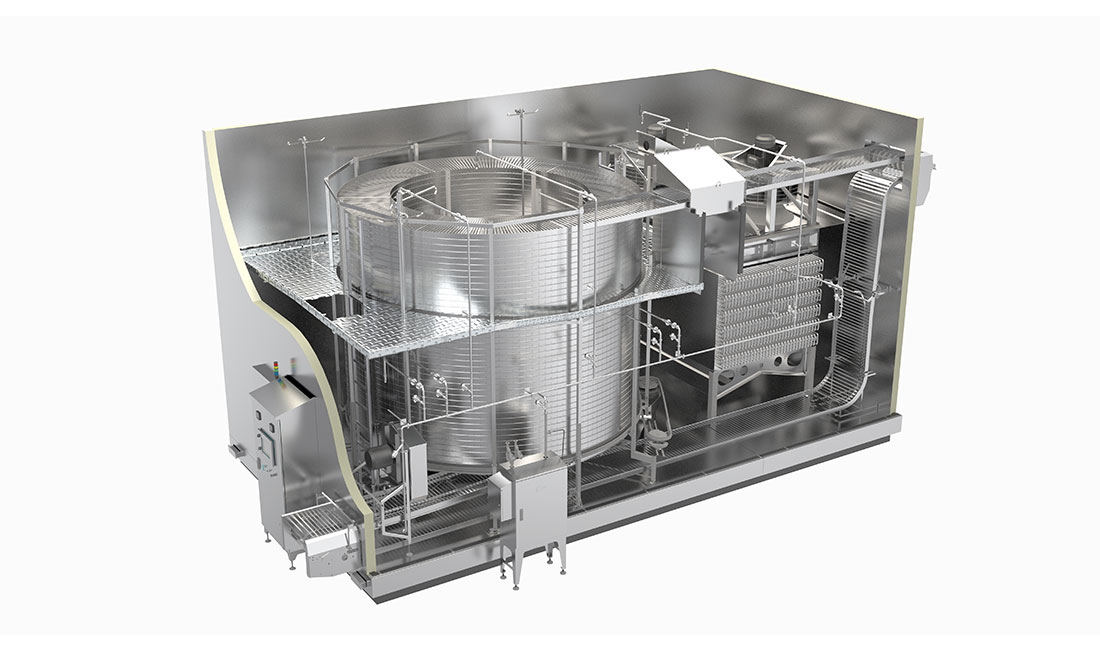
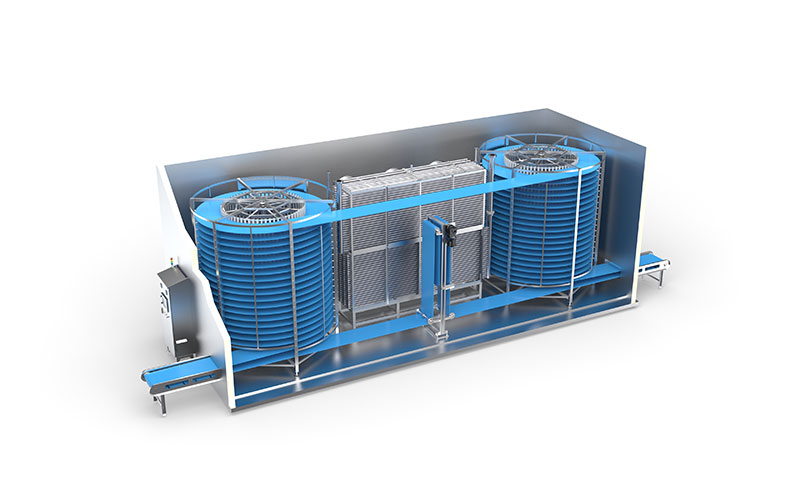
In systems with multiple compressors — common in IQF spiral freezer setups — NCGs do not spread evenly across all units. This causes uneven wear and can make one compressor fail earlier than others with the same run hours.
How Does High Discharge Temperature Change The Chemistry Of Refrigeration Oil?
High discharge temperatures cause a chemical reaction between oxygen, moisture, and refrigeration oil. This reaction forms organic acids inside the compressor and refrigerant circuit.
Three Parts Of The System That Acid Attacks
The table below shows which parts organic acids target and what failure each one leads to:
| Component | What Acid Does | Failure Result |
| Motor windings | Breaks down electrical insulation | Winding short circuit |
| Metal pipework | Causes internal rust and pitting | New refrigerant leak points |
| Seals and gaskets | Breaks down seal material | New paths for air to enter |
Oil breakdown also makes sludge. Sludge builds up on heat exchanger surfaces and blocks oil return lines. Less oil reaches the compressor, which speeds up wear. The damage often shows up weeks or months after the NCG problem starts. This makes it hard to trace back to the real cause without careful checks. Oil acid number (AN) testing catches the problem early. An acid number above 0.05 mg KOH/g means contamination is present. Pairing this with a broader freezing system maintenance schedule helps catch NCG-related damage before it becomes expensive.
What Long-Term Damage Accumulates On Evaporative Condenser Tubes?
High discharge temperatures caused by NCGs speed up mineral scale buildup on evaporative condenser tubes. NCGs and scale make each other worse over time: NCGs cut condenser output, which raises discharge temperature, which builds more scale, which cuts output further.
Scale builds up on condenser tube surfaces and acts as a thermal insulator. Even a thin layer of mineral scale significantly reduces heat transfer efficiency, according to ASHRAE fouling resistance data. This forces condensing pressure higher — compounding the problem NCGs already created. That pushes condensing pressure even higher — adding to the head pressure problem NCGs already created. Two clear signs show that condenser tube fouling has started:
- The condenser approach temperature rises above its design target
- Water-side pressure drop across the condenser goes up as scale narrows the tube opening
Scale requires chemical cleaning to remove. When NCG contamination is confirmed, condenser inspection and cleaning schedules should be moved up to stop further performance loss.
How Does Unstable Condensing Pressure Affect Product Temperature In IQF Systems?
Unstable condensing pressure from NCGs causes the evaporating temperature to swing up and down. In IQF spiral freezer circuits, a stable evaporating temperature is required to freeze every product piece to a consistent core temperature.
The table below shows how evaporating temperature swings affect food quality:
| Evaporating Temp Swing | Product Core Temp Impact | Food Quality Result |
| ±0.5°C | Very small | Within normal process tolerance |
| ±1.0°C | Product varies 1–2°C | Borderline for sensitive products |
| ±2.0°C | Product varies 3–4°C | Ice crystal damage; process spec breach risk |
| >±2.0°C | Uneven freezing across belt | Product quality and food safety risk |
When freezing is uneven, larger ice crystals form inside the product. These crystals break cell walls in seafood and meat. This raises drip loss after thawing. For IQF shrimp, fish, and meat processing, higher drip loss means less product weight and lower revenue per kilogram. Adjusting temperature setpoints alone does not fix this problem. The NCGs must be removed from the system first.
How Can These Issues Be Detected Before They Cause Equipment Failure?
The standard test for NCGs compares measured condenser pressure to the refrigerant’s saturation pressure at the current outdoor temperature. A reading above the pressure-temperature chart value means NCGs are present.
The five-step field test is listed below:
- Shut down the compressor. Keep the condenser fan running.
- Wait for the discharge line, liquid line, and outdoor air temperatures to match.
- Record the condenser pressure once all three temperature readings are equal.
- Look up the refrigerant’s saturation pressure at that temperature on a P-T chart.
- Any extra pressure above that value is caused by NCGs.
Three other problems produce similar signs and must be ruled out first. A dirty condenser coil raises head pressure on its own — clean it and retest. Low condenser airflow produces the same high condenser split. A refrigerant overcharge also raises discharge pressure. Check the charge weight against the design spec before concluding NCGs are the cause. For ammonia systems, discharge superheat significantly above the design specification is a secondary sign worth investigating. Check the system’s design documentation for the intended superheat range.
What Is The Correct Procedure For Purging Non-Condensables Permanently?
Automatic multi-point purgers are the correct tool for removing NCGs from industrial ammonia systems. They run continuously, pull NCGs from the highest-pressure points in the condenser, and release far less refrigerant per cycle than manual methods.
The table below compares manual and automatic purging across four key areas:
| Criteria | Manual Purging | Automatic Multi-Point Purger |
| Refrigerant released per purge | High | Low |
| Operator ammonia exposure | Present at every purge | Very low |
| Compliance record-keeping | Inconsistent | Continuous log |
| Labor needed | High | Low |
New systems must be pulled down to 500 microns (0.5 Torr) or lower before the first refrigerant charge. This removes air and moisture before startup. A micron gauge — not a compound gauge — is the only tool that can confirm this vacuum depth. When a system is opened for service, a full re-evacuation is required before recharging. The steps below prevent NCGs from building up:
- Pull down to 500 microns and verify with a calibrated micron gauge before charging
- Open solenoid valves during evacuation to clear air trapped between components
- Check valve stem packings, shaft seals, and threaded connections at every service visit
- Fit an automatic multi-point purger to any ammonia system that runs continuously
FAQs
What Gases Count As Non-Condensables In A Refrigeration System?
Non-condensable gases include air components (nitrogen, oxygen, argon), hydrogen from ammonia breakdown, and hydrocarbon vapors from oil breakdown. All of them stay as gas under normal refrigeration operating conditions and do not condense.
How Do Technicians Confirm NCGs Without Recovering The Charge?
Technicians stop the compressor, let the condenser cool to outdoor air temperature, then read the condenser pressure. They compare that reading to the refrigerant’s P-T chart value at the same temperature. Any extra pressure above the chart value points to NCGs.
Can Non-Condensables Build Up Inside A Sealed Ammonia System With No Leaks?
Yes. Ammonia breaks down over time and releases hydrogen and nitrogen. Lubricating oil breaks down under heat and releases hydrocarbon gases. Both build up as NCGs even when the system has no leaks, according to IIAR (2023).
What Vacuum Level Is Required Before Charging An Ammonia System?
The system must reach 500 microns (0.5 Torr) or lower before refrigerant is added. A compound gauge cannot read this level. Only a micron gauge gives an accurate reading at this depth.
How Often Should An Automatic Purger Be Checked?
Automatic purgers need to be checked at every scheduled maintenance visit. Reviewing the purge frequency log helps spot trends. A rise in purge frequency means new NCG sources are developing — usually a growing low-side leak or faster oil breakdown.
What Is The Difference Between Non-Condensables And Moisture Contamination?
Moisture condenses and freezes, blocking expansion valves and metering devices. NCGs stay as vapor and collect in the condenser. Both hurt system performance, but the fixes are different. Moisture is removed with desiccant filter-driers. NCGs are removed by purging.