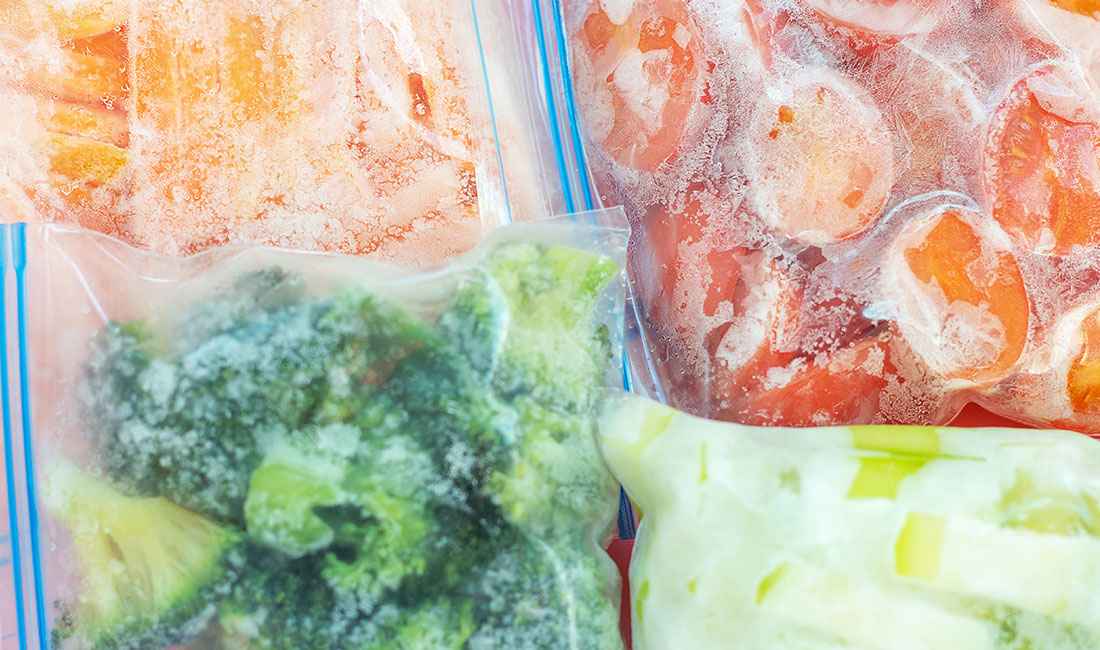
Blanquea los vegetales antes de congelarlos para evitar que las enzimas dañen su color, sabor, textura y nutrientes en el congelador. El congelamiento ralentiza estas reacciones, pero no las detiene. La blanqueación calienta brevemente los vegetales en agua caliente (70–100 °C) o al vapor, y luego los enfría rápidamente —en agua helada en casa o en túneles de agua fría en líneas industriales—.
Este artículo explica por qué la blanqueación es una etapa imprescindible antes de congelar los vegetales industrialmente. Aborda las enzimas que se inactivan, lo que sucede si se lo omite, qué vegetales no necesitan blanquear, cómo afecta a los nutrientes, por qué es importante el momento adecuado y cómo se relaciona con los congeladores IQF y los congeladores espirales.
¿Qué es la blanqueación?
El blanqueo es un tratamiento térmico breve en agua caliente a 70–100 °C o vapor saturado, seguido de un rápido enfriamiento. Desactiva las enzimas responsables del deterioro, reduce la carga microbiana superficial y previene la descomposición de los vegetales para un almacenamiento congelado estable de 8 a 12 meses a -18 °C.
¿Por qué es necesario blanquear las verduras antes de congelarlas?
Las verduras deben blanquearse porque el congelamiento solo ralentiza la actividad de las enzimas; no las detiene. Sin blanquear, la actividad residual de las enzimas destruye el color, el sabor, la textura y los nutrientes en un plazo de uno a tres meses, incluso cuando se almacena adecuadamente a -18 °C.
Las enzimas de los vegetales crudos permanecen activas a temperaturas congeladas y continúan descomponiendo nutrientes, pigmentos y estructuras celulares durante semanas de almacenamiento. El blanqueo aplica una temperatura suficiente para desnaturalizar permanentemente estas enzimas antes de congelar el producto.
Las verduras congeladas sin escaldar siguen siendo seguras para el consumo; el problema es la calidad, no la seguridad. Simplemente pierden color, desarrollan sabores desagradables y adquieren una textura blanda al descongelarse. El escaldado también reduce la carga microbiana superficial hasta dos ciclos logarítmicos; la eliminación de tierra y suciedad corresponde a la etapa de lavado previa.
El tiempo de escaldado varía entre 1,5 y 11 minutos, dependiendo del tipo y tamaño de los vegetales. Los frijoles verdes necesitan 3 minutos, los tallos de espárragos grandes 4 minutos y los mazorcas de maíz entre 7 y 11 minutos, según el diámetro.
¿Qué enzimas desactivan la blanqueación y por qué es importante esto?
El escaldado desactiva tres enzimas que degradan la calidad: la peroxidasa (POD), que causa sabores desagradables y pérdida de color; la lipoxigenasa (LOX), que oxida los lípidos en compuestos rancios; y la polifenoloxidasa (PPO), que desencadena el pardeamiento enzimático. La mayoría se desnaturaliza entre 70 y 90 °C.
La peroxidasa es la más resistente al calor del grupo y sirve como enzima marcadora utilizada para validar la adecuación de la blanqueación: cuando la POD está inactiva, las enzimas más sensibles al calor ya están inactivas. La lipoxigenasa provoca la rancidez en los vegetales verdes como el guisante, los frijoles y el brócoli. La polifenoloxidasa desencadena el pardeamiento en la coliflor, las patatas, los hongos y otros productos susceptibles a la oxidación. La catalasa también se reduce y a veces se utiliza como indicador secundario de validación.
El calor denatura permanentemente estas enzimas alterando su estructura proteica, de manera que ya no pueden funcionar. Una vez denaturadas, no pueden reactivarse durante el almacenamiento congelado, por eso las verduras correctamente blanqueadas mantienen la máxima calidad durante 8 a 12 meses.
Los procesadores de alimentos confirman que el blanqueo se realiza correctamente mediante la prueba de peroxidasa: un reactivo de guaiacol y peróxido aplicado a una muestra no debería mostrar color azul-marrón en los cinco minutos siguientes. Si la POD está inactiva, también están inactivas las Lox y el Ppo.
¿Qué sucede con el escaldado adecuado?
- La calidad se mantiene estable durante 8 a 12 meses
- Los colores siguen siendo brillantes
- La textura permanece firme
- Los nutrientes se conservan
La blanqueación debe alcanzar la temperatura y el tiempo adecuados para que funcione. Una temperatura demasiado baja deja algunas enzimas activas. Una temperatura demasiado alta daña la textura de la verdura y destruye las vitaminas antes de que siquiera comience el proceso de congelación.
¿Qué sucede si congelas las verduras sin blanquearlas?
Sin blanquear, los enzimas residuales y los microbios superficiales permanecen activos. Los vegetales congelados presentan colores apagados, sabores desagradables, consistencias blandas o fibrosas, quemaduras por congelación aceleradas y una pérdida significativa de vitamina C en un período de uno a tres meses —incluso cuando se almacenan correctamente a -18 °C—.
Los cambios en la textura hacen que los vegetales sean menos atractivos:
- Las verduras se vuelven blandas y pastosas
- Algunos se vuelven difíciles de masticar o gomosos
- El contenido de agua se separa durante la descongelación
- La estructura se degrada más rápidamente que los vegetales blanqueados
El sabor se debilita y adquiere sabores desagradables. Las verduras que no se escaldan en agua o al vapor pierden intensidad de sabor o ligeramente amargas después de unos meses en el congelador.
Los nutrientes se degradan más rápidamente sin blanquear. Las vitaminas se descomponen mientras las enzimas continúan trabajando durante el periodo de congelación.
Problemas comunes con los vegetales congelados sin blanquear:
| Problema | Resultado |
| Pérdida de color | Apariencia marrón, gris o descolorida |
| Daño en la textura | Consistencia blanda, espesa o dura |
| Degradación de los sabores | Sabor débil o notas amargas |
| Pérdida de nutrientes | Menor contenido de vitaminas con el tiempo |
Los vegetales sin blanquear siguen siendo seguros para comer. El problema es la calidad, no la seguridad. El agua o el vapor que los blanquearon detiene la actividad enzimática y conserva la calidad durante 8 a 12 meses en el congelador.
Algunos vegetales se congelan mejor sin blanquear que otros. Los pimientos, las cebollas y la mayoría de las hierbas frescas mantienen una calidad aceptable sin blanquear. Sin embargo, el maíz requiere blanquear en todas sus formas —granos, mazorcas enteras o trozos cortados— debido a su alto contenido enzimático. La mayoría de los vegetales necesitan un enfriamiento rápido inmediatamente después del blanqueo para detener la cocción residual y conservar la textura, el color y el contenido nutricional.
¿El escaldado destruye los nutrientes de los vegetales?
El blanqueo provoca una pérdida a corto plazo de vitaminas solubles en agua por lixiviación. Sin embargo, al desactivar las enzimas que destruyen los nutrientes durante los meses de almacenamiento congelado, los vegetales bien blanqueados conservan una cantidad mucho mayor de nutrientes totales que los que no han sido blanqueados durante toda su vida útil de 8 a 12 meses.
Las vitaminas solubles en agua como la vitamina C y las vitaminas del grupo B disminuyen ligeramente durante el escaldado. Los estudios muestran que las pérdidas de vitamina C suelen oscilar entre un 10% y un 30%, dependiendo del tipo de vegetal, el tamaño de la pieza, el método de escaldado y la relación entre agua y producto. Los minerales permanecen en gran medida intactos porque no se descomponen debido al calor.
La etapa de enfriamiento posterior al escaldado es importante para conservar los nutrientes. Sumergir las verduras en agua helada inmediatamente después del escaldado detiene la cocción. Así se evita el escaldado excesivo, que causa mayores pérdidas de nutrientes que un escaldado adecuado.
La conservación de los nutrientes depende de tres factores:
- Seguimiento de los tiempos exactos de blanqueo para cada tipo de verdura
- Usando suficiente agua hirviendo (una galón por libra de vegetales)
- Enfriar inmediatamente los vegetales en agua helada
Congelar los vegetales sin blanquear provoca una pérdida de nutrientes mayor con el tiempo. Los vegetales congelados crudos pierden vitaminas debido a la actividad enzimática durante el almacenamiento. Los vegetales blanqueados mantienen mejor su valor nutricional después de seis a doce meses en el congelador.
¿Qué verduras no necesitan blanquearse antes de congelarlas?
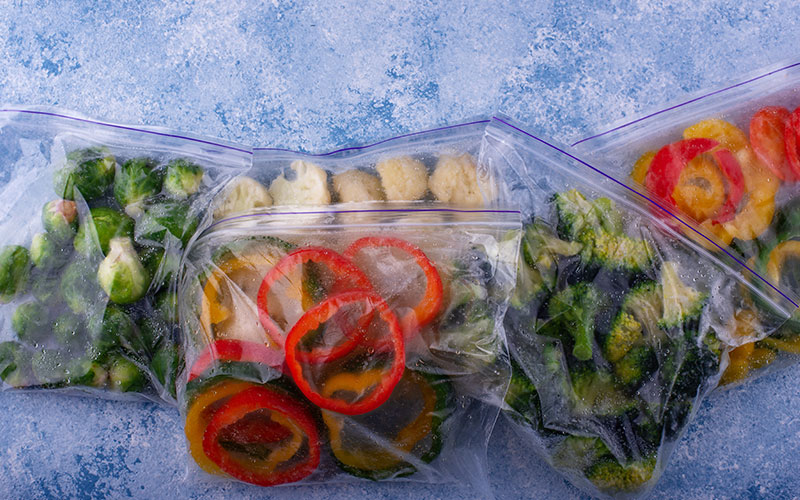
Algunos vegetales se pueden poner directamente en el congelador sin blanquearlos. Entre ellos se incluyen la cebolla, los pimientos y las hierbas como el perejil y el cebollino.
Congelar los vegetales sin blanquear ahorra tiempo, pero conlleva inconvenientes. Los vegetales pueden perder color, desarrollar sabores desagradables y tener una textura más blanda tras la descongelación. Las enzimas continúan trabajando en los vegetales sin blanquear, descomponiendo los nutrientes y la calidad con el tiempo.
Vegetales que se congelan bien sin blanquear:
Vegetales que se congelan bien sin blanquear:
- Cebollas (picados o cortados en rodajas)
- Pimientos dulces (de cualquier color)
- Pimientos picantes
- Tomates (enteros o picados, destinados a cocinar)
- Hierbas frescas (perejil, cebollino, eneldo)
- Ajo
Estos vegetales contienen menos enzimas activas que otros. Su estructura se mantiene mejor en el congelador sin la etapa de blanqueo.
Algunas fuentes incluyen como opcionales la blanqueada de verduras como zanahoria, frijoles verdes y calabacín. Sin embargo, estas verduras mantienen una mejor calidad cuando se blanquean primero. Los tiempos recomendados para la blanqueada son cortos: la zanahoria necesita 2 minutos para los trozos cortados en dados, los frijoles verdes necesitan 3 minutos y la calabaza de verano necesita 3 minutos.
Los vegetales de hoja verde como el espinaca, la lechuga, la col rizada y la col pueden congelarse sin blanquear. Sin embargo, serán seguros de comer, pero se perderá una gran parte de su calidad. Las hojas se volverán oscuras y blandas, por lo que solo serán aptas para cocinar platos como sopas o batidos.
Para obtener los mejores resultados, blanquee las verduras cuando sea posible. Este proceso requiere un tiempo mínimo y conserva la coloración, la textura y los nutrientes. Evite el blanqueo solo cuando el tiempo sea limitado o cuando la congelación de las verduras esté destinada a cocinar y no a comerlas crudas.
¿Por qué se debe realizar la blanqueación correctamente y qué ocurre si se blanquea demasiado o poco?
El blanqueo superficial no inactiva las enzimas y, de hecho, es peor que no hacerlo, ya que el calentamiento parcial acelera la actividad enzimática. El blanqueo excesivo hace que las vitaminas pasen al agua, desploma las paredes celulares y produce un producto blando y acuoso. Un control preciso del tiempo y la temperatura evita ambos casos de fallo; la prueba de peroxidasa confirma la idoneidad.
Las verduras blanqueadas demasiado rápido se deterioran más que las verduras que no se dejan blanquear en absoluto. La blanqueación corta o con temperaturas demasiado bajas activa las enzimas en lugar de detenerlas, acelerando la degradación de los sabores, el color y la textura en el almacenamiento congelado. Estas verduras desarrollan un sabor desagradable, se tornan marrones o grises y se vuelven más blandas más rápido que las verduras congeladas crudas.
El sobreblanqueo crea diferentes problemas pero también arruina la calidad. Las verduras que se blanquean demasiado tiempo pierden sus vitaminas y minerales en el agua de cocción, se suavizan antes de que incluso comience el congelamiento y se desintegran al cocinarlas más tarde.
Los tiempos recomendados para blanquear varían según el tipo y tamaño de los vegetales: los tallos de espárragos pequeños tardan 2 minutos en blanquear, en comparación con los tallos grandes que tardan 4 minutos; los frijoles verdes tardan 3 minutos; los brotes de brócoli tardan 3 minutos en hervir en agua hirviendo o 5 minutos cuando se cocinan al vapor.
El medio de blanqueo debe recuperar su temperatura objetivo rápidamente después de que se cargue el producto. La falta de recuperación indica que el dispositivo de blanqueo es de tamaño insuficiente o que la cantidad de producto es demasiado grande —en el hogar esto se manifiesta como la falta de retorno del agua a la ebullición durante un minuto; en los blanqueadores industriales se manifiesta como una caída de temperatura registrada por el sistema de control. El cómputo del tiempo solo comienza después de que se restablezca la temperatura objetivo, no cuando el producto entre por primera vez en el proceso.
¿Por qué la blanqueación resulta aún más importante a escala industrial?
A escala industrial, un error de blanqueo se extiende a toneladas de producto. Esto amenaza la vida útil de los productos de 8 a 12 meses, la conformidad con el sistema HACCP y el rendimiento del congelador IQF, que depende de productos tratados uniformemente con calor para obtener piezas congeladas individualmente y con fluidez.
Un único error de escaldado no arruina una cena completa; arruina todo un lote o la producción de un turno. Los chefs aficionados pueden ajustar la temperatura según su experiencia; las líneas industriales no pueden hacerlo. Los escaldadores de banda continua, tornillo, tambor o túnel de vapor mantienen los tiempos de permanencia y las temperaturas exactos para cada producto, registrados automáticamente.
El escaldado insuficiente a escala industrial provoca:
- Enzimas activas en todo el lote
- Color descolorido en cada paquete de la línea
- Desintegración de la textura tras meses de almacenamiento en frío
- La pérdida de sabor que perjudica la confianza de la marca con los minoristas
- Las afirmaciones nutricionales en el etiquetado que ya no son válidas
Los blanqueadores industriales utilizan agua caliente (70–100 °C) o vapor durante 30 segundos a aproximadamente 10 minutos. Las hojas de verduras necesitan el menor tiempo; las raíces densas y las mazorcas enteras de maíz necesitan el mayor tiempo.
El blanqueo tiene un lugar fijo en la cadena de producción: lavado → corte → blanqueo → refrigeración con agua fría → escurrido → túnel IQF o congelación en espiral → envasado. El túnel IQF o el congelador en espiral funcionan a -35 °C, pero solo pueden congelar lo que reciben. No pueden solucionar un fallo de blanqueo. La larga vida útil depende de que los productos lleguen al congelador con las enzimas ya inactivadas, la eliminación de agua superficial y una temperatura uniforme en el núcleo.
Los procesadores registran los tiempos y temperaturas de la blanqueación para cumplir con los requisitos de la norma HACCP, y luego realizan la prueba de peroxidasa para confirmar que el tratamiento térmico tuvo éxito antes de que el producto ingresara al congelador.
El blanqueo adecuado es la mitad de la calidad del producto congelado. La otra mitad es el sistema de congelación que lo mantiene en perfecto estado — es para esto que están diseñados el túnel IQF y los congeladores espirales de NTSquare.
Preguntas frecuentes
¿Es necesario blanquear todos los vegetales antes de congelarlos?
No, el blanqueo no es necesario para todos los vegetales. La mayoría de los vegetales necesitan blanqueo porque ralentiza la actividad de las enzimas que pueden dañar el sabor, el color y la textura durante el almacenamiento congelado.
Los pimientos, las cebollas, las hierbas y los tomates crudos para cocinar generalmente se pueden congelar sin blanquearlos.
¿Cuáles son los principales beneficios de blanquear los vegetales antes de congelarlos?
El blanqueo ayuda a que los vegetales conserven mejor su color, sabor, textura y nutrientes durante el almacenamiento congelado. Detiene las enzimas que continúan dañando los vegetales incluso en el congelador. También ayuda a limpiar la superficie y a suavizar los vegetales, facilitando su envasado y congelación.
¿Cuánto tiempo deben blanquearse los vegetales antes de congelarlos?
El tiempo de blanqueo depende del tipo de verdura y del tamaño de la pieza. La mayoría de las verduras necesitan entre 1,5 y 5 minutos en agua hirviendo; las verduras más densas tardan más tiempo.
Ejemplos: frijoles verdes 3 minutos, floretes de brócoli 3 minutos y tallos de brócoli 4 minutos, guisantes 1,5 minutos y maíz en mazorca 7 a 11 minutos, dependiendo del diámetro. El tiempo de cocción solo comienza después de que el agua vuelva a hervir completamente.
¿Qué verduras se pueden blanquear con éxito para congelarlas?
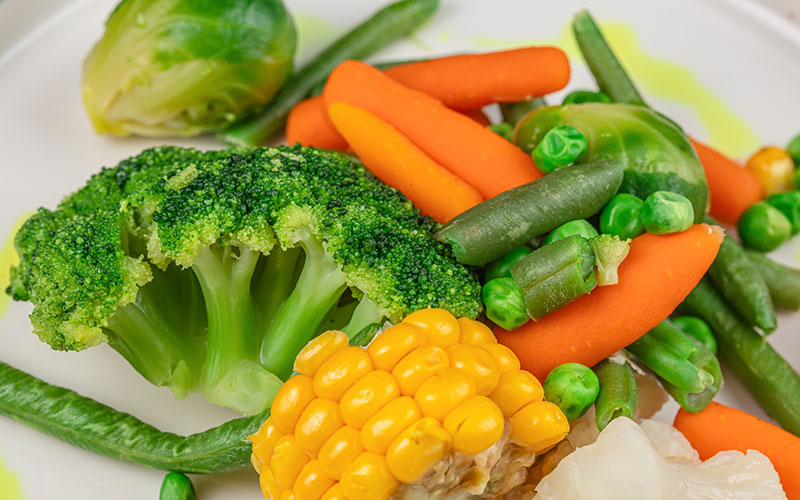
Muchos vegetales se congelan bien después de la blanqueación. Algunos ejemplos comunes son los frijoles verdes, el brócoli, la coliflor, las zanahorias, el maíz, los guisantes, el espárrago, las coles de Bruselas, el espinaca, la berza, la calabaza de verano y los guisantes de vaina comestible.
Con un buen blanqueo y un buen almacenamiento, muchas de estas verduras pueden conservar su calidad durante 8 a 12 meses.
¿Existen vegetales que se pueden congelar sin blanquear primero?
Sí, algunos vegetales se pueden congelar sin blanquear. Los pimientos, las cebollas, las hierbas y los tomates para cocinar son ejemplos comunes.
Estos alimentos pueden volverse más blandos después del congelamiento, por lo que son más adecuados para utilizar en platos cocinados, salsas, sopas o mezclas de condimentos.