
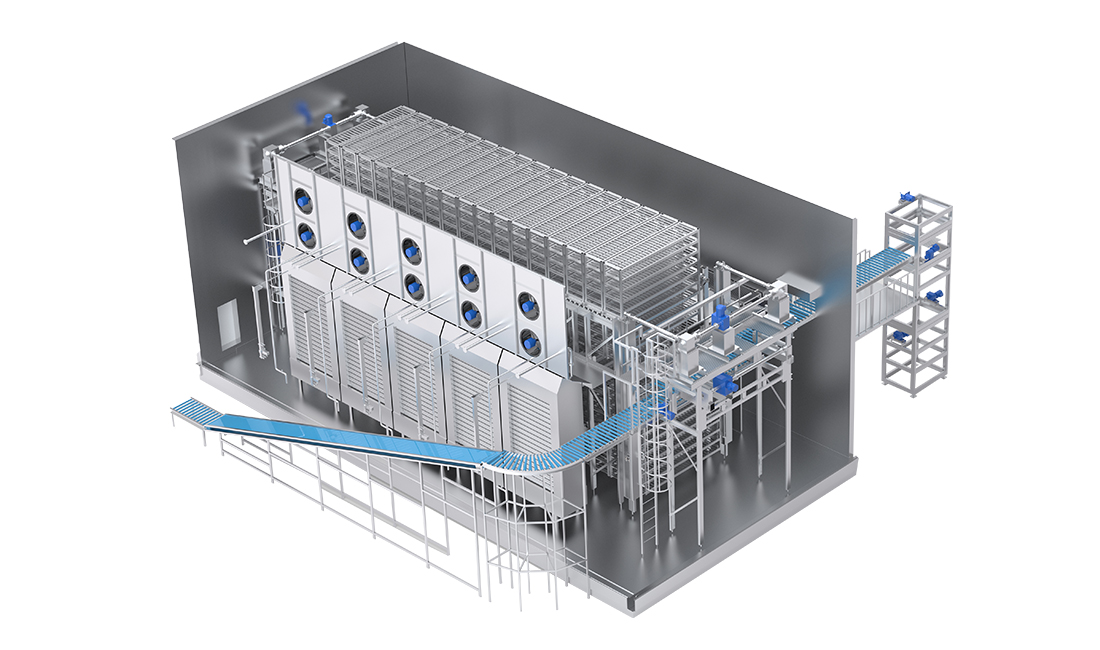
A commercial IQF freezer costs between $150,000 and $2,000,000, with most mid-range industrial systems priced at $300,000 to $800,000. Final pricing depends on freezer type (tunnel, spiral, fluidized bed, or impingement), throughput capacity, refrigeration design, hygienic construction, and customization level.
Drawing on many years of manufacturing experience, 300+ patents, and 5,000+ installations, this guide breaks down the full cost picture. Readers will find detailed price ranges by freezer type, the key technical and design factors driving cost variation, hidden expenses beyond the purchase price such as installation and refrigeration upgrades, and a complete lifetime ownership cost analysis to support your investment decision.
What Is the Typical Price Range for a Commercial IQF Freezer?
Commercial IQF freezers cost between $150,000 and $2,000,000 depending on size and specifications. Small pilot-scale units start at $150,000 to $300,000. Medium-capacity industrial models range from $300,000 to $800,000. Large or customized systems exceed $800,000 and can reach $2,000,000 or more.
How Does Freezer Type Determine the Price of an IQF System?
The freezer type sets the base price because each design uses different cooling methods and construction requirements. A spiral freezer costs more than a tunnel freezer due to its compact footprint and complex rotating belt system.
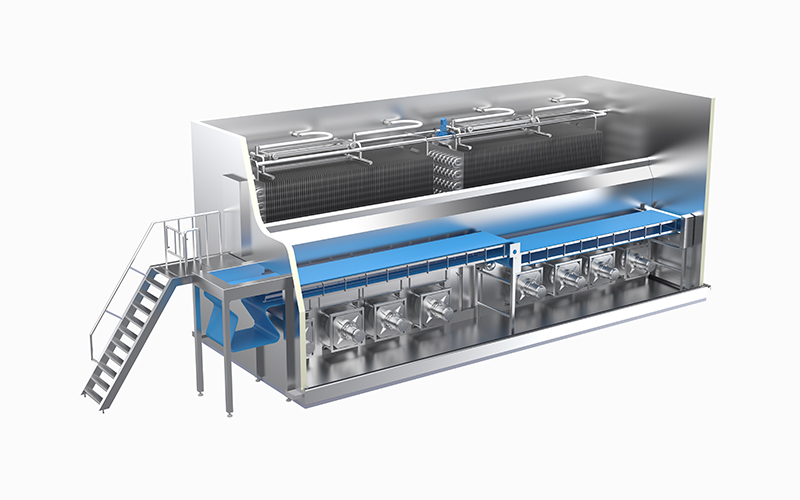
Túneles de congelación are the most affordable option for most processors. They use a straight belt that moves product through a refrigerated chamber. Prices start around $150,000 for small units and reach $800,000 to $1,000,000 for large systems. They require more floor space but have lower maintenance costs because the belt system is simple.
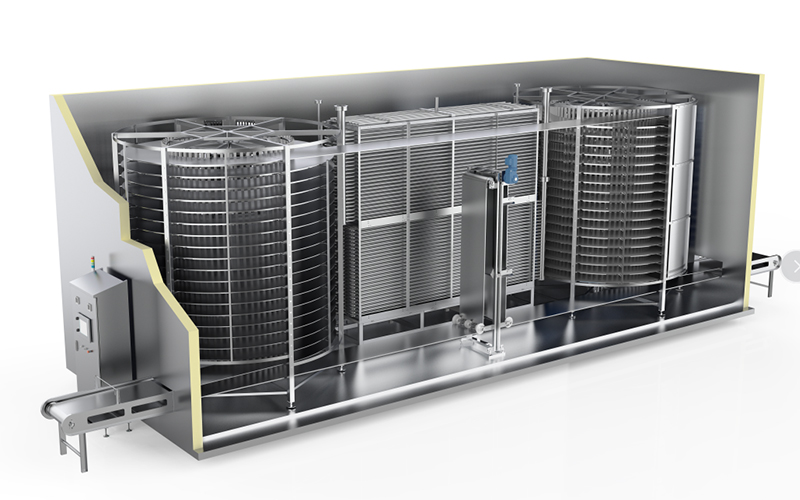
Congeladores espirales cost 30-40% more than tunnel models with similar capacity. They stack the belt in a vertical spiral to save floor space. This design needs specialized bearings, rotating drum support, and complex airflow engineering. Prices range from $400,000 to $1,500,000 depending on drum size.
Congeladores de lecho fluidizado work well for small products like peas or berries. They use high-velocity air to suspend and freeze product quickly. These systems cost $200,000 to $800,000 based on capacity. They have higher electricity costs because the fans run at maximum speed.
Congeladores por impacto use targeted high-velocity air jets to freeze thin, flat products such as fish portions, burger patties, and pizza bases. Their surface freezing speed is the fastest among IQF types. Prices range from $250,000 to $700,000 depending on belt width and capacity. They require precise airflow engineering, which raises both manufacturing cost and energy consumption.
While spiral freezers carry a higher purchase price than tunnel models, their compact insulated enclosure can reduce long-term refrigeration costs—a factor worth weighing against the initial price premium.
What Are The Key Factors Influencing Price Variation?
Beyond freezer type and capacity, several additional variables drive the final price of an IQF system.
Technology and design features add significant cost:
- European refrigeration technology and optimized evaporator layouts increase energy efficiency
- Fault self-diagnosis systems reduce downtime but add upfront expense
- Hygienic design with full stainless steel construction costs more than basic models
- Advanced automation and control systems raise prices by 15–30%
Food safety certification requirements vary by market. Export-focused processors need units that meet stricter international standards (such as USDA, CE, or EU regulations), which increases manufacturing costs.
Eficiencia energética creates price variation between models. High-efficiency units cost 20–40% more upfront but reduce electricity consumption over the freezer’s 15–20 year lifespan.
Customization for specific applications increases cost. Standard models suit common products, but unique characteristics like unusual sizes or special handling needs require engineering modifications.
Scalability affects long-term value. Freezers designed for future expansion cost more initially but prevent expensive replacements as production grows.
Installation complexity impacts final investment. Facilities with limited space or integration requirements with existing processing lines face higher total costs.
What Costs Come on Top of the IQF Freezer Purchase Price?
The purchase price covers only the equipment itself. Installation, infrastructure upgrades, and operational setup add significant costs to the total investment—often requiring facility modifications, refrigeration system expansion, and dedicated electrical infrastructure to support the freezer’s power and capacity demands.
Key additional costs include:
- Site preparation and floor modifications
- Refrigeration system expansion or upgrade
- Electrical infrastructure and power supply
- Conveyor integration with existing production lines
- Startup commissioning and testing
- Operator training programs
- Initial spare parts inventory
Budget 15 to 30 percent of the equipment price for installation and infrastructure. A $500,000 freezer typically requires $75,000 to $150,000 in additional upfront costs. Complex installations with major refrigeration upgrades can push this percentage higher. Plan for these expenses during the budgeting phase to avoid delays or cost overruns during installation.
What Is the Total Cost of Owning an IQF Freezer Over Its Full Operational Lifetime?
Total cost of ownership spans 10 to 20 years and includes purchase price, energy consumption, maintenance, downtime losses, and labor expenses. The purchase price typically represents only 20 to 30 percent of lifetime cost, while energy consumption drives the largest recurring expense—making efficiency and reliability the dominant long-term financial variables.
Lifetime cost breakdown:
| Cost Category | Percentage of Total |
| Purchase price | 20–30% |
| Consumo de energía | 35–45% |
| Mantenimiento | 15–20% |
| Downtime losses | 10–15% |
| Labor | 5–10% |
European refrigeration technology with optimized evaporator layout can reduce electricity cost by 15 to 25 percent compared to standard designs, while well-engineered freezers with accessible components cut maintenance expenses by 30 to 40 percent. Each hour of unplanned downtime costs $500 to $2,000 in lost production depending on plant size.
FAQs
Is IQF food more expensive?
Yes, IQF food costs 15% to 25% more than block-frozen equivalents at retail. Higher equipment investment, increased energy consumption, and specialized airflow systems drive the premium—offset by portion control, longer shelf life, and better thawed texture.
Is a commercial grade freezer worth the extra money?
Yes for operations exceeding 1,000 kg/hour. Commercial freezers cost 2 to 4 times more but reduce downtime by 20–40%, cut energy use by 15–30%, and improve yield—delivering payback within 2 to 4 years at industrial scale.
What price range should buyers expect for a new versus used spiral freezer?
New spiral freezers cost $400,000 to $2,000,000 depending on capacity. Used units sell for 40–60% of new prices but require 15–25% additional budget for refurbishment, replacement parts, and installation modifications before reaching operational status.