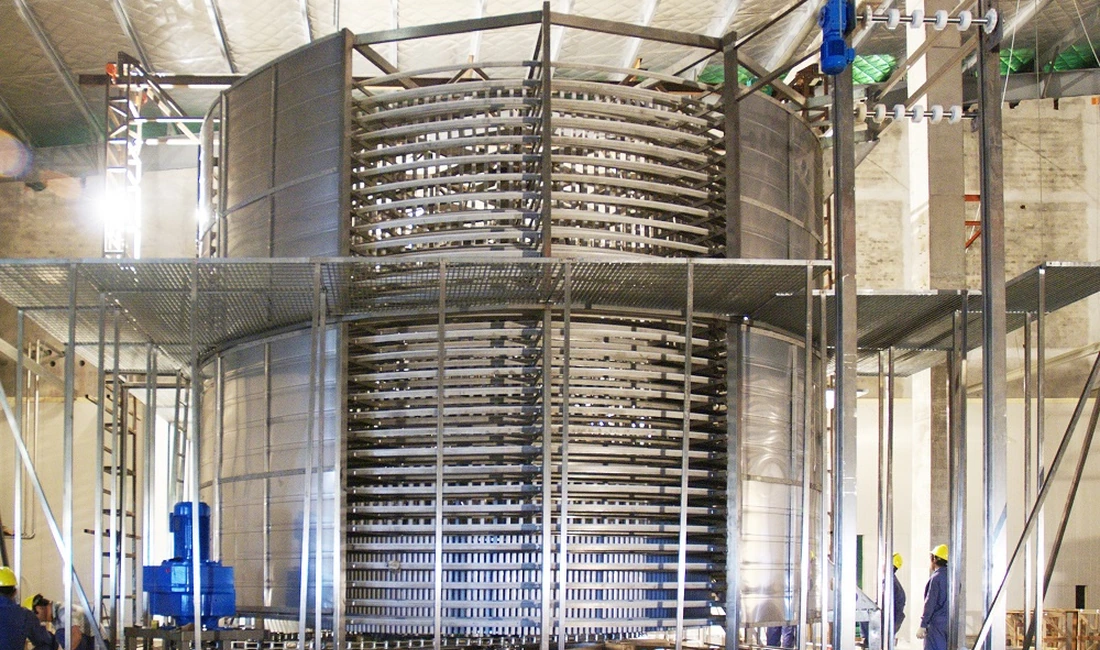
A spiral freezer belt does more than carry food through a cold enclosure. It supports the product, follows a curved path, and lets cold air reach the load. It also works with the drive for long production runs. Its design can affect even freezing, product appearance, cleaning time, and line uptime.
For this reason, material and width are not enough to select a belt. Product data, belt load, drive method, turn radius, airflow, cleaning, and machine layout must be reviewed together. This guide explains the main belt types, selection factors, and ordering checks.
What Is a Spiral Freezer Belt and Why Does It Matter?
A spiral freezer belt is the moving surface that supports food through the spiral path. Its design links product support, airflow, turning, and drive performance.
How a Spiral Freezer Belt Works
A spiral freezer uses a long conveyor arranged in vertical tiers. This layout provides the required freezing time while using less floor space than a long straight conveyor.
The belt carries food from the infeed, around the tower, and toward the outfeed. Cold air passes around the load during this path. The belt must bend, stay stable across its width, engage with the drive, and withstand repeated cold and wash cycles.
How Belt Design Affects Airflow, Product Quality, and Uptime
The belt surface affects product support and air access. A fine surface can support small food. A more open structure can let more air pass through. The openings must still stop the product from tipping, marking, or falling through.
Poor tracking can cause edge wear and unplanned stops. Joints that are hard to reach can also extend cleaning time. Still, no single belt feature controls freezer performance. Open area, loading, airflow, pitch, turn radius, and drive fit must work together.
What Are the Main Types of Spiral Freezer Belts?
The main belt groups are stainless steel mesh, modular plastic, and hybrid designs. Each one changes product support, airflow, cleaning, repair, and system fit.
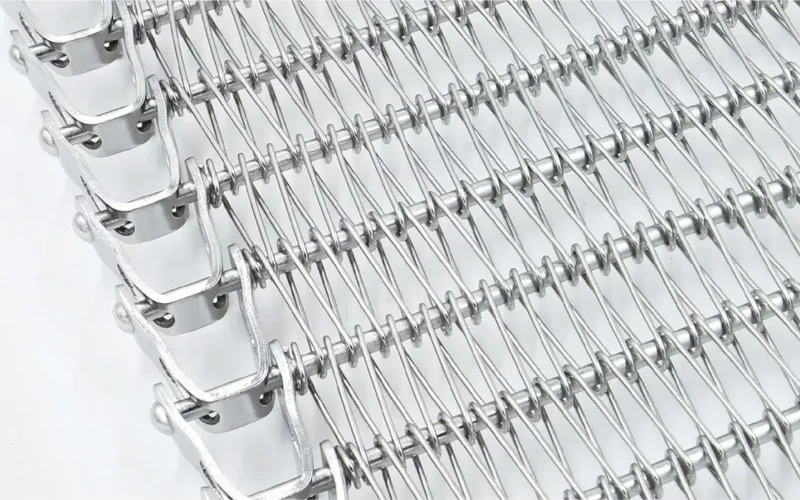
Stainless Steel Mesh Belts
Stainless steel spiral belts often use cross rods, links, and an open mesh surface. They can provide strength and airflow during constant turning. They may suit heavy loads, long runs, or products that need a thin carrying surface.
The wire, rod, link, edge, steel grade, and cleaning chemicals must still match. Welds and guide contact areas can wear. Some repairs need trained staff and the correct joining method.
Modular Plastic Belts
Modular plastic belts are built from linked modules. They can provide a smooth contact surface. In many designs, damaged sections can be replaced. Different patterns support drainage, airflow, product release, or small products.
Only materials rated for the required freezer temperature should be used. Buyers must check cold strength, impact resistance, chemicals, load, turn radius, drive, and rod material. One general temperature limit is not enough to judge a plastic belt.
Hybrid Metal-and-Plastic Belts
Some spiral belts use a metal load frame with plastic contact parts. Their value depends on the product, load, drive, cleaning, and repair plan. Buyers should confirm which parts can be replaced and how both materials react to cold and chemicals.
A Quick Comparison of Spiral Freezer Belt Materials
The table below shows how the three belt groups differ in common buying areas.
| Selection factor | Paslanmaz çelik ağ | Modüler plastik | Hybrid construction |
| Product support | Depends on mesh and rod spacing | Wide choice of module surfaces | Can combine an open frame with added support |
| Air access | Often high with open mesh | Depends on module open area | Depends on the metal and plastic layout |
| Load capacity | Can suit demanding loads when correctly designed | Must be checked against resin, width, and temperature | Depends on the metal frame and module design |
| Field repair | May require special joining or welding methods | Damaged modules can often be replaced | Repair method depends on both materials |
| Temizlik | Open structures can improve access, but joints and edges still matter | Smooth modules can help, but hinges and rods need access | Mixed interfaces require careful review |
| Typical fit | Determined by the full process and freezer design | Determined by the full process and freezer design | Used when the combined structure solves a clear product or system need |
The final choice should be based on the real product and machine, not on a general material ranking.
How Should the Food Product Guide Spiral Freezer Belt Selection?
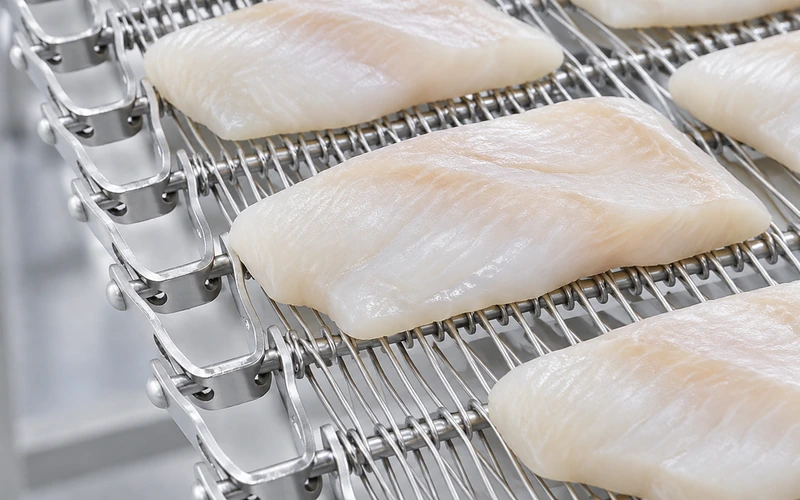
The food should guide belt selection before materials are compared. Size, weight, surface, packaging, and loading pattern define the required support and air access.
Product Size, Weight, and Loading Pattern
Small food pieces need enough support to avoid falling through or catching at a transfer. Larger products may allow a more open belt. Heavy meat, poultry, trays, and packed meals place more load on the belt and drive.
The loading pattern matters as much as total weight. The supplier needs product weight and planned load per square meter. A single layer creates different forces and airflow from a deep or uneven load.
Delicate, Sticky, Coated, or Packaged Foods
Soft dough, pastries, and formed products may need smooth support and gentle transfers. Wet or sticky foods can move or leave residue. Breaded foods can lose coating at large openings or rough transfers.
For packed products, tray feet and film edges may catch on openings or joints. Cartons and package corners can do the same. The actual pack should be tested or checked against the planned transfer.
Airflow, Product Support, and Belt Marking
The belt must balance air access with product support. Open area can help air reach the lower surface. However, fan position, air pressure, tier spacing, load depth, and product spacing also matter. Product trials can reveal marks on soft food.
Salt, Moisture, and Cleaning-Chemical Exposure
Seafood, brine, seasoning, and frequent wet cleaning can raise corrosion risk. The steel grade, plastic resin, joining parts, and surface finish must suit this setting. Buyers should share the chemical strength, temperature, contact time, and rinse method.
How Does the Drive System Affect Spiral Freezer Belt Selection?
The drive system controls how force reaches the belt and how tension is managed. Belt edges, sprockets, cages, guides, and controls must match the chosen drive.
Low-Tension or Friction-Driven Systems
Many standard spiral systems use a central rotating drum or cage. Friction at the inner belt edge helps move the belt. Controls link the drum with the take-up or outfeed drive.
Ice, water, oil, residue, and wear can change friction. Poor settings may then raise belt tension or make it uneven. The drum, belt edge, take-up, and drive need regular checks.
Positive or Direct-Drive Systems
A positive-drive system uses shaped cage bars, teeth, or similar parts to engage the belt. It relies less on sliding friction and can make tension easier to control in some uses.
This is not a simple belt change. A conversion may affect the cage, controls, supports, and safety settings. Any gain should be compared with the work, cost, and downtime.
Edge-Drive and Outside-Drive Systems
An edge-drive system applies force through one or both belt edges. Some designs use outer shafts and sprockets instead of a central drum. Edge strength, sprocket contact, alignment, guides, and wear must be checked as one system.
Self-Stacking Spiral Systems
In a self-stacking system, the belt edges rest on the tier below and help form the spiral. Side-link shape, stack height, tier space, load transfer, drive, and cleaning access must all match. This belt cannot be freely exchanged with a standard spiral belt.
Buyers may compare a standard industrial spiral freezer with a self-stacking spiral freezer. The review should cover the full machine design. Belt material alone cannot show which structure is a better fit.
Which Spiral Freezer Belt Specifications Must Be Confirmed?
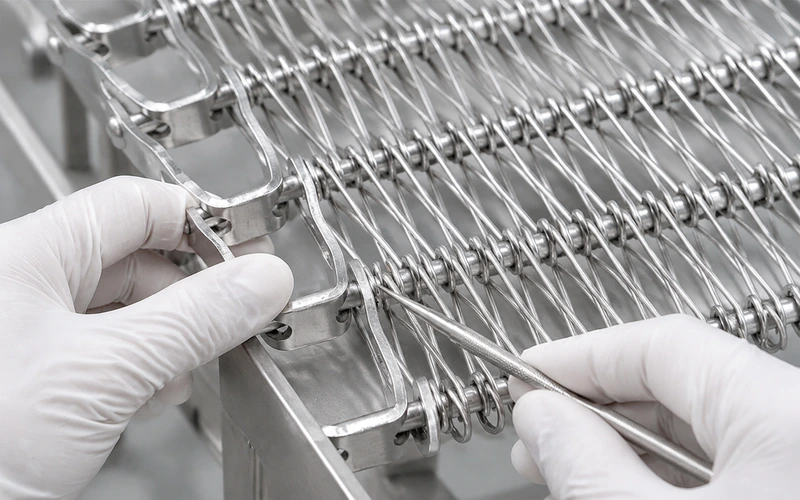
The order should define machine fit and operating needs. Width, pitch, radius, speed, load, edges, and drive details are the main checks.
Total Width, Usable Width, Pitch, and Open Area
Total belt width and usable carrying width are not always the same. Edge links, guards, guides, and drive parts can reduce product space. For example, if a belt is 1,000 mm wide but only 900 mm is usable, load plans should use 900 mm. These figures are illustrative.
Pitch is the distance between repeated rods, links, or modules. It affects support, bending, open area, weight, and drive contact. A small pitch can support small food, while a large pitch may provide more open space. Buyers should also check how the supplier calculates open area.
Inside Turn Radius, Turn Ratio, and Drum Diameter
The belt closes on the inside of a turn and opens on the outside. Its minimum radius must match its width and build. Turn ratio often links the inside radius to belt width, but each offer should state the formula used.
The wrong radius can raise edge stress, drive load, and wear. The belt drawing should be checked with the tower and drum drawings.
Belt Speed, Product Load, and Required Dwell Time
Belt speed helps set how long the product stays in the freezer. The required time also depends on product size, recipe, inlet temperature, target temperature, loading, and heat transfer.
The belt must carry the load during normal runs, starts, stops, and short loading changes. A kilograms-per-hour figure does not show every local force. Changing speed can alter dwell time and output, but it cannot correct poor airflow or low refrigeration capacity.
Edges, Guide Rails, Sprockets, and Transfer Points
The edge link, joint, side gap, and guide surface must fit the machine. Guide rails and wear strips should support the belt without creating high friction in one area.
Where sprockets are used, the tooth shape and pitch must match. Diameter, shaft position, and tooth contact also matter. Worn sprockets, guides, or rails can damage a new belt. Infeed and outfeed transfers must let the product cross without tipping or catching.
| Information to confirm | Why it matters |
| Total and usable belt width | Confirms machine fit and product capacity |
| Belt, rod, or module pitch | Affects support, flexibility, and drive engagement |
| Inside radius and drum diameter | Confirms turning compatibility |
| Product load per belt area | Supports strength and drive calculations |
| Belt speed and dwell time | Links production rate with freezing time |
| Edge and guide details | Affects tracking and wear |
| Sprocket or drive interface | Prevents mismatch and abnormal wear |
| Transfer dimensions | Protects product flow at infeed and outfeed |
How Do Hygiene and Cleaning Requirements Affect a Spiral Freezer Belt?
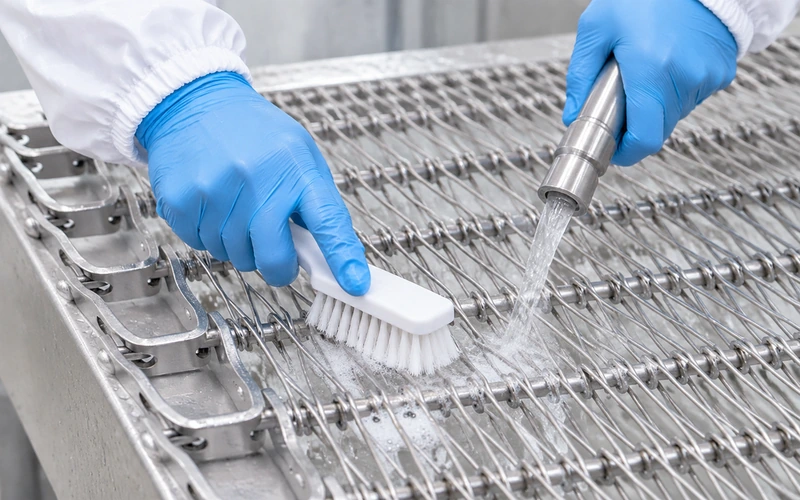
Cleaning needs affect the belt surface, joints, materials, and access. The design must release soil, tolerate the wash method, and allow inspection.
Open Design, Soil Traps, and Cleaning Access
An open belt can improve cleaning access, but open space alone does not make it hygienic. Rod links, hinges, welds, module joints, edges, and guards can still hold soil. Spray must reach the top, underside, edges, return path, and drive area.
CIP, Belt Washers, and Cleaning-Chemical Compatibility
Some spiral freezers use clean-in-place equipment or a belt washer. Wash steps depend on the food, soil, plant rules, and chemical guide. Water pressure and nozzle position should remove soil without harming parts. Heat and chemicals must suit the belt, rods, joints, guides, and drive.
Food-Contact Documents and Material Traceability
Food contact records depend on the sales market and plant approval process. Metal belt records may cover steel grade and surface treatment. Plastic belt records may cover resin and joining parts. Clear drawings and part numbers support future replacement.
What Causes Spiral Freezer Belt Problems and Premature Wear?
Early wear usually points to system mismatch, poor setup, buildup, or worn machine parts. The location and pattern of damage often help identify the cause.
Poor Tracking, Edge Wear, and Belt Flip-Up
Uneven edge wear, guide contact, belt lift, and flip-up are warning signs. Causes include poor alignment, uneven tension, wrong cage speed, worn guides, buildup, or the wrong radius. A broken link can point to a wider guide or drive problem.
Incorrect Tension, Drive Mismatch, and Worn Components
High tension adds stress to links, rods, edges, bearings, and drive parts. Poor control can also cause weak contact and poor tracking. Sprockets, cage bars, wear strips, and rails should be checked before a new belt is ordered.
Ice Buildup, Product Residue, and Overloading
Ice and residue can change friction, block openings, limit hinge movement, and raise drive load. An uneven or heavy load can also change belt shape and block airflow. Cleaning and defrost plans should match the real production run.
Inspection, Condition Monitoring, and Planned Maintenance
Checks should cover edges, rods or modules, joints, tracking, guides, sprockets, take-up position, drive load, sound, and product movement. The schedule should reflect run hours, food type, cleaning, and maker instructions.
Changes in tension, motor load, cage power, temperature, or bearing condition can warn of a problem. Lubricants should be used only where required and must suit the cold food area. Plants should also keep the correct joining parts and key spares.
| Warning sign | Possible causes to check |
| Uneven edge wear | Alignment, guide clearance, tension, loading |
| Belt lift or flip-up | Cage speed, take-up, friction change, obstruction |
| Sprocket jumping | Pitch mismatch, worn teeth, poor engagement |
| Rising motor load | Ice, residue, high friction, overload, bearing condition |
| Product movement | Drive action, belt surface, transfer, loading pattern |
| Repeated rod or link damage | Local stress, fatigue, radius, worn machine parts |
What Should Buyers Confirm Before Ordering a Spiral Freezer Belt?
A complete RFQ should describe the product, process, machine, and supply scope. New and replacement projects need different supporting data.
Requirements for a New Spiral Freezer Project
For a new project, the supplier needs the product name, size, weight, pack type, required output, inlet temperature, target core temperature, and run hours.
Floor area, ceiling height, infeed, outfeed, nearby conveyors, cleaning access, and refrigeration system affect machine design. These details can change belt width, tier count, drive, and transfers. Future products should also be reviewed when their weight or surface differs.
Checks for a Replacement Belt Project
A replacement project needs the machine model, drawings, pitch, part sizes, edge design, radius, drum or sprocket data, running direction, belt length, and clear photos.
Failure history is just as important. The supplier should know where the belt wore, whether it tracked to one side, and whether drive load or cleaning changed. Samples and machine measurements can help when drawings are missing. Production should not begin until all key sizes are clear.
Spiral Freezer Belt RFQ Checklist
The RFQ should include the following details so the supplier can check fit and scope.
- Food product, size, weight, and condition
- Required output and loading density
- Inlet temperature and target outlet or core temperature
- Required dwell time and belt speed, if known
- Total belt width and usable width
- Belt, rod, link, or module pitch
- Inside turn radius and drum diameter
- Drive method and sprocket information
- Edge, guide rail, and side-guard details
- Operating temperature and production hours
- Cleaning method, chemicals, and wash temperature
- Drawings, old belt photos, and failure records for replacements
- Required documents, spare parts, delivery date, and installation support
Documentation, Testing, Spare Parts, and After-Sales Support
Buyers should confirm the drawing, material, drive contact, size limits, and check plan. The order may cover only the belt or include sprockets, wear strips, joining parts, spares, tools, start-up help, and training.
For a complete freezer, factory tests should check belt movement, tracking, controls, alarms, and safety functions where practical. Freezing results still need confirmation under the agreed site conditions.
Comparing Purchase Price with Total Cost of Ownership
Buyers should compare more than the purchase price. Other costs include installation, machine changes, cleaning, repairs, spares, lost production, and service support.
Energy use must be checked for the full system. Belt weight, open area, friction, drive load, fans, refrigeration, frost, loading, and work plans all have an effect. Any saving claim needs project data and a clear test method.
There is no set belt life for every plant. Load, cycles, radius, tension, cleaning, corrosion, alignment, drive condition, and care all matter. A useful offer explains the design basis and wear controls instead of relying on one life claim.
Frequently Asked Questions About Spiral Freezer Belts
These questions cover issues that often remain after initial selection. They address material choice, open area, conversion, service life, worn parts, and product range.
Which Is Better, a Stainless Steel or Modular Plastic Spiral Freezer Belt?
Neither material is right for every project. Stainless steel mesh can suit open airflow and heavy loads. Modular plastic can give smooth support and easier section repair. The right choice depends on the product and freezer temperature. Load, turn radius, drive, cleaning, and contact surface also matter.
Does a Larger Open Area Always Improve Freezing?
No. Open area can help air reach the product. Freezing also depends on air direction, speed, and pressure. Product space, load depth, tier space, and cooling power also matter. The belt must still support the food and limit marks or loss through the openings.
Can a Spiral Freezer Belt Be Replaced with a Different Material or Design?
It may be possible, but it needs an engineering review. A new material or build can change belt weight and growth in the cold. It can also change turning, sprocket contact, friction, tension, support, and cleaning. The belt, drive, guides, controls, and transfers may all need changes.
How Long Does a Spiral Freezer Belt Last?
Belt life can vary widely. Running hours alone cannot predict it. Product load, cycle count, turn radius, drive state, wash chemicals, alignment, and rust all have an effect. Care also matters. Wear trends and check records give a better repair guide than a fixed number of years.
When Should Sprockets, Rails, or Wear Strips Be Replaced with the Belt?
They should be replaced when wear is outside the machine maker’s limits. Parts should also be replaced when their wear could harm the new belt. Tooth shape, rail level, surface damage, guide gap, and shaft alignment should be checked during each major belt change.
Can One Spiral Freezer Belt Handle Several Food Products?
One belt can handle several products when they fit the same design range. Their size, load, surface, pack, and cleaning needs must be similar. Each product still needs checks for support, airflow, transfer, freezing time, and loading. These checks should be complete before the settings are approved.
Choose the Spiral Freezer Belt as Part of the Complete Freezing System
A spiral freezer belt should be selected as part of the complete freezing system. Its material, surface, pitch, width, radius, edge, and drive must suit the product. They must also work with airflow, dwell time, cleaning, refrigeration, and plant layout. Reviewing these factors together gives buyers a sound basis for comparing proposals.
Square Technology evaluates the belt, drive, transfers, and freezer configuration as one system. Buyers planning a new line or replacing a belt can provide product size and weight, required output, inlet and target temperatures, loading pattern, run hours, cleaning method, refrigeration conditions, and available layout.
With this information, the engineering team can confirm the design needs and project scope. This gives buyers a clear basis for reviewing the proposal and moving the project forward.