
A food processing line turns raw ingredients into safe, uniform products by linking preparation, cooking, freezing, and packaging in one continuous system. Each stage has a specific job to keep things consistent, meet safety rules, and speed up production.
If you set up the line well, you’ll cut waste, spend less, and keep food quality steady from batch to batch. The right mix of equipment layout, automation, and hygiene control creates an efficient flow.
Engineers and plant managers look closely at ingredient handling, temperature control, and sanitation systems because these shape both output and safety. Sensors track temperature and humidity, conveyors keep things moving, and automated cleaning systems save labor while stopping contamination.
This article breaks down each stage—from receiving raw stuff to packaging—showing how automation, smart controls, and layout planning boost throughput. Picking the right equipment supplier also helps companies stay scalable and compliant without losing efficiency.
What a Food Processing Line Really Is (And Why It Matters for Modern Manufacturing)
A food processing line is a system of machines, conveyors, and workstations that turns raw ingredients into finished products in a controlled, repeatable sequence.
Here’s how it all fits together:
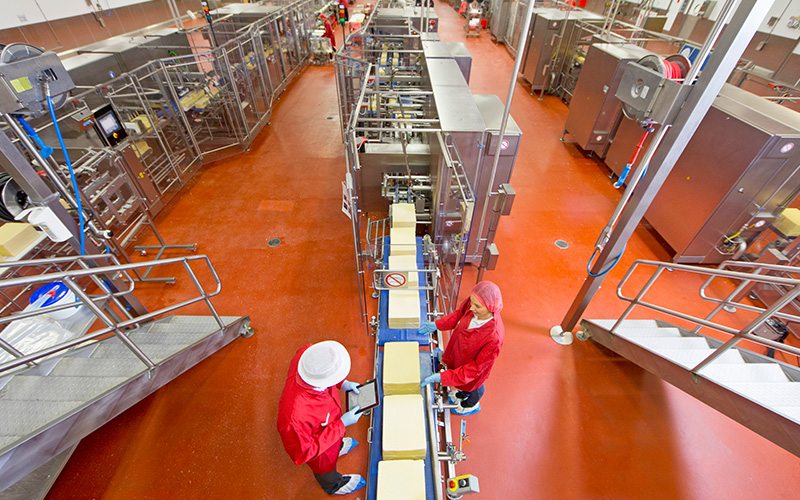
- Structure: Every line has sections for preparation, cooking or forming, cooling, packaging, and inspection. Conveyors connect these sections, keeping product flow steady and reducing how much people handle things by hand.
- Purpose: With each stage assigned a clear job, manufacturers can monitor temperature, timing, and hygiene closely. This helps the final product meet food safety standards like HACCP or ISO 22000.
- Design Logic: Modern lines focus on flow, not just filling up space. Machines go in the order materials move, so downtime and cross-contamination drop since people and products follow clear, predictable paths.
Integrated design matters because every part supports consistency and safety. Robots handle portioning to cut down on manual contact, and automatic washers keep surfaces clean between runs.
Common products of food processing line:
- Frozen Dumplings: Mixers, forming machines, and blast freezers work together so each dumpling is shaped, cooked, and frozen without stopping.
- Baked Goods: Ovens and cooling tunnels line up with slicers and wrappers, helping keep bread quality steady and saving time.
- Ready Meals: Cooking kettles connect to filling and sealing units that keep things at the right temperature until everything’s packed.
Key elements and impacts of food processing line:
- Conveyor Flow: Moves products between stages without delay, cutting idle time and reducing product damage.
- Hygienic Design (304 stainless steel): Resists corrosion, cleans up easily, meets sanitation rules, and helps equipment last longer.
- Automated Sensors: Track weight and temperature, reduce waste, and keep batches uniform.
How a Food Processing Line Begins: Receiving, Sorting, and Preparing Ingredients
The start of a food processing line sets the tone for the whole operation. Every ingredient needs checking, cleaning, and prepping to make sure the end product is safe and consistent.
Ingredient Intake & Inspection in the Processing Line
Intake and inspection make sure raw materials meet standards for safety, condition, and consistency before they go any further.
- Receiving: Ingredients show up in controlled conditions, usually by truck or conveyor. Workers check delivery records and make sure storage temperatures and containers meet food safety rules.
- Inspection: Staff or automated sensors look for defects, contamination, or wrong labels. Optical sorters might use near-infrared scanners to spot foreign objects or color differences, pulling out bad stuff early.
- Documentation: Each batch gets a traceability code linked to the supplier and test results.That way, if there’s a problem later, you can track it back.
- Reason: Early checks cut waste and keep unsafe materials out of the main processing stages. This helps avoid rework and keeps production running smoothly.
Cleaning, Washing, and Trimming Before the Processing Line Moves Forward
The cleaning and trimming phase gets rid of dirt, damaged parts, and contaminants so ingredients are ready for the next step.
- Washing Methods: Water jets, air bubblers, or mild chlorine solutions get used depending on what’s being cleaned. Leafy veggies might go through gentle agitation tanks to loosen dirt without tearing leaves.
- Trimming: Operators or automated cutters remove bruised or inedible bits. In fruit lines, laser or vision systems guide the trimming to get more usable yield.
- Drying and Draining: After washing, centrifuges or air knives get rid of surface moisture to fight microbial growth and stop equipment from rusting.
- Cause: Cleaning early prevents clogs, boosts hygiene, and keeps processing uniform. For manufacturers, this means smoother flow and fewer losse
Core Food Processing Line Steps: Mixing, Forming, Cooking, and More
A food processing line turns raw ingredients into safe, uniform products through a series of mechanical and thermal steps that keep quality and consistency on point.
- Mixing – Ingredients go into industrial mixers with paddle or ribbon blades to get everything blended evenly. The machines stick to set speeds and times, so hydration and texture stay consistent. That’s how you get doughs or batters that cook or bake the same every time.
- Forming – Mechanical formers shape the mixed stuff into portions using molds, dies, or extrusion nozzles. By controlling compression and shape, the line delivers predictable weights and sizes, making packaging easier and cutting down on waste from oddball products.
- Cooking – Steam tunnels, ovens, or fryers bring the heat. Operators set the right temperature and timing to kill microbes but keep the product’s texture intact. This means food hits safety marks without ruining structure or color.
- Cooling and Packaging – Rapid cooling systems drop product temperature fast to stop bacteria. Then, automated conveyors send items to filling and sealing stations, often using vacuum or gas-flush methods. This extends shelf life and gets things ready for storage or shipping.
- Automation in Repetitive Operations – Programmable logic controllers (PLCs) and sensors keep timing, temperature, and conveyor flow in sync. In a bakery, they coordinate mixing and baking; in meat processing, they track cooking temps; in ready-meal lines, they handle filling and sealing cycles.
Freezing in the Processing Line: Cooling, Freezing, and Proofing
Freezing in the processing line isn’t just one thing. It’s a series of steps that control temperature to lock in texture, flavor, and safety. Cooling, freezing, and proofing each use their own methods to keep products stable before packaging or shipping.
- Cooling: Cooling knocks down the heat after cooking or forming, usually with air or water systems that bring product temps to safe levels in minutes. Controlled air speed and humidity help prevent moisture loss, so products stay firm for transport and packaging, and bacteria don’t get a foothold.
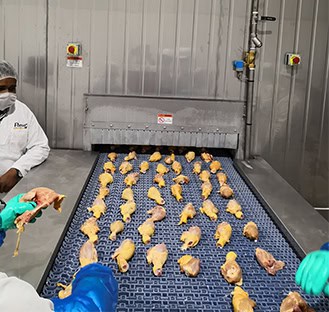
- Freezing: Industrial freezing uses air blast, plate, or cryogenic systems with nitrogen or CO2. Cryogenic freezers can drop food temps super fast (from about 160°F to 0°F), making smaller ice crystals. That keeps texture intact, so fruits, meats, or pastries taste right after thawing. Spiral freezers keep trays moving through cold air, boosting throughput and keeping temps even across batches.
- Proofing: In bakeries, proofers let dough rest and rise under set heat and humidity, usually around 38°C and 75–85% humidity. Since yeast reacts to temperature, keeping these limits steady means loaves rise predictably and have the right crumb. Operators get fewer rejects and more reliable bake times.
How To Keep a Processing Line Hygienic: Safety, Compliance, and Cleanability
Keeping a processing line clean means making sure equipment and facilities don’t let in contaminants, microbes, or residues that could hurt food safety. Every step needs to match Hazard Analysis and Critical Control Point (HACCP) rules and local laws.
- HACCP Considerations Each production stage controls known hazards. Temperature checks stop bacteria, and barriers or good cleaning routines keep cross-contamination in check. This way, critical points stay safe, and anything off gets pulled out fast.
- Hygienic Design Principles: The line uses smooth, nonporous materials like 304 or 316 stainless steel to fight corrosion and stop residue buildup. Welded and polished joints keep bacteria from hiding. This makes cleaning easier and cuts downtime during sanitation.
- Cleaning and Disinfection Methods: Regular cleaning uses alkaline detergents to break down organic mess, followed by acid rinses for minerals. Afterward, surfaces get sanitized with agents like peracetic acid. Sticking to set strengths and times keeps microbe control consistent.
- CIP (Clean-in-Place) Systems: Automated CIP loops run cleaning solutions through pipes and tanks without taking things apart. This saves labor and water, plus it keeps records for compliance. For processors, it means repeatable cleaning and easy audits.
- Environmental and Zoning Controls: Hygienic zoning separates raw, semi-processed, and finished areas with barriers or airflow controls. This setup limits pathogen spread and makes cleaning schedules easier to manage and check.
Automation Inside the Processing Line: Sensors, Data, and Smart Controls
Modern food processing lines lean heavily on sensors, data networks, and automated control systems to keep production steady and traceable. Sensors monitor key variables like temperature, pH, and flow rate.
When a sensor spots a deviation, the control system instantly tweaks machine settings to keep products within spec. It’s a dance of constant adjustment, really.
Smart sensors now come with microprocessors that crunch data before sending it to the main system. This setup cuts down on signal noise and gives you a quicker response.
Because of this, processors can catch bottlenecks or quality hiccups as they happen, not after the batch is done. That’s a big deal for keeping things on track.
Here’s a quick rundown of common technologies used in food processing lines:
- Temperature sensors keep thermal conditions in check, like when monitoring pasteurization units.
- Vision systems inspect and grade products, catching things like packaging defects.
- Flow meters regulate ingredient input, making sure mixing lines stay balanced.
- Vibration sensors predict wear or imbalances, so you can track motor and bearing health before something goes wrong.
Automation ties all these devices together using PLC (programmable logic controller) or SCADA (supervisory control and data acquisition) systems. These platforms analyze real-time data from every step, so operators get a full view of equipment status, alarms, and output metrics on a single screen.
For manufacturers, this means fewer manual checks and much faster fixes when something’s off. Predictive maintenance uses vibration or temperature data to figure out when machines need service.
By jumping on this info early, plants avoid downtime and cut waste from surprise failures. Honestly, it’s a smarter way to boost reliability without piling on labor or material costs.
How the Processing Line Prepares Food for Final Packing
A processing line gets food ready for packaging by controlling portion size, checking appearance and consistency, and moving the finished product through clean, synchronized systems that guard quality and safety.
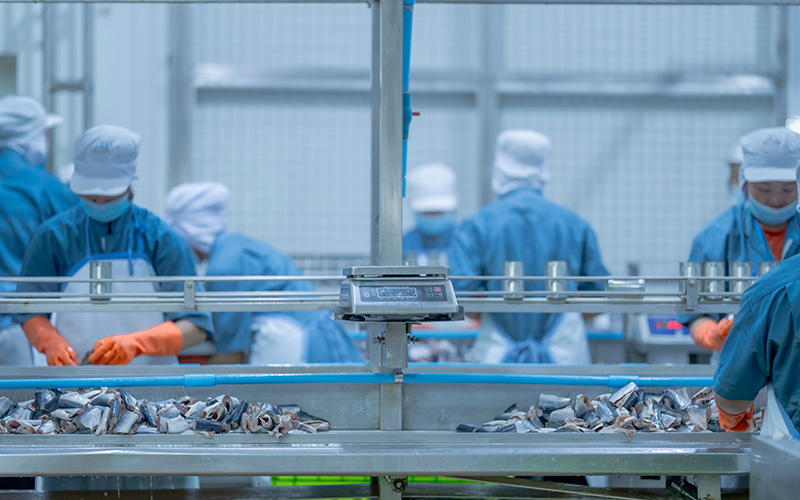
- Portion Accuracy: Automated weighing and cutting systems use load cells and optical sensors to measure each portion within preset tolerances, often within ±2 grams per unit. Automation removes human guesswork, so every unit hits the right fill weight and shape. That means uniform servings and less product giveaway.
- Appearance/Consistency Checks: Cameras and vision software inspect color, shape, and texture against reference models. If something falls outside the standard, actuators kick it off the conveyor. Only products that match spec move into the packaging phase. For shoppers, that’s why every package looks and feels the same.
- Transfer to Packaging Equipment: Conveyors with food-grade stainless steel or polymer belts shuttle products into packaging stations under controlled temperature and humidity. These conveyors are sealed and easy to clean, so contamination risk stays low. Hygienic design here keeps food safe and helps shelf life after packing, too.
How To Improve Processing Line Efficiency: Layout, Bottlenecks, and Equipment Choice
Efficient processing lines depend on three things: organized layouts that cut travel time, consistent product flow, and equipment that fits both your capacity and reliability needs. Getting these lined up means smoother throughput, fewer holdups, and steady product quality.
Line Layout & Flow Planning
A clear, logical line layout trims down handling time and blocks congestion between machines. In food processing, stations like mixing, forming, cooking, and cooling usually follow a straight or U-shaped sequence to match product flow.
This setup keeps workers moving materials forward—not back or sideways—so each batch takes less time. Modern design tools let engineers simulate flow by mapping out cycle times and idle periods for each step.
By plotting these data points, bottlenecks pop up, and you can adjust spacing before installing equipment. Digital modeling makes it way less likely you’ll need a costly redesign later.
Operators often split raw and cooked zones with physical barriers and dedicated air handling systems to meet hygiene rules. Since airflow and temperature stability affect food safety, planners size ducts and chillers based on real-time heat load data instead of fixed guesses.
This means fewer compliance headaches and more consistent processing temps for everyone involved.
Eliminating Bottlenecks Across the Processing Line
Bottlenecks happen when the slowest machine or transfer step drags down the whole line. Fixing them means balancing equipment and matching capacities. The following are methods, reasons, and the impact of eliminating bottlenecks across the processing line.
- Method: Automated transfer systems like belt conveyors or vacuum pumps keep feed rates steady. Automation cuts manual handoff delays and lowers contamination risk.
- Reason: Temperature-control units such as freezers or proofers can slow the process if their cycle times don’t match upstream steps. Variable-speed or multi-zone models let you fine-tune retention time for continuous loading.
- Impact: Maintenance routines matter, too. Smart sensors for vibration and temperature help operators catch wear early and avoid surprise stoppages. The payoff is higher line availability and more predictable production schedules.
How To Choose a Processing Line Partner: What to Look For in a Reliable Equipment Supplier
A reliable processing line partner brings technical know-how, custom solutions, and a real commitment to service—all matched to what a food manufacturer actually needs. Here are the key factors to consider when choosing a processing line partner.
- Experience: Suppliers with at least ten years in the food industry have seen it all. They know sanitary design, automation, and rules like FDA or EU hygiene codes. That kind of experience leads to practical fixes that prevent cross-contamination and downtime.
- Custom Engineering: Partners who offer custom engineering—like tweaking conveyors for product texture or humidity—can match equipment to your real throughput targets. This means fewer bottlenecks and more reliable product quality.
- Material Specification: Equipment made with 304 or 316L stainless steel stands up to cleaning chemicals and high humidity. That translates to longer service life and fewer maintenance headaches.
- Integration Capability: The ability to connect new gear with existing PLC or MES software keeps data tracking unified. When everything’s synced, operators can tweak performance in real time.
- After‑Sales Service: Suppliers with on-site tech support and spare parts on hand make it easier to bounce back from faults. Fast response keeps uptime high, which is what you want for hitting output goals.
- Cost vs. Lifetime Value: Upfront price matters, but looking at total cost of ownership reveals where you really save. Equipment that cuts energy use or cleaning cycles will cost less over the years.
Sıkça Sorulan Sorular
What key factors influence efficiency in a food processing production line?
Efficiency comes down to equipment layout, process timing, and how well workers coordinate. When machines and workstations are set up in a logical order, product moves better and idle time shrinks.
Sticking to regular maintenance schedules helps prevent surprise downtime. Real-time monitoring systems flag delays early, so you can adjust before they hurt production.
How do automation and technology play a role in food processing lines?
Automation handles repetitive tasks like mixing, filling, and packaging. Robots and sensors do these jobs faster and with fewer mistakes, sticking to precise tolerances down to fractions of a millimeter.
Automated temperature and pressure sensors lock in consistent cooking and sterilization. For operators, this means more uniform food texture and fewer errors during long shifts.
What is the importance of quality control in food manufacturing?
Quality control makes sure products meet safety and labeling standards. Routine checks confirm weight, ingredient ratios, and packaging integrity using digital scales and inspection cameras.
Spotting variations early helps manufacturers avoid recalls. In practice, this saves resources and keeps consumer trust intact.
How can manufacturers ensure safety and compliance in food processing?
Most plants stick to Hazard Analysis and Critical Control Points, or HACCP, guidelines to keep contamination at bay. These guidelines point out spots where temperature, moisture, or microbial risks might pop up and set clear, measurable limits.
Manufacturers usually choose food-grade stainless steel, like 304 or 316L, for equipment. This material stands up well to cleaning chemicals and keeps corrosion in check.
Operators benefit from this design because it cuts down on bacterial buildup. It also helps support FDA and USDA compliance, which is always a big deal.
What are the common challenges faced during food processing and how are they resolved?
Some headaches in food processing include uneven cooking, material waste, and mechanical breakdowns. Process engineers use things like standardized testing and thermal mapping to check if heat spreads out evenly.
To deal with breakdowns, manufacturers install backup components and use predictive maintenance software. This setup lowers downtime from worn-out parts.
Staff notice fewer disruptions during their shifts, and output levels stay steady. It’s not a perfect system, but it sure beats scrambling every time a machine fails.
What strategies are used for optimizing workflow in food processing plants?
Optimizing workflow usually kicks off by mapping every step, from ingredient intake all the way to packaging. Managers then look at this process map and spot the bottlenecks.
They’ll reassign resources when things get stuck or slow. Lean manufacturing techniques come into play here, too.
For example, single-minute exchange of die systems help shorten setup times between batches. These systems cut down on tool-change steps, so production lines can switch between products faster.
That means the team keeps labor costs steady, even while boosting flexibility. It’s a practical way to make the most of every shift.