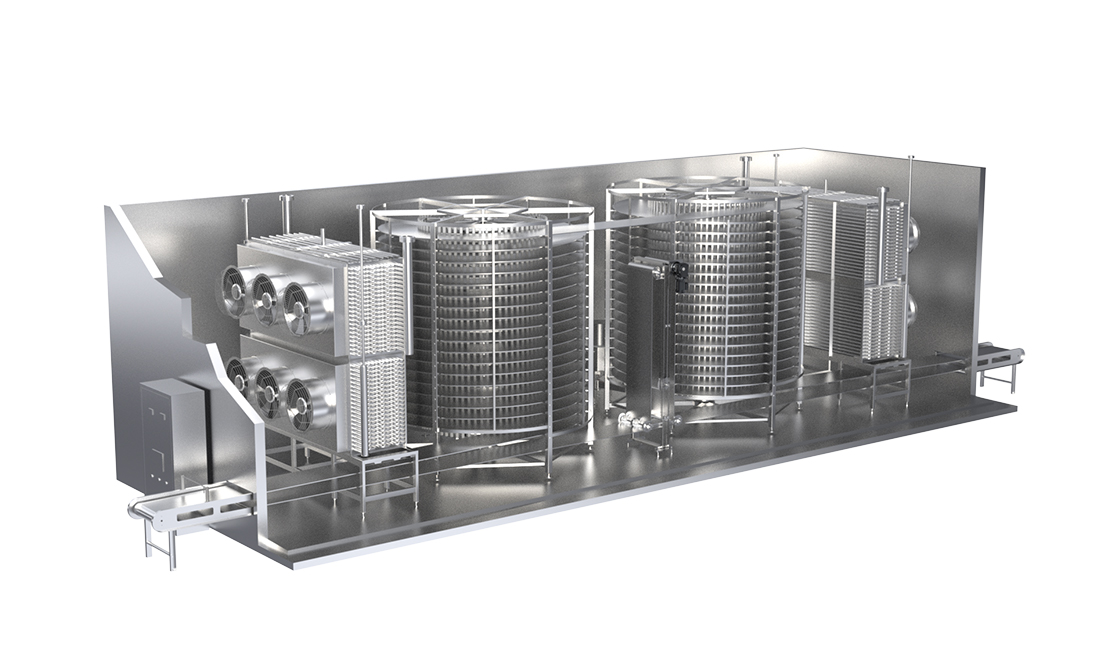
IQF freezing protects food cells better than other methods. It freezes each piece in 8 to 15 minutes at -35°C to -40°C. This speed creates tiny ice crystals under 25 micrometers that stay inside cell walls without breaking them. Slow freezing takes hours and forms large crystals over 100 micrometers. These large crystals puncture cells and cause moisture loss, mushy textures, and nutrient leakage when thawed.
Based on many years of industrial freezing engineering—designing IQF tunnel, spiral, and fluidized-bed systems for food processors—this guide explains how IQF works, compares ice crystals between IQF and slow freezing, shows the drip loss and nutrient gaps, and lists which foods benefit most.
What Is IQF Freezing and Why Does It Matter for Food Cells?
IQF freezing is a technology that freezes individual food pieces separately at temperatures between -35°C and -40°C using high-velocity air. The rapid freezing process takes minutes instead of hours, which directly affects how ice forms inside food cells.
Quick freezing through IQF preserves cell membranes because ice crystals stay small. When cells remain intact, food keeps its original texture, color, and nutritional content. Products frozen with IQF technology show drip loss between 3-8% during thawing compared to 10-20% for block-frozen items.
Key advantages of IQF freezing for cellular preservation:
- Speed: Freezes food in 8 to 15 minutes
- Separation: Each piece freezes individually without clumping
- Quality: Maintains cellular integrity and natural structure
- Flexibility: Allows portion control without thawing entire batches
The freezing technology works through optimized airflow patterns that surround each food piece. Temperature control systems maintain consistent cold throughout the process. High-velocity air removes heat from food surfaces at rates 15-20 times faster than still air methods.
How Does IQF Freezing Actually Work?
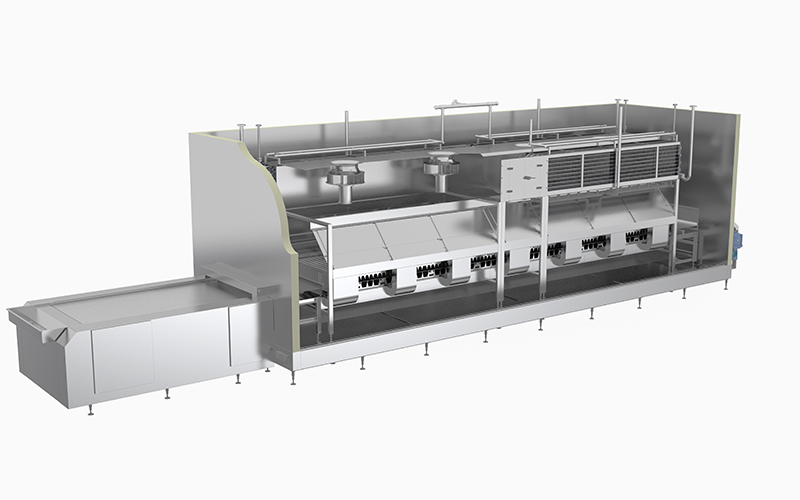
IQF freezing uses cold air circulation or liquid nitrogen to freeze individual food pieces in minutes instead of hours. Food items enter a specialized freezer on a conveyor belt or shaker system. They move through a freezing zone where cold air flows around each piece separately. The process prevents individual pieces from sticking together during freezing.
Three main types of IQF equipment exist:
- Tunnel freezers — Carry food on a single horizontal conveyor through a freezing chamber. High-velocity cold air flows from underneath the belt while the product advances.
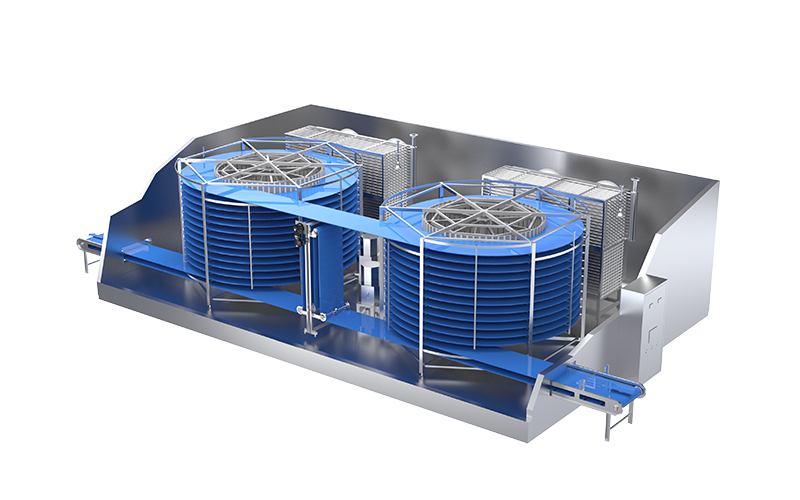
- Spiral freezers — Stack multiple belt tiers vertically to save floor space while maintaining high throughput.
- Fluidized-bed freezers — Use upward airflow to suspend small food pieces like peas, berries, or diced vegetables for the fastest, most uniform freeze.
Blast freezing completes in 3-15 minutes depending on the food type and size. This speed matters for quality preservation. The rapid temperature drop creates tiny ice crystals inside food cells instead of large ones.
How Much Better Is IQF at Preserving Food Quality?
IQF freezing reduces drip loss by 30 to 50 percent compared to traditional slow freezing methods. That retained moisture translates directly to higher product weight, better texture, and improved visual appeal after thawing.
Traditional freezing creates ice crystals larger than 100 micrometers in diameter. IQF systems generate crystals under 25 micrometers. These smaller crystals fit between cell walls instead of rupturing them, which preserves the original structure of fruits, vegetables, seafood, and proteins.
Key Quality Differences:
- Texture retention: IQF-frozen strawberries maintain 85 to 90 percent of their fresh firmness, while slow-frozen berries retain only 50 to 60 percent
- Color stability: Advanced freezing solutions lock in pigments faster, reducing oxidation and browning by 40 percent
- Nutrient preservation: Vitamin C loss drops from 25 percent in slow freezing methods to under 10 percent in IQF systems
Modern IQF freezers use food-grade stainless steel construction with proper insulation to maintain temperatures between -35°C and -40°C. This design allows tunnel freezer configurations and customization based on product type.
Refrigeration systems in IQF freezers circulate high-velocity cold air at speeds of 6 to 12 meters per second. This airflow freezes individual pieces in 8 to 15 minutes instead of the 6 to 10 hours required by conventional block freezing . The speed directly determines crystal size, which controls quality outcomes across all frozen food categories.
The faster freezing rate in IQF directly preserves product quality and nutritional value. Foods maintain their original texture, color, and bite after thawing. Traditional freezing causes mushy textures because broken cell walls can’t hold their shape.
Below is a comparison table between IQF and traditional freezing:
| Freezing Method | Crystal Size | Freezing Time | Cell Damage |
| IQF | <25 micrometers | Minutes | Minimal |
| Traditional | >100 micrometers | Hours | Significant |
Which Foods Benefit Most From IQF Freezing?
Foods with high water content and delicate cellular structures gain the most from IQF freezing. Rapid freezing prevents large ice crystals from rupturing cell walls, preserving texture, color, and nutrients across these key categories.
Below is a table shows the foods that benefit from IQF freezing:
- Berries — Strawberries, blueberries, and raspberries maintain shape with drip loss of only 3–8%, compared to 10–20% in block-frozen products.
- Cut Vegetables — Broccoli florets, cauliflower, green beans, Brussels sprouts, and diced onions, peppers, and carrots retain texture and nutritional content through rapid temperature reduction.
- Seafood — Shrimp, scallops, and fish fillets preserve moisture and prevent protein degradation when frozen individually.
- Poultry and Meat Products — Chicken pieces, meatballs, and burger patties benefit from adjustable freezing rates based on product size and fat content.
- Delicate Items — Herbs, mushrooms, and sliced fruits require the gentle handling IQF provides, as they cannot withstand slower freezing methods.
FAQs
Does IQF Freezing Kill Bacteria in Food?
No, IQF freezing does not kill most bacteria. It only pauses microbial growth by lowering temperatures below -18°C. Bacteria, yeasts, and molds become dormant but reactivate when food thaws. Only proper cooking to safe internal temperatures actually kills harmful pathogens.
Can You IQF-Freeze Food at Home?
No, you cannot truly IQF-freeze food at home. Home freezers operate at -18°C with low airflow, taking 4–6 hours to freeze fully. Industrial IQF requires -35°C to -40°C with high-velocity air, freezing food in 8–15 minutes—conditions impossible to replicate in residential freezers.
How Long Does IQF-Frozen Food Last Compared to Other Frozen Food?
IQF-frozen food maintains peak quality 30–50% longer than slow-frozen food. Most IQF products retain optimal texture and nutrition for 12–18 months at -18°C, while block-frozen equivalents decline noticeably after 6–9 months. Both remain safe indefinitely if stored continuously at 0°F.
Does IQF Freezing Affect the Taste of Food?
No, IQF freezing preserves taste better than any other freezing method. Microscopic ice crystals prevent cell rupture, so natural juices, flavor compounds, and aromatic oils stay locked inside cells during thawing. Slow-frozen food often tastes flat or watery from cellular fluid loss.
Is IQF Freezing More Expensive Than Other Freezing Methods?
Yes, IQF costs 15–30% more per kilogram than block freezing due to higher equipment investment and energy use. However, IQF remains 3–5 times cheaper than cryogenic freezing (liquid nitrogen or CO₂). The higher cost is offset by reduced waste, longer shelf life, and premium pricing.