
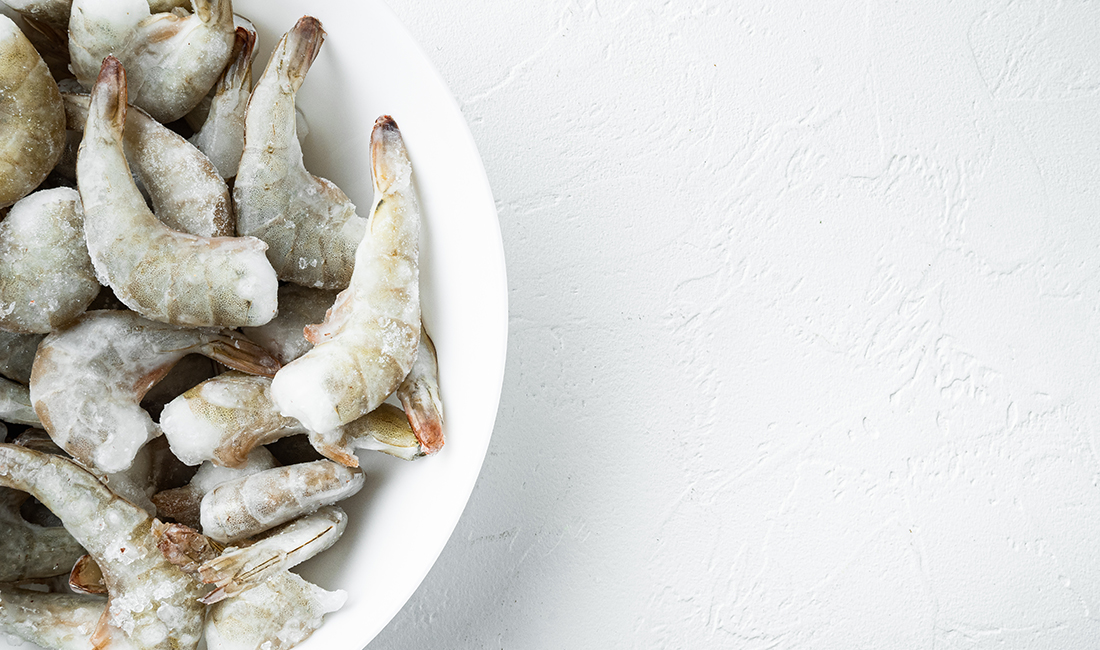
Preventing glazing loss requires careful control at every step: proper pre-freeze preparation, precise glaze application, stable cold-chain conditions, and routine verification. A loss of even 2–3% glaze can trigger customer complaints, regulatory issues, and margin erosion.
This guide walks through the causes of glaze degradation in frozen shrimp and the process controls needed to keep the ice coating intact from the IQF tunnel to the customer’s freezer. Each section includes target parameters, common defects, and troubleshooting actions based on field data from commercial IQF shrimp lines.
What Causes Glazing Loss In IQF Shrimp?
Glazing loss in IQF shrimp occurs when the protective ice coating breaks away or melts during handling, storage, and transport. The glaze protects frozen shrimp from freezer burn and dehydration.
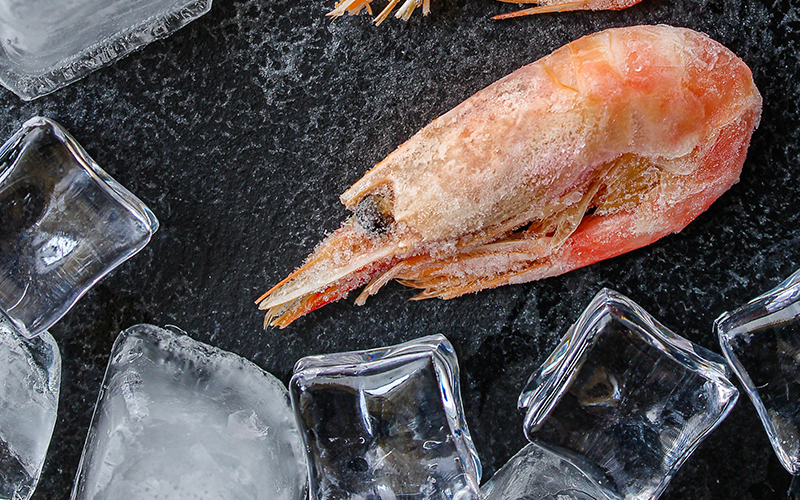
Common causes of glazing loss:
- Temperature swings during storage or transport
- Impact damage from rough handling
- Incorrect shrimp temperature during glaze application
- Extended storage approaching or beyond the product’s rated shelf life
- Inadequate packaging that allows air exposure
- Multiple freeze-thaw cycles
How Do You Freeze Shrimp Correctly Before Glazing?
IQF (individually quick frozen) shrimp must be frozen at extremely low temperatures to preserve quality before glazing. The shrimp are spread in a single layer on a conveyor belt or freezer tray to prevent clumping.
Quick freezing happens with air temperatures around -34°C to -40°C (-30°F to -40°F). Because IQF is a continuous belt process rather than a batch operation, each shrimp passes through the freezer in only a few minutes — smaller sizes freeze faster, larger counts take longer. The short dwell time prevents large ice crystals from forming inside the shrimp tissue.
Each shrimp freezes separately during IQF processing. This separation allows the glaze to coat every piece evenly later. Processors monitor the core temperature of the shrimp to confirm complete freezing before moving to the glazing stage.
Key factors for proper freezing:
- Temperature must stay below -30°F throughout the process
- Air circulation needs to reach all surfaces of the shrimp
- Shrimp cannot touch or overlap during freezing
- Freezing time depends on shrimp size and equipment capacity
The frozen shrimp move immediately to the glazing station after reaching target temperature. Any delay between freezing and glazing exposes the product to dehydration and oxidation. Storage of unglazed IQF shrimp should not exceed 30 minutes.
Proper freezing creates a stable base for the protective ice glaze. The glaze adheres better to fully frozen shrimp and forms a uniform barrier. This barrier protects the product during storage and transport to buyers.
How Do You Apply Glaze To Maximize Retention?
The application method determines how well the glaze stays on shrimp during handling and transport. Spray or curtain application usually gives more consistent adhesion than dipping for individual quick freezing operations.
Most shrimp processing facilities use one of three methods:
- The spray method works by passing frozen shrimp under fine water sprays inside or immediately after the IQF tunnel freezer
- The dip method submerges shrimp in chilled water for 2 to 5 seconds
- The staged method applies multiple thin layers rather than one thick coating
Multiple thin layers bond better than one thick layer. Letting each layer freeze fully before the next builds thickness gradually and improves adhesion to the shrimp surface.
Water temperature matters. Glaze water at 32–40°F freezes faster into smaller ice crystals, which bond more tightly to the frozen surface.
Glaze fast. Apply the first layer within 30 seconds of the shrimp leaving the IQF freezer, while the surface is still cold enough to freeze the water on contact.
Equipment that freezes product by contact or in blocks — such as plate freezers — generally cannot glaze inline and needs a separate glazing line, whereas spiral and tunnel IQF freezers can integrate a glazing zone directly.
Set the right belt speed. Too fast leaves gaps; too slow wastes water and over-glazes. Aim for 15–25 ft/min depending on spray setup.
How Do You Protect The Glaze During Cold Storage And Transport?
Constant temperature control protects the glaze on IQF shrimp during storage and transport. The storage temperature must stay at -18°C or below without fluctuation.
Temperature swings cause the glaze to sublimate. The ice layer evaporates when temperatures rise, leaving the shrimp tissue exposed to dehydration and freezer burn. This damage cannot be reversed even if proper temperatures are restored later.
Storage facility requirements:
- Maintain -18°C to -25°C consistently
- Use cold storage rooms with minimal door openings
- Install temperature monitoring systems
- Keep humidity levels stable
- Ensure proper air circulation
Proper packaging adds a second layer of protection. IQF shrimp should be sealed in moisture-proof bags or containers immediately after glazing. The packaging material must have strong vapor barrier properties to prevent moisture loss.
Stacking arrangements matter during storage and transport. Pallets should allow air circulation around all boxes. Poor air flow creates warm spots that damage the glaze on specific packages while others remain protected.
Glaze uptake of about 6–12% of product weight provides adequate protection for standard storage and transport, with roughly 8% as a common target. Long-haul export or buyer-specified programs sometimes run higher (commonly 15–20%), but any level above ~12% must be agreed in the purchase order and clearly declared on the label, because it raises short-weight scrutiny under EU, US, and Japanese rules.
How Do You Monitor And Verify Glaze Retention?
Buyers and processors monitor glaze retention by weighing frozen shrimp at three key points: immediately after glazing, at the end of storage, and upon arrival at the destination. The difference between these weights reveals how much glaze was lost.
At the glazing station, QA teams record the gross weight of each batch right after the ice coating is applied. This number becomes the baseline. Most shrimp processing facilities document this step as part of their HACCP control point for frozen product protection.
During storage, processors pull random samples every 7–14 days from the blast freezer or cold store. They weigh the same units again without deglazing. A drop of more than 1–2% from the baseline signals excessive glaze loss and triggers a review of storage temperature, humidity, and packaging integrity.
At receiving, buyers repeat the gross weight check before acceptance. If the current weight falls below the declared net weight plus expected glaze, the shipment may be short. This is when the deglaze test from the purchase order becomes critical to separate true net weight from remaining glaze.
Key metrics to track:
- Initial glaze weight (%)
- Current gross weight
- Weight loss over time (grams or %)
- Storage duration and temperature log
FAQs
Does Glaze Count Toward The Declared Net Weight?
No. In most markets the declared net weight must exclude glaze, and the glaze is reported separately. Counting ice as product weight invites short-weight claims and regulatory action, so always specify “net weight exclusive of glaze” on the spec.
How Long Can Glazed IQF Shrimp Be Stored At -18°C?
Glazed IQF shrimp keep good quality for roughly 6 to 12 months at a stable -18°C. A steady temperature matters more than the headline number; frequent swings shorten this window even when the average stays at -18°C. Colder storage extends it further.
Is Spray Glazing Better Than Dip Glazing For Retention?
Spray or curtain application usually gives more consistent adhesion and coverage than static dipping. Dipping in a static bath produces uneven, variable glaze and risks contamination, while a continuous spray with chilled, overflowing water lays down a more uniform film that holds up in transit.
Can You Re-Glaze Shrimp During Long-Term Storage?
Yes. Shrimp can be re-glazed when the original coat has thinned from sublimation during extended storage. Re-chill the product, apply a fresh glaze, and re-harden it; this restores the moisture barrier and protects quality through the remaining storage and transport.