
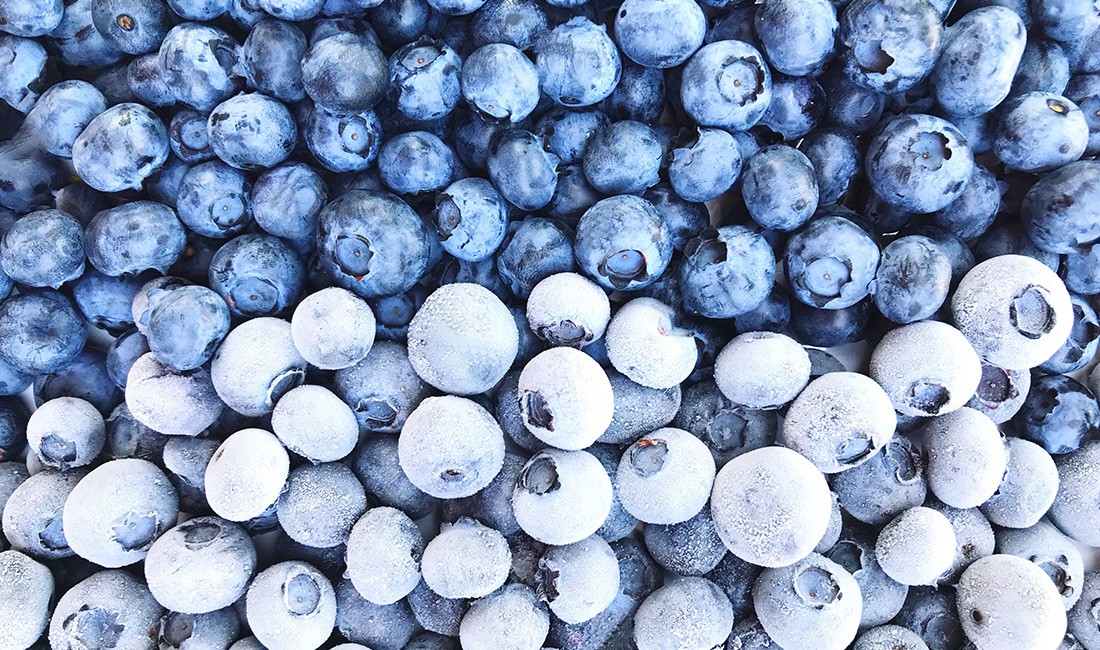
IQF blueberries are in high demand because they lock in the same flavor, texture, and nutrients as freshly picked fruit while offering the convenience of long shelf life and easy portioning. This makes them valuable to food manufacturers, bakeries, and restaurants that need consistent quality year-round.
The process, called Individual Quick Freezing (IQF), rapidly freezes each berry to prevent clumping and preserve natural color and shape.
The growing focus on nutrition and clean-label foods fuels market growth, as consumers look for fruits rich in antioxidants with minimal additives. In 2025, the IQF blueberry market is expected to continue expanding due to health trends, steady global supply chains, and increased demand in bakery, smoothie, and dairy applications.
What Are IQF Blueberries?
IQF blueberries are Individually Quick Frozen blueberries. Each berry is frozen as a separate piece rather than as part of a solid block.
This process keeps them free-flowing and easy to measure or mix during food preparation.
The IQF method uses rapid freezing in a tunnel or fluidized bed where cold air moves around the berries at about −30 °C to −40 °C. The temperature of each berry quickly reaches about −18 °C at its core.
Because the freezing happens so fast, large ice crystals do not have time to form. As a result, the fruit keeps most of its original structure and nutrients.
The key benefit of this process comes from physics. Quick freezing prevents cell walls from rupturing because smaller ice crystals form inside the fruit.
This means the berries stay plump and less mushy when thawed. For food processors and chefs, the individual pieces eliminate waste and make portion control easier.
IQF blueberries also maintain more of their taste and vitamin content than slower-frozen fruit because enzymatic activity and oxidation slow dramatically at these low temperatures. For consumers, this translates to berries that taste closer to fresh fruit, even months after harvest.
Why IQF Blueberries Are in High Demand
IQF (Individual Quick Freezing) blueberries have become one of the most sought‑after frozen fruits. The process freezes each berry separately at temperatures well below 0 °C, which prevents ice crystal growth and keeps the fruit’s original shape, color, and nutrients.
Because of this, they taste and look close to fresh even after months in storage. For food producers and consumers, this means consistent quality and less waste.
Key reasons for demand growth:
1.Health and Nutrition Drivers
Blueberries contain anthocyanins, vitamin C, and manganese. IQF preserves these compounds with minimal loss during freezing and distribution.
For consumers focused on health, this means reliable nutrition even outside the harvest season.
2.Convenience and Versatility
These berries fit well in smoothies, yogurt, bakery products, cereals, and snack bars. Since they pour easily from the freezer in exact amounts, manufacturers and households can use them year‑round without thawing large batches.
3.Market Growth Numbers
The IQF blueberry market was about USD 1.5 billion in 2023 and is projected to reach around USD 3.2 billion by 2032, showing a CAGR of roughly 8.7%.
The global frozen fruit segment grows near 6–7% annually, driven by convenience and the steady interest in healthy eating.
From Field to Freezer: How IQF Blueberries Are Processed
Processing blueberries through the Individual Quick Freezing (IQF) method locks in freshness by rapidly freezing each berry. The process focuses on timing, temperature control, and cleanliness to preserve the fruit’s natural flavor, texture, and nutrients.
Harvesting and Receiving
Growers harvest blueberries at their peak ripeness when the sugar-to-acid ratio and color are fully developed. This timing matters because underripe berries can taste sour while overripe ones soften too quickly.
Workers use gentle picking methods to prevent bruising since damaged berries do not freeze or store well. Once picked, berries move quickly to the processing facility to avoid microbial growth or moisture loss.
Wild blueberries, typically smaller and more concentrated in flavor, may not require washing, while cultivated varieties generally do. Keeping the harvested fruit shaded and cool before processing helps maintain firmness.
In some cases, hydro-cooling or forced-air cooling begins in the field to slow respiration and preserve the berries’ cell structure.
Cleaning, Sorting and De-Leafing
At the plant, blueberries first pass through sieves and air classifiers to remove stems, leaves, and debris. Machines often combine air jets and rotating drums to separate light fragments from the heavier fruit.
The cleaned berries then move to inspection belts where workers or optical sorters remove damaged or green berries. Optical sorting uses cameras and sensors to detect variations in color and size.
This step ensures only sound, evenly ripened fruit continues to freezing. Well-sorted berries freeze uniformly and retain better appearance after thawing.
For processors, consistent sorting improves yield and reduces waste, since fewer batches fail quality checks later in packaging.
Pre-Cooling and Dewatering
Pre-cooling reduces the fruit’s core temperature before freezing. Chilling berries close to 0 °C minimizes the time needed for freezing, which in turn limits ice crystal growth.
When ice forms too slowly, it expands inside the fruit, breaking cell walls and causing soft texture after thawing. After cooling, berries pass through dewatering tunnels.
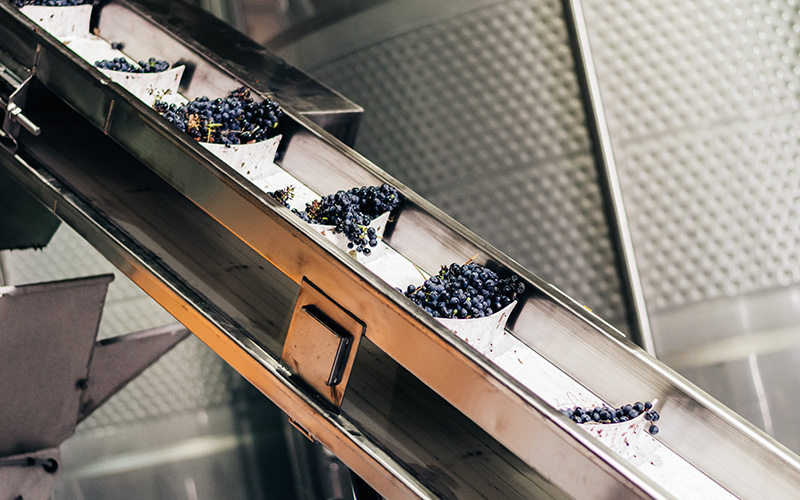
Air knives, vibration tables, or gentle shake belts remove residual surface water from washing. The goal is to keep each berry’s surface dry but its internal moisture intact.
This prevents berries from clumping during freezing and helps maintain individual separation during packaging.
IQF Freezing Stage
In IQF systems, blueberries spread in a single layer on a perforated conveyor belt or fluidized bed freezer. Cold air flows upward at high velocity, suspending berries slightly and ensuring uniform contact with subzero air.
The surface freezes first, forming a “crust” that protects internal moisture from escaping. Freezers generally operate between −35 °C and −45 °C.
Core temperature must reach at least −18 °C for safe storage. Because each berry freezes separately, they remain loose and free-flowing rather than solidified into a block.
This method preserves the natural shape, skin integrity, and bite of the finished product, making IQF berries easy to handle in later food manufacturing.
Glazing, Packing and Cold Storage
Some processors apply a light glaze—an extremely thin layer of water that freezes instantly on the berry surface. This barrier limits air contact, reducing dehydration and “freezer burn.”
The glaze also adds mechanical protection for the delicate fruit skin during handling. After glazing, workers or automated lines pack the berries into polyethylene bags or lined cartons.
Packages are sealed immediately to prevent temperature fluctuations. Storage and distribution occur at a stable temperature of −18 °C or lower.
Maintaining uniform cold conditions preserves flavor and texture and extends the product’s shelf life without added preservatives.
Common IQF Blueberry Processing Challenges
IQF blueberry processing often struggles with issues that affect product appearance, yield, and handling. The main factors are mechanical stress, moisture control, and airflow management during the freezing stage.
Each problem has a direct impact on shelf appeal and customer satisfaction, especially for buyers in bakery and confectionery sectors.
Cracking and Surface Burns
Berry cracking and surface burns usually occur when freezing happens too slowly or unevenly. Slow freezing allows large ice crystals to form inside the fruit, which rupture cell walls and cause splits.
When metal mesh belts or harsh contact surfaces are used, the skins may scuff or show dull spots after freezing. Uneven airflow or overexposed cold air streams can also lead to “freezer burns” — patches where surface moisture evaporates and the skin darkens.
This reduces the berries’ visual grade and makes them less suitable for retail packaging. To minimize this, processors use fluidized bed IQF freezers that suspend berries in cold air.
This design keeps the fruit separated, ensures each berry freezes rapidly at about –35°C to –40°C air temperature, and limits direct mechanical contact. For the processor, this means higher throughput with fewer rejected batches and less manual trimming.
Dehydration and Low Yield
Dehydration, or moisture loss, lowers product weight and directly affects yield. Excess drying during freezing or poor humidity control in storage can remove up to 2–5% of berry mass.
This not only reduces revenue per lot but also causes wrinkling and dull appearance. The primary causes include long dwell times in the freezer, low humidity air, and ineffective pre-cooling before freezing.
Rapid hydro-cooling after harvest helps stabilize internal temperature and slow respiration before freezing, reducing overall moisture loss. Operators often install misting or humidification systems near the infeed zone to maintain relative humidity around 90–95%.
This means more uniform water content, brighter appearance, and better consistency when berries are later used in baking or blending applications.
Clumping and Poor Separation
Clumping occurs when berries freeze together into clusters instead of remaining separate. This tends to happen when the belt is overloaded or airflow velocity in the freezer is too low to fluidize the product bed.
Frozen clusters can jam packaging lines or require manual breaking, increasing labor and waste. Proper bed depth — usually less than two berry layers thick — allows cold air to circulate evenly around each piece.
Maintaining air velocity near 3–4 m/s keeps the berries suspended and moving freely, which results in true individual quick freezing. Some processors add gentle vibration at the belt discharge to prevent partial thawing or sticking before packaging.
This translates to smoother downstream handling, predictable fill weights in packaging, and fewer product losses due to clumped rejects.
The Best Equipment for IQF Blueberries
Freezing equipment really shapes how well blueberries keep their structure, color, and nutrients after freezing. Advanced fluidized bed systems let you freeze each berry on its own, so there’s no clumping and the quality stays consistent during storage and shipping.
What Is Fluidized Bed?
A fluidized bed is basically a chamber where cold air blows upward, suspending small foods like fruits or veggies in a floating motion. The air moves fast enough to lift the product and separate each piece while freezing.
Because the berries keep moving in the airflow, the cold hits every surface evenly. This means quick crust freezing on all sides and no sticking together.
In practice, this design shortens freezing time and protects delicate fruit surfaces from damage. Processors end up with fewer broken berries and a cleaner product ready for packaging.
Why Fluidized Bed Freezers Are Ideal for Blueberries
Fluidized bed freezers work well for blueberries since they handle small, delicate items gently and efficiently. Their two‑stage airflow keeps moisture loss low and berries separate.
- Uniform Separation: Fast, cold air pushes berries into a “fluid” state. Every berry freezes on all sides, so you don’t get clumps or weird ice patches.
- Two‑Stage Design: ○Stage 1: Strong fluidization quickly crust-freezes the outside, locking in surface moisture and stopping sticking. ○Stage 2: Softer airflow finishes the freeze on the belt, so berries stay round and keep their natural bloom.
- 3.Low Breakage: Smooth airflow and steady bed pressure mean less mechanical stress and less damage to soft skins.
NTSquare Fluidized Bed Freezer for Fruit & Blueberries
NTSquare designs its fluidized bed freezers with small, lightweight fruits in mind—think strawberries, blueberries, and diced fruit pieces. The system combines heat-exchange efficiency with a compact footprint for industrial use.
Key performance advantages:
- 20% higher heat exchange efficiency compared to regular tunnel freezers, thanks to a better evaporator coil and direct liquid refrigerant. That saves energy per ton of frozen berries.
- Excellent product separation from precise airflow control, so you get almost no clumping and super even freezing. This bumps up yield since fewer berries stick together or get squished.
- Capacity of up to 6 tons per hour in a compact setup that fits into standard processing lines. For users, it means you can scale up without needing more space.
Role of IQF Technology in Quality Retention
IQF (Individual Quick Freezing) tech makes sure each berry freezes separately, not in a big block. This keeps the fruit’s texture and color even after thawing. There are three technologies in quality retention.
- Independent Freezing: Each blueberry stays separate, which makes portioning easy and cuts down on waste in food service.
- Nutrient and Color Retention: Fast freezing stops big ice crystals from forming, so cell damage and moisture loss are minimal. The berries stay firmer and taste more like fresh fruit.
- System Compatibility: NTSquare’s IQF freezers also cover tunnel and spiral models for mixed fruit, but for small berries, the fluidized bed is the best fit because it’s so gentle and even.
With these technologies, processors can deliver frozen blueberries that look good, hold their shape, and work well in bakery, drinks, and retail products.
Best Practice Tips for Running an IQF Blueberry Line
Running an IQF blueberry line takes careful control of temperature, airflow, and fruit handling. Every step matters for berry integrity and yield, so accuracy is more important than speed. Here are the tips for running an IQF blueberry line.
- Correct infeed temperature and uniform berry size. Blueberries should enter the line at 2–5°C. This slows respiration and keeps condensation down before freezing. Keeping berry size consistent helps each one freeze individually instead of clumping.
- Good destemming and leaf removal; careful washing strategy. Use a mechanical destemmer with an air classifier to get rid of stems and debris. Wild berries need gentle washing to avoid tearing the skin, while cultivated ones can handle a bit more spray pressure. Clean fruit lowers contamination risk and helps the freezer work better.
- Efficient dewatering before freezer entry. Too much surface water turns into ice sheets that stick berries together. Air knives or vibration tables remove visible moisture, which keeps flow smooth and cuts down on clusters.
- Optimize fluidization air velocity and bed depth. Balanced airflow keeps berries floating without shooting them into the evaporator coils. Adjust bed depth to match how much product is coming through—too deep means uneven freezing, too shallow wastes energy.
- Monitor dehydration and adjust settings to protect yield. Set humidity and dwell time in the tunnel just right to stop moisture loss, which impacts both weight and texture.
- Implement strict hygiene and sanitation plans. Stainless-steel contact surfaces, potable rinse water, and solid cleaning routines keep microbes in check. For operators, this means compliance, product safety, and steady shelf life.
Frequently Asked Questions
What are the advantages of using IQF technology for freezing blueberries?
IQF, or Individually Quick Frozen, tech freezes each berry separately with rapid cold air at temps often below −30°C. This stops berries from sticking together and keeps big ice crystals from forming.
Blueberries keep their round shape, bright color, and firm texture after thawing. Processors get easier portion control and less waste when packaging or cooking.
How does IQF freezing affect the nutritional value of blueberries?
Rapid freezing slows enzyme activity almost right after harvest. Key nutrients like vitamin C, fiber, and anthocyanins stay close to what you’d find in fresh blueberries.
So, people still get the antioxidant benefits of fresh berries, even after months in storage.
Can you explain the commercial processing steps for IQF blueberries?
The IQF process starts with sorting and washing the berries. After inspection, berries go through a blast freezer where cold air freezes each one in minutes.
Once frozen, they’re packed in moisture-proof containers to stop ice buildup. Good temperature control during transport keeps berries below −18°C until they get to distributors or customers.
What distinguishes IQF blueberries from traditionally frozen blueberries in terms of quality and taste?
Traditional freezing usually freezes berries in bulk, which lets ice form between them. This can damage cell walls, making berries soft and watery when thawed.
IQF avoids that. Since each berry freezes separately, it keeps its firmness and full flavor. For the user, the texture is much closer to fresh fruit and just works better in smoothies or baked goods.
Are IQF blueberries more cost-effective for businesses compared to other preservation methods?
IQF blueberries usually give a better yield per kilogram because they don’t clump or get crushed in storage. Packaging and portioning go faster, so handling time drops for both foodservice and manufacturers.
While the equipment and energy costs can be higher at first, lower product loss and longer shelf life make it a smart choice for high-volume producers.
What are the quality control measures in place during the IQF process of blueberries?
Quality control kicks off before freezing, starting with grading for size, ripeness, and any visible defects. The team uses sensors during processing to track temperature and make sure each batch freezes evenly.
After freezing, metal detection and optical sorting systems come into play to spot and remove foreign particles or damaged berries. These checks help keep texture, color, and food safety up to standard in every package.