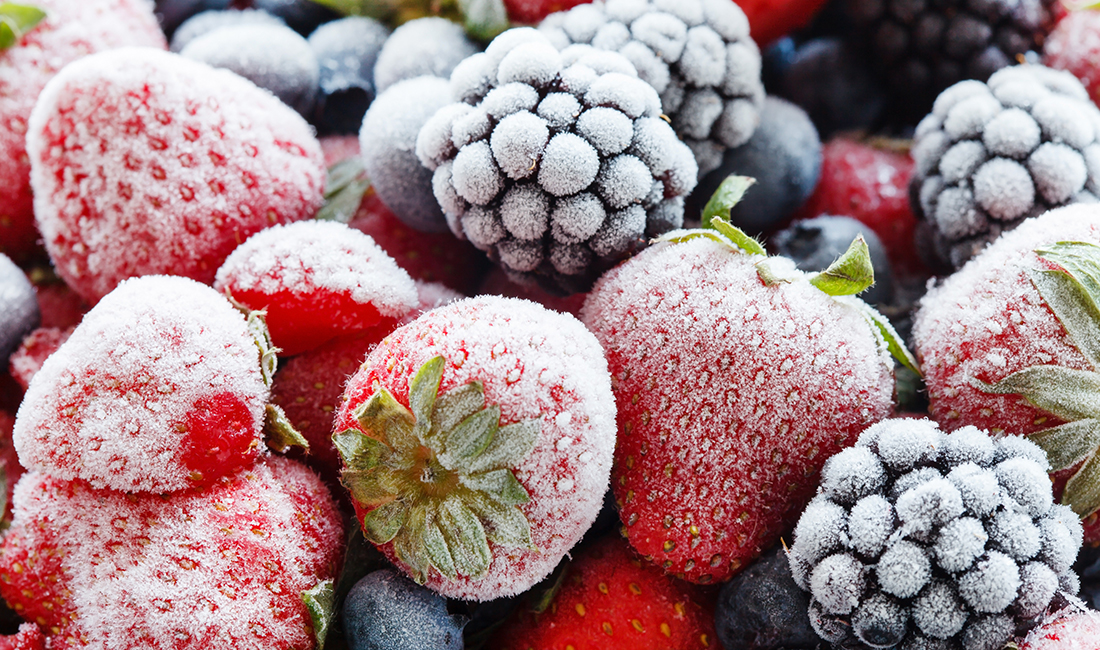
IQF freezing rate runs from 3 to 45 minutes per piece, depending on product type. Peas freeze in 3 to 5 minutes, berries in 5 to 10 minutes, shrimp in 8 to 15 minutes, and thick meat cuts in 30 to 45 minutes. This makes IQF 20 to 60 times faster than block freezing, which takes 6 to 10 hours.
Based on many years of industrial freezing engineering—building IQF tunnel, spiral, and fluidized-bed systems for food processors—this guide shows the actual freezing rate by product type, explains how rate is measured, lists the factors that control speed, compares IQF to traditional methods, and shares how to make your line run faster.
How Fast Is the IQF Freezing Rate?
IQF technology freezes food at rates above 1 degree Celsius per second. This rapid cooling happens in temperatures between -35°C and -40°C with high-velocity air surrounding each piece of food.
Most small to medium products freeze completely in 3 to 15 minutes, depending on size and water content. Traditional freezing methods take several hours to achieve the same result.
The quick freezing stage moves food through the critical zone faster than conventional methods. This zone sits between -1°C and -5°C, where large ice crystals typically form. Fast freezing creates smaller ice crystals that cause less damage to food cells.
Key Freezing Speed Factors:
- High-velocity airflow circulating around individual pieces
- Cryogenic systems using liquid nitrogen or carbon dioxide
- Operating temperatures well below standard freezing points
- Efficient heat transfer from product to cooling medium
How Is IQF Freezing Rate Measured?
IQF freezing rate is measured by tracking how long it takes for a product’s core temperature to drop from its initial temperature to -18°C or lower. Food technologists use temperature probes inserted into the center of the product to record this thermal change.
The measurement focuses on three specific stages. The pre-cooling stage tracks the temperature drop from the initial product temperature to 0°C. The quick freezing stage monitors the critical phase from -1°C to -5°C, where ice crystal formation occurs. The final hardening stage measures the drop from -5°C to the target storage temperature of -18°C.
Key metrics tracked during measurement include:
- Time to reach core temperature of -18°C
- Rate of temperature decrease per minute
- Ice crystal size through microscopic analysis
- Product surface temperature at entry and exit points
Specialists also measure the freezing rate by calculating the distance from the product surface to its thermal center, divided by the time required to freeze. This produces a rate expressed in centimeters per hour or millimeters per minute.
What Factors Affect How Fast IQF Freezing Works?
Three main factors control how fast IQF technology freezes food: airflow, temperature, and belt speed. These factors work together to determine freezing rate and product quality.
Airflow moves cold air across food to remove heat. Higher air speed transfers heat faster and creates smaller ice crystals. This protects product integrity and prevents texture damage. Poor airflow distribution causes uneven freezing and leads to clumping between items.
Temperature determines how quickly food passes through the quick freezing stage. Lower temperatures speed up ice crystal formation. The faster food freezes, the smaller the ice crystals stay. Small ice crystals preserve cell structure better than large ones.
Belt speed controls how long food stays inside the freezer. Slower belt speeds give more freezing time but use more energy. Faster speeds risk incomplete freezing and larger ice crystal size. The belt must move at the right speed for the product type and thickness.
Product characteristics also matter. Thicker items need more time to freeze completely. Wet or sticky foods require stronger airflow for preventing clumping. Each product type needs different settings to maintain IQF quality.
How Long Does IQF Freezing Take for Different Food Types?
IQF freezing time ranges from 3 minutes for small vegetables to 90 minutes for large meat pieces. The freezing duration depends on product size, water content, and surface area exposed to cold air.
Typical IQF Freezing Times by Product Type:
| Product Type | Weight/Size | Freezing Time |
| Peas or diced vegetables | Small pieces | 3-5 minutes |
| IQF shrimp | 20-30 g per unit | 8-15 minutes |
| Berries (strawberries, blueberries) | Medium pieces | 8-12 minutes |
| Fish fillets | 150-200 g | 25-35 minutes |
| Chicken pieces | Medium cuts | 40-60 minutes |
| Whole poultry or large meat cuts | Large pieces | Up to 90 minutes |
Water content affects freezing speed because water requires substantial energy to convert from liquid to solid during the quick freezing stage. Products like fruits, vegetables, and seafood take longer than fatty items to reach final temperature.
How Does IQF Freezing Speed Compare to Traditional Methods?
IQF technology freezes food in minutes while traditional methods take hours. Traditional cold storage freezing can take 12 to 72 hours depending on product size and room temperature. IQF systems complete the quick freezing stage in 5 to 30 minutes.
Speed differences shape ice crystal formation. Slow freezing allows water inside food to form large ice crystals that rupture cell walls. Fast IQF freezing creates microscopic crystals that preserve product integrity.
| Freezing Method | Typical Freezing Time | Ice Crystal Size |
| IQF | 5-30 minutes | Small (microscopic) |
| Blast Freezing | 1-4 hours | Medium |
| Block Freezing (plate) | 6-10 hours | Large |
| Walk-In Freezer (home/storage) | 12-24 hours | Very large |
The speed of individually quick frozen processes delivers measurable quality gains. Products maintain texture after thawing because cellular damage stays minimal. Traditional freezing damages cells as large crystals expand and pierce membranes.
Freezing technology impacts both quality and workflow. IQF prevents clumping by freezing surface moisture before pieces stick together. Traditional methods freeze products in bulk where pieces fuse into solid blocks.
Speed directly controls ice crystal size. Faster freezing equals smaller crystals. Smaller crystals mean better IQF quality and less drip loss during thaw.
How Can Food Processors Optimize Their IQF Freezing Rate?
Food processors can optimize their IQF freezing rate by adjusting equipment settings and preparing products correctly before freezing. Temperature, airflow, and product preparation are the three main factors that determine how fast food freezes.
Temperature Control
Lower freezing temperatures speed up the quick freezing stage. Most IQF systems work best between -35°C and -40°C (-31°F to -40°F). Cryogenic systems using liquid nitrogen at -196°C (-320°F) freeze products in 3 to 10 minutes, though this extreme speed requires careful matching to product type to avoid thermal cracking.
Airflow Optimization
Higher air velocity around products increases heat transfer and accelerates freezing. IQF technology relies on strong airflow to freeze each piece separately while preventing clumping. Processors should maintain consistent air circulation throughout the freezer chamber.
Product Preparation
Proper product preparation improves freezing technology performance. Food processors should:
- Cut items into uniform sizes for even freezing
- Remove excess moisture from product surfaces
- Spread pieces in a single layer on conveyor belts
- Avoid overloading the freezer capacity
Equipment Settings
Conveyor speed must match the product type and size. Slower speeds give items more time in the freezing zone, which helps maintain product integrity. Processors can adjust belt speed based on the thickness and water content of each food item.
Maintenance Practices
Regular equipment maintenance keeps IQF quality high. Clean coils and fans work more efficiently. Frost buildup reduces airflow and slows freezing rates. Processors should schedule routine cleaning and inspection of all freezer components to ensure optimal ice crystal formation patterns that preserve texture and quality.
FAQs
What Is the Fastest IQF Freezer on the Market?
Cryogenic IQF freezers using liquid nitrogen at -196°C are the fastest, completing freezing in 3 to 10 minutes. Among mechanical IQF systems, fluidized-bed freezers are the quickest, freezing small items like peas or berries in 3 to 8 minutes.
Does Freezing Faster Always Mean Better Food Quality?
Yes, faster freezing generally produces better quality up to a point. Speeds above 1 cm per minute consistently form microscopic ice crystals that protect cells. Beyond a certain speed, mostly relevant for cryogenic freezing, returns diminish and some delicate products may crack.
Can IQF Freezing Rate Be Too Fast for Some Foods?
Yes, ultra-fast cryogenic freezing at -196°C can crack large or dense products like whole fillets or thick meat cuts. The extreme temperature gradient between surface and core causes thermal stress. Mechanical IQF at -35°C to -40°C avoids this risk for most products.
How Does IQF Freezing Rate Compare to Home Freezer Speed?
IQF freezes 10 to 30 times faster than a home freezer. Home freezers at -18°C take 4 to 6 hours to fully freeze a 200g chicken breast, while industrial IQF at -35°C to -40°C completes the same product in 15 to 25 minutes.
What Slows Down IQF Freezing in a Production Line?
Five common issues slow IQF lines: overcrowded conveyor belts blocking airflow, frosted evaporator coils reducing heat transfer, warm product loaded above +4°C, inadequate refrigeration capacity for throughput, and damaged door seals letting warm air enter the freezing chamber.