
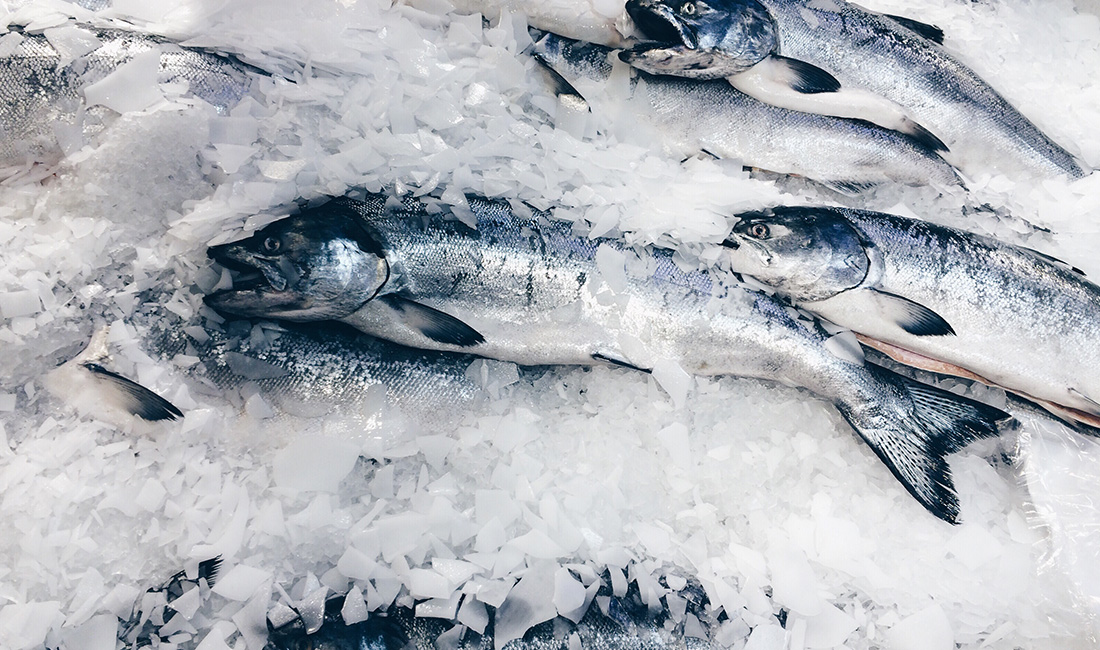
Choosing the right IQF fish processing equipment affects product quality, efficiency, and profits. The best systems balance gentle handling, steady freezing, and easy cleaning while meeting production goals.
Modern IQF systems freeze each fish piece individually with controlled airflow and precise temperature, preventing clumping and keeping appearance uniform. This consistency benefits both large plants and small shops.
A good setup integrates washing, chilling, and freezing smoothly. Stainless steel construction ensures fast cleaning and reduces bacterial risk.
Processors now evaluate spiral, tunnel, and fluidized bed designs, considering not only speed but also energy efficiency and product quality.
What Is IQF Fish Processing and Why Does It Matter?
Individually Quick Freezing (IQF) freezes each fish portion separately, not in blocks, using cold air at –30°C to –40°C in just minutes. This prevents large ice crystals, keeping texture and tissue intact.
IQF avoids clumping, making portioning and packaging easier, and protects fillets, whole fish, and shrimp from moisture loss. It preserves cell structure, maintaining firm texture and natural taste after thawing, while reducing drip loss and ensuring steady yields.
Processors often use spiral freezers or stainless steel systems for easy cleaning, with strong airflow and precise temperature control to freeze each piece evenly. IQF combines science and efficiency, keeping seafood close to its natural state and supporting smooth production.
What Are The Core Steps In An IQF Fish Processing Line?
An IQF fish line turns raw seafood into frozen products that stay separate and easy to handle, protecting freshness, texture, and shelf life.
- Sorting and Grading – Fish are sorted by species, size, and quality to ensure uniform batches that freeze evenly.
- Cleaning and Pre-Processing – Stainless steel washing systems remove dirt and contaminants, preparing fish for freezing.
- Cooking or Chilling (Optional) – Some lines pre-cook or chill fish to stabilize internal temperature before freezing.
- IQF Freezing – Fish pass through tunnel or spiral freezers where cold air blasts each piece individually, preserving cell structure and flavor.
- Glazing and Hardening – A thin ice layer protects the surface and hardening units lock it in, maintaining weight and appearance.
- Packaging and Storage – Frozen fish are packed in airtight containers and stored at –18 °C or below, with FIFO systems reducing waste.

What Types of IQF Equipment Are Available for Fish?
IQF fish processing equipment comes in several types, each designed to freeze seafood efficiently while maintaining quality.
- Tunnel Freezers: Conveyor-based freezers with high-speed cold air, ideal for flat, uniform products; stainless steel and removable belts allow easy cleaning.
- Spiral Freezers: Vertical spiral belts provide high freezing area in a compact space, consistent freezing, and reduced weight loss; often feature automatic cleaning.
- Impingement Freezers: High-speed cold air jets freeze thin fillets quickly, preserving shape and minimizing drip loss; easy to clean for frequent changeovers.
- Hybrid/Multi-Zone Systems: Combine different freezer types with zoned airflow and temperatures, preventing sticking and handling various fish forms; require careful setup.
Tunnel Freezers
Fish move through a long insulated chamber on a conveyor while high-speed cold air circulates, freezing products quickly and evenly. Air temperatures often reach –35°C or lower, keeping ice crystals small. Best for flat, uniform items laid in a single layer. Stainless steel construction and removable belts make cleaning easy, but tunnel freezers require more floor space.
Spiral Freezers
A continuous spiral belt climbs vertically in a round chamber, providing high freezing area in a compact footprint. Even airflow and insulated stainless steel ensure consistent freezing and reduced weight loss, ideal for breaded or glazed fish. Most models include automatic belt washing; upfront cost is higher but energy-efficient and space-saving.
Impingement Freezers
High-speed cold air jets freeze fish surfaces in 2–5 minutes, preserving shape and minimizing moisture loss. Compact and fast, perfect for thin or delicate fillets. Removable nozzle plates allow quick cleaning, supporting frequent product changeovers. Less suitable for bulky or uneven pieces.
Hybrid or Multi-Zone Systems
Combine features of tunnel, spiral, and impingement freezers, splitting the path into zones with different airflow, belt speed, or temperature. Some include fluidized beds to prevent sticking. Offer flexibility for varied fish types and mixed seafood, though setup and control are more complex.
How Do These Freezer Types Compare in Performance?
IQF freezer designs differ in speed, ice crystal control, handling, yield, and capacity, impacting quality and efficiency.
- Freezing: Spiral freezers freeze gently with small ice crystals; tunnel freezers freeze fast but risk uneven cores.
- Handling: Spiral belts reduce contact and protect fragile fillets; tunnel belts need vibration or spacing to prevent sticking.
- Yield: Spiral units retain more moisture and weight; tunnel units may lose more unless adjusted.
- Capacity: Spiral freezers save floor space with vertical stacking; tunnel freezers support high-volume, continuous flow.
Freezing Speed and Ice Crystal Control
Spiral freezers use lower air velocity and longer freezing times, producing small ice crystals that preserve texture and firmness. Tunnel freezers use high-speed air for rapid surface freezing, suitable for large batches but may freeze the outside faster than the core. Spiral is best for premium fillets; tunnel works for high-volume uniform items.
Product Separation and Handling Delicate Items
Spiral freezers move products vertically on stacked belts, reducing contact and preventing breakage, ideal for delicate fillets. Tunnel freezers run horizontally and rely on vibration or air agitation to keep pieces separate, needing careful spacing for fragile items.
Yield, Moisture Retention, and Dehydration Loss
Gentle spiral airflow reduces dehydration and surface drying, improving yield by 1–2%. Tunnel units freeze faster but can cause more moisture loss unless airflow or misting is adjusted. Spiral systems suit value-added fish, while tunnel lines fit high-volume production.
Capacity, Footprint, and Throughput
Spiral freezers stack multiple belts vertically, saving floor space while maintaining high capacity. Tunnel freezers extend horizontally, supporting continuous, high-volume processing with in-line integration. Spirals are space-efficient; tunnels excel at steady, large-scale throughput.
What Should You Evaluate Before Choosing Equipment?
Choosing IQF fish processing equipment requires assessing product type, production needs, energy efficiency, and hygiene to ensure quality, reliability, and cost-effectiveness.
- Product Type & Objectives: Match freezer design, belts, and airflow to the seafood (whole fish vs. fillets) and processing goals; glazing, temperature control, and sanitation vary by product.
- Production Volume & Layout: Choose capacity to avoid bottlenecks or idle energy; consider line flow, vertical stacking, and space constraints for maintenance and installation.
- Energy Efficiency & Costs: Look for variable fans, insulation, balanced refrigerant flow, automated defrost, and water recycling to reduce power and operating expenses.
- Hygiene & Food Safety: Stainless steel structures, smooth welds, tool-free belt removal, and CIP systems ensure thorough cleaning, prevent contamination, and support HACCP compliance.

Product Types And Processing Objectives
Seafood type determines freezer design, belt choice, and airflow. Whole fish need sturdy conveyors and wider tunnels, while fillets or portions benefit from fine mesh belts to protect delicate surfaces and reduce drip loss. Temperature control and glazing systems help maintain texture and appearance. Matching equipment to processing goals ensures consistent yield and reliable throughput.
Production Volume And Line Layout
Choose capacity to match production needs—too small causes bottlenecks, too large wastes energy. Straight-line setups simplify flow, while spiral or modular designs save space. Floor space, ceiling height, and access for cleaning and maintenance should guide layout decisions.
Energy Efficiency And Operating Costs
Efficient IQF systems use variable fans, insulation, and balanced refrigerant to reduce power use. Automated defrost and closed-loop glazing cut downtime and waste. Regular maintenance, like cleaning evaporators and lubricating drives, preserves efficiency and extends equipment life.
Hygiene, Cleaning, And Food Safety Standards
Open-frame stainless steel (Grade 316L), sloped bedplates, smooth welds, and tool-free belt removal make cleaning easy and reduce contamination risk. CIP manifolds support high-pressure cleaning without full disassembly, helping maintain HACCP compliance and consistent product quality.
Why Does Modern IQF Technology Deliver Better Results?
Modern IQF technology freezes each fish portion quickly and evenly, keeping ice crystals small and preserving texture.
Variable-speed fans and PLC-controlled temperature let operators adjust airflow and belt speed for different product thicknesses, ensuring even freezing without overcooling. Gentle fluidization lifts pieces above the belt, preventing clumping and reducing manual sorting.
Stainless steel construction, sloped floors, and tool-free panels improve cleanability, lowering downtime and contamination risk. Sensors and data tracking provide real-time feedback on temperature, belt speed, and defrost cycles, helping plants maintain consistency, optimize performance, and ensure traceability.
How To Make The Final Decision?
Choosing the right IQF fish processing equipment isn’t about guesswork. Each operation needs to match machine capacity, hygiene features, and automation with its real production demands.
Start by listing your non‑negotiable criteria:
- Required throughput (e.g., kilograms per hour)
- Species handled (e.g., shrimp, whitefish)
- Space and utility limits
- Local food safety and energy regulations
Then compare the key specs in a simple table:
| Factor | Example Specification | Why It Matters |
| Freezer Type | Spiral vs. Tunnel IQF | Spiral units offer compact footprints; tunnel types suit large continuous lines. |
| Material | AISI 304 or 316L stainless steel | Resists salt corrosion; extends service life in humid, saline environments. |
| Temperature Range | Down to −40 °C | Enables rapid surface crust freezing, preserving cell structure and texture. |
| Cleaning System | CIP (Clean‑in‑Place) | Reduces downtime and labor because operators can sanitize without disassembly. |
Look at objective performance data. For instance, an IQF freezer with variable‑speed fans (EAV) fine‑tunes airflow and keeps freezing uniform, which lowers dehydration losses.
That means more consistent product weight and better yield. Before you commit, check after‑sales support, spare‑part access, and how the equipment fits with your current conveyors or glazing units.
Those factors shape your uptime over the machine’s life. If you change product types often, modular systems make adjustments easy.
If your volume and line flow are steady, high‑capacity units built for constant throughput might be the better fit.
Frequently Asked Questions
What are the critical factors to consider when selecting IQF freezing technology for fish?
Buyers should look at airflow design, freezing capacity, and belt configuration. For example, a spiral freezer that pushes horizontal airflow at −38°C creates smaller ice crystals and keeps the texture right.
This happens because cold air moves evenly across each piece, stopping water migration and surface dehydration. Material choice matters too.
Equipment made from 304 or 316 stainless steel resists corrosion from saltwater and cleaning chemicals, so it lasts longer. For users, that means fewer shutdowns and lower maintenance costs.
How does the efficiency of IQF freezing equipment impact the quality of processed fish?
Efficient IQF systems freeze fish in just a few minutes, which stops big ice crystals from forming inside the tissue. The process locks in moisture fast, so the fish keeps its firmness and color.
Energy efficiency also affects your bottom line. Units with insulated panels and variable-speed fans use less power per kilogram of product.
So, processors can run continuous freezing without overheating compressors or running up the energy bill.
What features ensure the highest hygiene standards in IQF fish processing equipment?
Hygiene starts with sanitary design. Smooth, welded joints and removable conveyors keep debris from building up.
When belts come off without tools, workers can clean every surface faster between batches. Freezers with open-frame construction and built-in drain systems allow complete washdowns and leave little standing water.
For plants under strict food safety rules, this design cuts down on bacteria and makes it easier to meet HACCP and EU hygiene standards.
What is the role of automation in enhancing the IQF fish freezing process?
Automation keeps temperature, airflow, and belt speed steady with PLC (programmable logic controller) controls. These controls monitor real-time conditions and tweak settings right away to keep freezing even across all the fish.
Automated systems track data like throughput and how often defrosting happens. For operators, this means fewer manual tweaks and quicker troubleshooting during the workday.
Automated cleaning cycles also cut downtime and help the plant run more smoothly. It’s hard to overstate how much easier this makes things for everyone on the floor.