
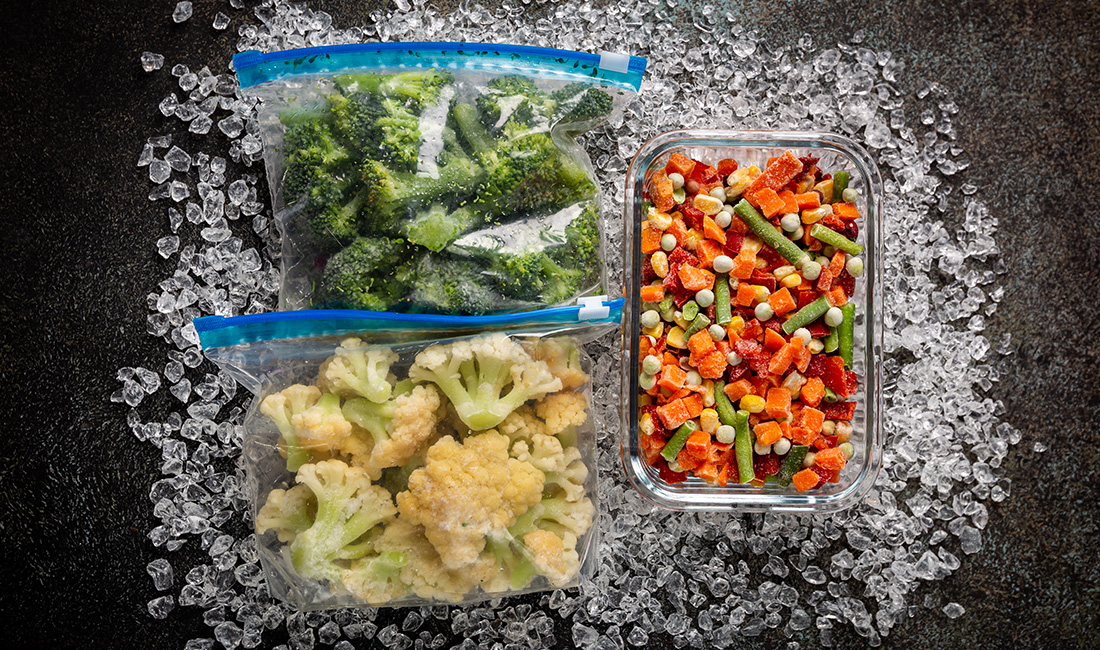
Quick freezing preserves food quality better than traditional freezing because it prevents large ice crystals from forming, which helps maintain texture, flavor, and nutrients. This method freezes food rapidly at temperatures often below -30°C, locking in freshness before cell damage can occur. Traditional freezing, which cools food more slowly, allows larger ice crystals to develop, leading to moisture loss and texture changes after thawing.
With decades of use in the food industry, quick freezing—also known as flash or individual quick freezing (IQF)—has become the preferred method for fruits, vegetables, seafood, and meats. It not only improves product consistency but also extends shelf life and reduces waste. Studies from food technology experts show that rapid freezing retains up to 95% of a product’s original nutritional value, compared to lower retention rates seen with slower methods.
This article explains how quick and traditional freezing work, how each affects food quality, safety, and shelf life, and what factors like cost and environmental impact mean for both home and commercial use. By understanding these differences, anyone handling food can choose the freezing method that best fits their needs.
What Is Quick Freezing?
Quick freezing, also called Individual Quick Freezing (IQF), rapidly cools food to between –30°C and –50°C within 30 to 60 minutes. The process uses forced cold air or cryogenic gases such as liquid nitrogen (boiling point –196°C) to remove heat quickly. Because of this high rate of heat transfer, water inside the food forms microcrystals smaller than 10 µm.
These small crystals cause minimal cell rupture, so the food retains over 90% of its original moisture and texture after thawing. The technique often uses stainless steel mesh belts or fluidized beds to keep individual pieces separate, preventing clumping.
IQF systems typically operate in humidity levels below 70% to reduce frost buildup. Because freezing occurs so quickly, enzymatic and microbial activity drops sharply, extending shelf life to 6–24 months, depending on the product.
This method suits foods like berries, shrimp, peas, and diced fruits that require piece separation and consistent texture. However, high energy demand and equipment cost make it less common for low-value bulk products.
What Is Traditional Freezing?
Traditional freezing, sometimes called static or air-blast freezing, cools food more slowly at –18°C to –25°C over 2 to 12 hours, depending on product size and airflow. This slower rate allows water molecules to form ice crystals larger than 50 µm, which can damage cell walls and lead to drip loss during thawing.
Equipment often includes cold storage rooms or still-air freezers built with polyurethane-insulated panels and refrigeration coils using refrigerants like R404A or ammonia (R717). These systems maintain relative humidity between 75–85% to limit surface dehydration.
Because of the slower process, traditional freezing consumes less instantaneous power but may use 10–20% more total energy per kilogram of product. It works best for bulk storage of meats, bakery items, or prepared meals where individual separation is unnecessary.
Key Differences in Process
| Parameter | Quick Freezing (IQF) | Traditional Freezing |
| Operating Temperature | –30°C to –50°C | –18°C to –25°C |
| Freezing Time | 0.5–1 hour | 2–12 hours |
| Ice Crystal Size | <10 µm | >50 µm |
| Moisture Retention After Thawing | ~90% | ~70–80% |
| Equipment Type | Fluidized bed, cryogenic tunnel | Still-air or air-blast room |
| Energy Use Profile | High power, short duration | Moderate power, long duration |
Quick freezing maintains cellular integrity because rapid cooling limits crystal growth. In contrast, traditional freezing allows crystals to expand, rupturing membranes and causing texture loss.
IQF systems trade higher equipment costs and maintenance for improved product quality and reduced thawing loss, while traditional systems favor simplicity and lower upfront investment. The choice depends on product type, desired texture, and production scale.
Impact on Food Quality
The rate and method of freezing directly affect a food’s physical texture, nutrient composition, and flavor stability. Rapid freezing forms smaller ice crystals that reduce cell damage, while slower freezing allows larger crystals that degrade structure and taste. These physical and chemical changes determine how well food maintains its original quality after thawing.
Texture and Structure Preservation
Quick freezing typically lowers product temperature from +20°C to -18°C within 30 minutes. This rapid drop forms ice crystals smaller than 10 micrometers, compared to 50–100 micrometers in traditional freezing. Because the smaller crystals form uniformly inside cells, they minimize rupture of cell membranes and reduce drip loss during thawing.
Traditional freezing often uses air-blast systems at -25°C with airflow speeds of 1–2 m/s. The slower heat transfer allows ice to grow outward from the surface, creating uneven crystal distribution. This leads to a softer or mushier texture in fruits and vegetables after thawing.
In IQF (Individual Quick Freezing) systems, foods such as peas or shrimp are frozen individually on a fluidized bed at -35°C to -40°C. The airflow rate of 5–6 m/s ensures uniform cooling. Because each piece freezes separately, it retains its original shape and avoids clumping, improving handling and portion control.
Nutrient Retention
Freezing rate strongly influences vitamin and mineral preservation. Studies show that quick freezing retains 90–95% of vitamin C in produce, while slow freezing retains about 70–80%. The difference occurs because rapid freezing limits enzymatic activity and oxidation before the temperature reaches -10°C, where most degradation reactions slow dramatically.
Proteins and lipids also remain more stable under faster freezing. In meats, quick freezing reduces protein denaturation by about 15% compared to conventional methods. Because the water inside muscle fibers freezes faster, fewer soluble nutrients migrate into extracellular spaces and are lost during thawing.
Traditional freezing methods, such as still-air freezers operating at -18°C, require several hours to reach the target temperature. This longer exposure allows oxidative enzymes to remain active, leading to measurable nutrient loss. Quick freezing minimizes this exposure window, preserving the food’s natural nutritional profile more effectively.
Flavor and Color Maintenance
Flavor compounds are sensitive to oxidation and enzymatic reactions. Quick freezing at -35°C or lower halts these reactions within minutes, preserving volatile compounds such as esters and aldehydes that define fruit aroma. In contrast, slow freezing allows partial oxidation, which can produce off-flavors or dull taste after thawing.
Color retention follows a similar pattern. For example, chlorophyll in green vegetables remains 85–90% intact under quick freezing but drops to 65–70% under slow freezing. This occurs because smaller ice crystals reduce cell wall rupture, preventing pigment leakage and oxidation.
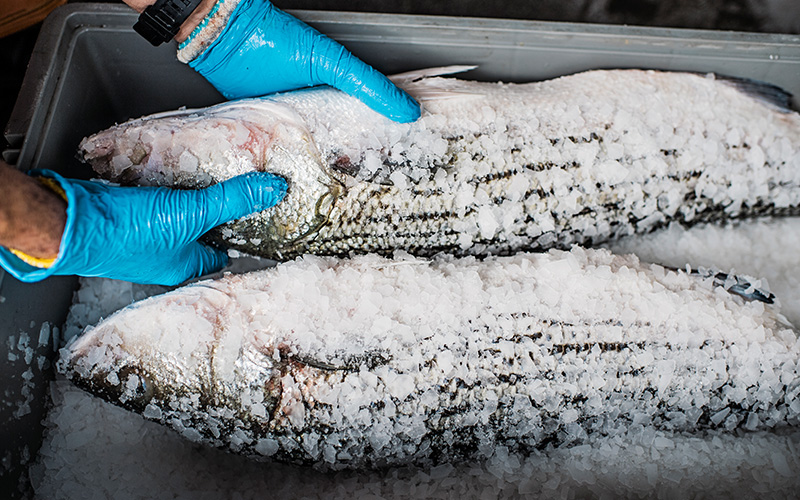
In seafood, rapid freezing limits lipid oxidation, maintaining peroxide values below 5 meq O₂/kg fat, compared to 12 meq O₂/kg in slow-frozen samples. Because of this, the product retains a fresher appearance and natural flavor longer during storage at -18°C.
Food Safety and Shelf Life
Freezing slows or stops microbial growth, enzyme activity, and moisture loss that cause food spoilage. The speed and method of freezing determine how well foods maintain safety, flavor, and texture during storage.
Microbial Control
At temperatures below -18°C (0°F), bacteria, yeasts, and molds cannot grow because water becomes unavailable for microbial metabolism. Quick freezing reaches this temperature within 30 to 90 minutes, while traditional air freezing can take 3 to 6 hours.
Because faster freezing forms smaller ice crystals (typically less than 50 micrometers in diameter), cell membranes remain intact. This limits nutrient leakage after thawing, which reduces bacterial recovery rates by up to 40% compared to slow-frozen foods.
Quick-frozen products also experience less surface dehydration, which keeps the water activity (aw) below 0.85, a threshold that prevents the growth of Listeria monocytogenes and Salmonella enterica. However, freezing only halts growth—it does not destroy all microbes. Proper handling before freezing remains essential.
Enzyme Activity Reduction
Enzymes such as polyphenol oxidase and lipase remain active at low temperatures, though their reaction rates drop by more than 90% at -18°C. Quick freezing reduces enzyme activity faster because it passes through the maximum ice crystallization zone (0°C to -5°C) in less than 30 minutes, compared to 2–4 hours in traditional systems.
This rapid transition limits the time enzymes can alter pigments, flavors, or nutrients. For example, in green vegetables, chlorophyll degradation is reduced by 25–30% when frozen rapidly. Many processors also use blanching at 85–95°C for 1–3 minutes before freezing to denature enzymes completely.
In contrast, slower freezing allows partial enzymatic browning and lipid oxidation, especially in high-fat foods like fish or nuts. The combined control of temperature and pre-treatment defines how long frozen foods retain their original color and taste.
Freezer Burn Prevention
Freezer burn occurs when surface moisture sublimates at storage temperatures below -18°C, forming dry, grayish patches. The rate of sublimation depends on the vapor pressure gradient between the food surface and the freezer air. Quick freezing limits this by forming a compact ice layer that seals surface pores.
Using packaging films with oxygen transmission rates (OTR) under 20 cc/m²·day and moisture vapor transmission rates (MVTR) below 1 g/m²·day further reduces dehydration. Vacuum sealing or nitrogen flushing also lowers oxidation potential by maintaining oxygen levels under 2%.
Traditional freezing, which creates larger crystals and uneven surfaces, increases exposed area by up to 15%, accelerating moisture loss. Because of these structural differences, quick-frozen foods can maintain acceptable sensory quality for 8–12 months, while slow-frozen equivalents often show noticeable texture loss after 4–6 months.
Applications and Suitability
Quick freezing and traditional freezing methods differ in how they handle food size, moisture, and structure. Each method fits certain food types, processing scales, and equipment setups based on freezing speed, temperature range, and equipment design.
Best Foods for Quick Freezing
Quick freezing, often called Individual Quick Freezing (IQF), operates between –30°C and –90°C and completes the process in 2.5 to 30 minutes. Because of this rapid cooling rate, it forms ice crystals smaller than 10 µm, which prevents cell wall rupture.
Foods with small, uniform pieces such as peas, berries, shrimp, diced meat, and corn kernels benefit most. These items have high surface area-to-volume ratios, allowing even exposure to cold air or cryogenic gases.
IQF systems often use fluidized bed or air-blast tunnels with airflow speeds of 4–6 m/s. The airflow suspends each piece, ensuring separation and preventing clumping. Because the process limits dehydration to less than 1% mass loss, color and texture remain close to fresh conditions after thawing.
However, IQF requires consistent product size and low initial moisture variation. Irregular items like large fish fillets may freeze unevenly, leading to partial crystallization and texture inconsistency.
Best Foods for Traditional Freezing
Traditional freezing methods, such as air or still freezing, operate at –18°C to –25°C with cooling times from 2 to 8 hours. The slower rate forms ice crystals between 50 µm and 100 µm, which can slightly damage cell membranes.
This method suits large cuts of meat, whole fish, bakery items, and prepared meals where surface texture is less critical. Because these products have lower surface area and higher mass, gradual freezing allows thermal equalization through the core.
Equipment often includes static cold rooms or plate freezers using aluminum contact plates with thermal conductivity of 205 W/m·K. These systems are cost-efficient and require less maintenance than high-speed IQF tunnels.
The trade-off is reduced microstructural integrity in high-moisture foods. For example, frozen fruits may release up to 8–10% drip loss after thawing due to larger ice crystal formation.
Commercial vs. Home Use
Commercial operations use quick freezing for continuous production lines. A standard IQF tunnel rated at 1,000 kg/hour can process small items efficiently while maintaining consistent product temperature within ±1°C. This precision supports export-grade food standards and extended storage up to 12 months at –40°C.
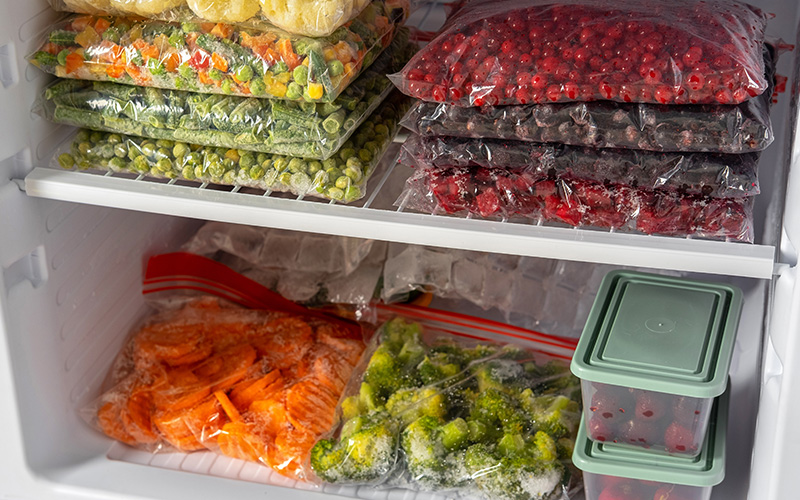
In contrast, home freezers typically operate at –18°C with limited airflow and slower cooling rates. This makes them better suited for traditional freezing of bulk items or leftovers rather than IQF-style results.
Cryogenic IQF systems using liquid nitrogen (LN₂) or carbon dioxide (CO₂) require specialized safety controls and high energy input, unsuitable for household use. For small-scale businesses, hybrid systems combining air-blast and plate freezing balance cost with quality.
Each environment—industrial or domestic—selects its method based on throughput, energy availability, and product type rather than a single “best” approach.
Cost, Convenience, and Environmental Considerations
Quick freezing systems require higher initial investment but deliver faster processing and improved product quality. Traditional freezing remains less expensive to install yet consumes more time and energy per unit of food. The choice often depends on production scale, energy costs, and sustainability goals.
Equipment and Energy Requirements
Individual Quick Freezing (IQF) systems operate at temperatures between -30°C and -90°C, using forced cold air convection or cryogenic gases such as liquid nitrogen (boiling point -196°C). Because of these low temperatures, IQF freezers require compressors rated above 15 kW and insulated chambers compliant with ISO 22000 food safety standards.
Traditional air-blast or plate freezers run at milder ranges of -18°C to -40°C, with energy consumption between 0.4–0.8 kWh per kilogram of food. Their simpler design—often using R404A or R507 refrigerants—lowers equipment cost by up to 30–40% compared to IQF systems.
However, IQF’s rapid freezing minimizes ice crystal growth, preserving texture and reducing dehydration loss by 2–3%, which can offset higher operating costs in large-scale production. This trade-off often favors IQF for high-value products like seafood, berries, and diced vegetables.
Time Efficiency
IQF systems freeze small food units in 2.5 to 30 minutes, depending on product size and airflow velocity. Their design uses fluidized bed tunnels that suspend items in cold air, ensuring uniform exposure and preventing clumping. Because freezing occurs so quickly, processors can handle up to 1,200 kg per hour in continuous operation.
Traditional batch freezers may require 1–4 hours to reach core temperatures of -18°C, depending on load density and airflow rate. Longer freezing times allow larger ice crystals to form, which can damage cell walls and affect texture after thawing.
For businesses with high throughput demands, IQF’s shorter cycle reduces labor hours and storage bottlenecks. However, small operations may prefer traditional systems for their lower maintenance needs and simpler controls.
Environmental Impact
Energy use and refrigerant type determine most environmental effects. IQF systems, while efficient in throughput, can consume 15–25% more electricity per ton of product due to higher compressor loads. Yet, when paired with ammonia (NH₃) or CO₂ (R744) refrigerants, they achieve Global Warming Potential (GWP) values below 5, significantly lower than synthetic options.
Traditional freezers often rely on hydrofluorocarbons (HFCs) like R404A, with GWP values exceeding 3,900, contributing more to greenhouse gas emissions. Their longer freeze cycles also increase total energy use per batch.
Modern IQF installations mitigate this by integrating heat recovery systems that reuse compressor waste heat for defrosting or facility heating, cutting total energy consumption by up to 12%. These design updates make IQF systems more adaptable to sustainability regulations and carbon reduction targets.
Frequently Asked Questions
What are the benefits of individual quick freezing (IQF) for preserving food quality?
Core Performance Parameters:
IQF operates at temperatures between -30°C and -40°C, freezing each piece of food within 3 to 10 minutes. Because freezing happens so quickly, the average ice crystal size remains below 50 micrometers, compared to over 150 micrometers in slow freezing. Smaller crystals cause less cell rupture, which helps retain up to 95% of the food’s original texture and moisture after thawing.
Physical & Material Characteristics:
IQF systems use stainless steel (grade 304 or 316) for food-contact surfaces to comply with FDA and ISO 22000 hygiene standards. The equipment typically operates in humidity levels under 60% to prevent surface frost buildup. Conveyor widths range from 0.8 to 1.2 meters, allowing uniform airflow around each product piece for consistent freezing.
Structural & Design Principles:
IQF freezers rely on fluidized bed airflow, where high-velocity cold air (5–7 m/s) suspends individual food items during freezing. Because each piece remains separated, products like peas or shrimp do not clump together. The design minimizes thermal gradients, so internal and external temperatures equalize quickly, reducing structural stress on cell membranes.
Application Scenarios & Trade-offs:
IQF is widely used for berries, diced vegetables, shrimp, and poultry portions. These foods benefit because maintaining shape and bite texture is critical for consumer acceptance. However, the rapid freezing process requires higher energy input—typically 15–20% more electricity than conventional blast freezing. This trade-off yields better product integrity but increases operational costs.