
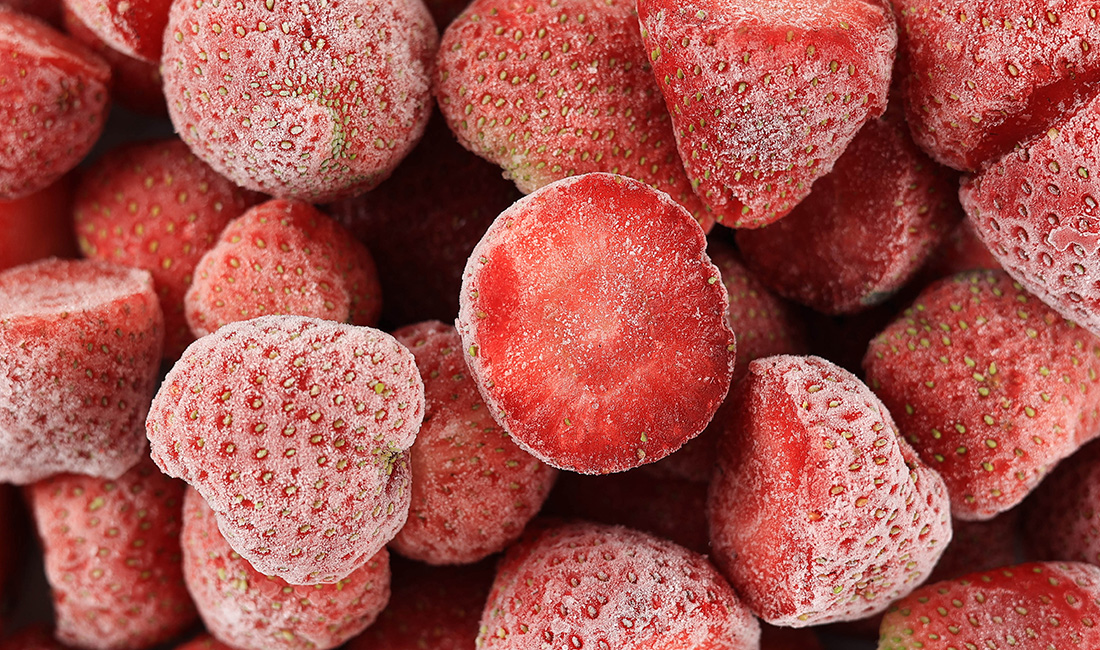
Individually Quick Frozen (IQF) strawberries keep their natural flavor, shape, and nutrients because each berry freezes on its own at extremely low temperatures.
By using the right processing steps and choosing equipment made for IQF production, processors can preserve strawberry quality from harvest to storage.
This process stops clumping, reduces big ice crystals, and helps keep the product consistent for both industrial and retail use.
IQF processing really depends on tight control at every stage—sorting, washing, freezing, and packaging.
Equipment like fluidized bed and spiral freezers create different airflow and temperature patterns, which affect how fast you can freeze and what the berries feel like after thawing.
If you get how these systems work, you can pick the freezer type that fits your production goals and berry size.
This article covers how IQF technology works, the steps to get strawberries ready for freezing, and what to think about when choosing the right freezer and processing line.
It leans on food industry standards and real-world methods to show how professional setups keep things safe, efficient, and shelf-stable from the field to the finished product.
What Is IQF and Why It Matters for Strawberries
IQF stands for Individually Quick Frozen, a process where each strawberry freezes separately instead of in a big block.
This method blasts very cold air—often below –35°C (–31°F)—over the berries and pulls the heat out in a matter of seconds.
Because of that, ice crystals stay tiny, which stops cell walls from breaking and keeps the fruit’s shape and firmness.
In practice, IQF tech lets strawberries hold onto their fresh color, flavor, and nutritional value.
Since freezing happens so fast, less moisture escapes when you thaw them, so you get less drip loss.
For anyone using them, the berries keep their texture in smoothies, baked goods, or packaged foods—pretty handy, honestly.
Compared with block freezing, IQF has some obvious perks.
Producers and buyers like IQF because quality assurance controls can be applied to each berry before packaging.
Each one goes through sorting, washing, and size grading before freezing.
This kind of consistency improves efficiency and cuts down on waste for processors.
End users get predictable results in every batch—which is really what you want.
Strawberry Pre-Processing Steps Before IQF
Before strawberries hit the Individually Quick Frozen (IQF) stage, they go through several careful steps to keep their flavor, color, and texture.
Each task supports food safety and helps the berries freeze the right way.
Key pre-processing steps include:
- 1.Raw material selection and quality requirements Processors pick strawberries at peak ripeness, usually with a soluble solids content between 7–10° Brix. This keeps the sugar and acid balanced, so they taste sweet after freezing. Choosing ripe but firm berries helps avoid cell damage during freezing.
- 2.Washing, sorting and grading Berries move through water baths with spray nozzles to get rid of soil and debris. Optical or vibratory sorters separate them by size and color. Sorting before freezing helps airflow and speeds up freezing cycles.
- 3.Hulling, cutting and size uniformity Mechanical hullers take off caps and stems, and cutting machines slice oversized berries to a standard size. Uniform sizing makes sure each piece hits the target core temperature quickly—usually between −18°C and −35°C—so ice crystals don’t form unevenly.
- 4.Surface water removal and pre-cooling After washing, air knives or centrifugal dryers remove excess moisture. Pre-cooling systems drop the fruit temperature to about 0–2°C. This step limits thermal shock when berries enter the IQF freezer and helps keep the cells intact.
Types of IQF Strawberries Processing Methods
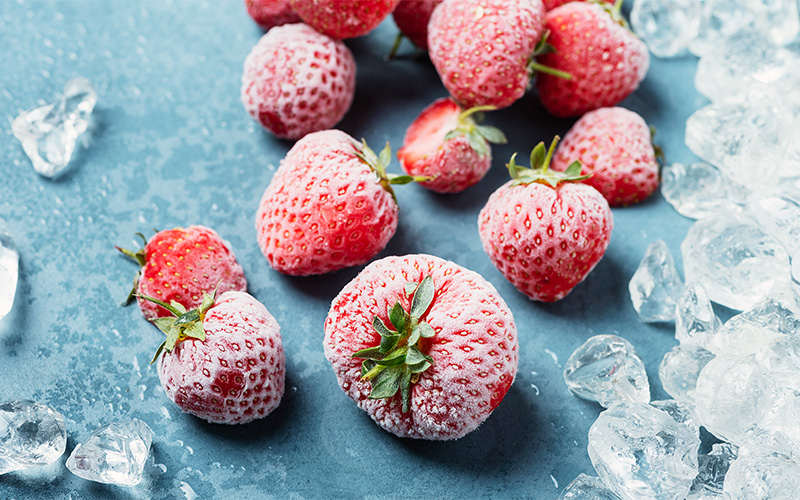
Producers use several freezing systems and line setups to process strawberries efficiently while keeping their original flavor, color, and shape.
Each method uses specific equipment and tight temperature control so every berry stays separate and food-safe for later use.
Typical IQF Line Flow for Strawberries
A standard IQF strawberry line starts with sorting and cleaning.
Workers or optical sorters pull out damaged fruit, and washing systems rinse off soil and debris.
Then, air knives or dewatering screens remove surface moisture before freezing.
This step helps prevent big ice crystals from forming on the fruit.
Next, the berries ride a vibrating conveyor or feed spreader that lays them out in a single layer before they head into the freezer.
Getting them spaced out helps airflow hit every surface.
This spacing lets the system reach rapid freezing rates below -35 °C, which keeps the berries from breaking down.
The typical equipment in a line like this includes:
- Sorting: Optical or manual, to remove defects
- Cleaning: Washer and air knife, to get rid of debris and moisture
- Freezing: Fluidized bed or spiral freezer, for quick surface freezing
- Packaging: Weigher, bagger, and sealer, to keep the product intact
This setup keeps the product consistent and lets it flow easily during final packaging.
Fluidized Bed IQF Freezing Process
The fluidized bed freezer uses fast, cold air to lift and separate berries just above a perforated belt.
Since each piece moves freely, cold air can reach every surface.
The airflow and temperature—often around -40 °C—make ice crystals form fast inside each berry, not between them.
This process usually has two zones.
The first is a crust-freezing zone that hardens the outside, and the second finishes freezing inside to stabilize temperature and stop clumping.
Because the berries stay suspended, not pressed together, their texture and shape stick around.
Fluidized bed systems work well for whole or sliced strawberries where you want to keep the shape.
For users, this means less damage, better portion control, and easy handling later.
Maintenance is pretty simple too, since the belt can be cleaned in place with built-in wash systems.
Spiral IQF Freezing Process
A spiral freezer uses a continuous belt that coils up or down inside an insulated chamber.
Air moves across each layer, cooling evenly without needing as much floor space as a straight-line system.
Its compact footprint fits well in facilities with tight production areas.
Each tier in the spiral keeps a steady temperature, usually between -30 °C and -40 °C.
This design allows longer freezing times and smoother operation for bigger loads.
It’s especially good for high-volume producers who run mixed fruit batches or bigger strawberry pieces.
The belt’s stainless-steel links hold up against fruit acids and resist corrosion.
Producers can expect less maintenance and reliable freeze times.
Uniform freezing with minimal water loss or frost buildup is the result.
Optional Steps: Glazing, Metal Detection, Weighing and Packing
After freezing, processors might add optional finishing operations for quality and safety.
A glazing step covers berries with a thin layer of potable water, which freezes into a protective ice film.
This coating slows down dehydration and oxidation during storage.
A metal detector checks for any stainless steel or aluminum bits that might have slipped in.
Detection sensitivity gets tuned to the berry size and density so it catches real threats.
This step keeps things up to ISO 9001-certified systems and AFFI guidelines.
Final stages include automatic weighing and packaging.
Multihead weighers split portions into consumer or bulk sizes, accurate to a few grams.
Packaging systems seal the berries in multilayer polyethylene bags built for low temperatures.
For distributors, this means steady portion sizes, better shelf life, and less waste during shipping.
Recommended Equipment for an IQF Strawberry Line
Efficient IQF strawberry production relies on specialized machinery to keep shape, flavor, and safety at every processing stage.
The must-have components are washing and grading systems, controlled feeding units, precision freezers, and post-freezing equipment that keep quality high until packaging.
Pre-Processing Equipment
The pre-processing stage gets strawberries ready for freezing by removing soil, leaves, and damaged fruit.
Bubble washers use air agitation to loosen debris while being gentle, since strawberries bruise easily.
This method works better than mechanical scrubbing for these delicate fruits.
Cleaner fruit means a lower risk of contamination and better yield later on.
Next, an optical sorter picks out unripe or blemished berries by checking color and size.
Sensors catch differences in surface reflectivity for precise selection.
Vibratory graders then standardize fruit size for consistent freezing, which helps ice crystals form evenly inside each piece.
De-waterers use gentle air knives or centrifugal force to dry off surface moisture.
Less surface water means less clumping, which leads to faster and more even freezing in the IQF tunnel.
Feeding and Distribution Systems Before IQF
Feeding systems regulate how strawberries flow into the freezer. Consistent feeding means air gets distributed evenly and the product temperature stays stable.
Vibratory feeders control how thick the layer is on the conveyor. You can tweak the vibration intensity depending on fruit size and moisture, which helps prevent overlapping and partial freezing.
Some facilities use laning conveyors or rotary spreaders to spread berries evenly before freezing. Each berry needs space to freeze individually, so these systems really affect IQF results.
Operators notice higher yield and fewer refreezing cycles when berries are spaced right. In plants with multiple lines, automatic weigh-hoppers balance the feed between tunnels, cutting down on manual work and making energy use per kilogram more efficient.
IQF Freezer Options
An IQF freezer needs to freeze strawberries quickly and keep them separate. Fluidized bed freezers are popular—they use strong cold air jets to lift the fruit, which reduces sticking and forms small ice crystals.
This helps strawberries keep their texture after thawing. Fluidization also keeps the berries from getting soft by stopping ice from building up where berries touch.
A spiral freezer is a good fit for moderate capacities and tight spaces. Its spiral conveyor moves berries through cold zones in a loop, and the airflow stays even for uniform freezing.
Tunnel freezers work better for high volumes. They use horizontal air circulation to freeze layers of fruit on wide belts. Yes, they take up more floor space, but processors find them easier to clean and maintain when handling thousands of kilos per hour.
Post-Freezing Equipment
After freezing, the process moves on to glazing, weighing, and packaging. Glazing machines coat strawberries with a thin ice layer by spraying or dipping them in chilled water.
The glaze keeps the berries from drying out and protects their color during storage. Operators can adjust the glaze thickness to get the right look and shelf life.
Conveyors gently move frozen berries to weighing units. Stainless steel or food-grade plastic belts help keep things hygienic.
Multihead weighers use load cells to portion exact amounts into bags or cartons, which reduces giveaway weight. Automatic packaging machines seal the product in cold-room conditions, so nothing thaws out early.
In the end, users get consistent product weight and longer shelf life without texture loss. There’s also less manual handling, which is always a plus.
Types of IQF Freezers for Fruits and Their Use Cases
Different IQF freezer designs control airflow, temperature, and belt motion to match fruit size, water content, and how fast you need to process. Picking the right system helps keep the fruit’s shape, texture, and nutrients during freezing.
Fluidized Bed IQF Freezers
A fluidized bed IQF freezer blasts strong, cold air jets to lift and separate fruit pieces on a perforated belt. The airflow freezes each piece on its own, which stops clumping and uneven surfaces.
Since air hits all sides, heat leaves quickly and evenly. This setup is great for small or delicate items like strawberries, raspberries, or diced fruit.
Rapid airflow—usually between -30°C and -40°C—locks in moisture and color before ice crystals get a chance to grow. For operators, that means less dehydration and less waste when thawing.
The flexible belt can handle different fruit loads without sacrificing freezing quality.
Spiral IQF Freezers
A spiral IQF freezer moves fruit along a continuous helical belt inside a compact chamber. The spiral path lets you freeze for longer without using much floor space.
Operators often use ammonia or CO₂ refrigeration to keep ultra-low, steady temperatures. This works well for medium to large processors with limited space.
The belt moves slowly and evenly, so it’s good for sliced strawberries or fruit pieces that can’t handle a sudden freeze. The spiral design also helps avoid surface cracking from thermal shock.
Its closed-off layout means better hygiene, since there’s less open-air exposure. Maintenance access and belt cleaning stations help keep downtime low.
Users get steadier output and more consistent products from batch to batch.
Tunnel and Plate Freezers for Specific Fruit Applications
Tunnel freezers move fruit on linear conveyors through zones of controlled airflow. High-speed fans blow chilled air across each layer as fruit passes through. This system fits high-volume operations like frozen berry mixes or diced tropical fruit packs.
Plate freezers, on the other hand, press flat fruit packages or puree blocks between metal plates cooled by refrigerant. Both surfaces touch metal, so freezing happens fast and evenly.
Processors use plate freezers for packaging fruit in uniform trays or forming blocks for later. The big plus is product uniformity—every unit reaches the same core temperature, making storage and transport simpler.
Both tunnel and plate systems offer tight temperature control and predictable output. The tradeoff: they’re not as flexible for odd-shaped fruit compared to fluidized beds.
How Fruit Characteristics Influence Freezer Choice
Fruit properties—like size, sugar level, surface moisture, and stickiness—have a big impact on freezer selection. Small, light fruits like blueberries freeze best in fluidized beds, since high-velocity air can lift them gently.
Denser or uneven fruits might need a spiral or tunnel system for smoother movement. Fruits with high sugar content, like ripe strawberries, need faster freezing rates to avoid texture collapse and drip loss after thawing.
Sticky or sliced fruits call for nonstick belts or air agitation to stop clustering. For example, diced mango might go through a tunnel freezer with adjustable airflow to cut down on sticking.
Processors look at these traits along with their capacity needs and floor space. Matching freezer design to fruit behavior helps with efficient freezing and consistent quality.

Fluidized Bed Freezer vs Spiral Freezer for IQF Strawberries: What’s the Difference?
A fluidized bed freezer uses high-velocity cold air to keep individual strawberry pieces floating as they freeze. Each piece stays separate, so you get uniform shape retention and no clumping.
Freezing time drops to about 10–15 minutes for small pieces. Processors see less dehydration and a better texture after thawing.
A spiral freezer moves strawberries through a nearly enclosed spiral conveyor in a cold chamber. The air moves slower and surrounds the berries more gently.
This softer airflow puts less mechanical stress on the fruit, which is great for whole or large strawberries that bruise easily.
Fluidized bed systems usually get higher throughput for small pieces because the airflow removes heat fast. Spiral systems can handle larger capacities per hour if you have the space, thanks to their stacked belt design.
In practice, processors pick fluidized bed freezers when they want to keep strawberry pieces separate for IQF retail packs or mixes. They’ll go with spiral freezers for whole berries in bigger volumes or when the facility can handle a tall, multi-tier setup.
How to Choose the Right IQF Freezer for Strawberries
Picking the right Individually Quick Frozen (IQF) freezer really starts with figuring out what your strawberries need. Tunnel freezers move berries through a cold air stream on a conveyor, keeping them apart and stopping clumps from forming.
Fluidized bed freezers use upward air pressure to gently lift and freeze each berry. This keeps the shape and texture consistent, which matters a lot for soft fruits like strawberries.
Energy use is another thing to watch. Some freezer systems use variable-speed compressors and heat recovery units to cut down on energy by adjusting cooling output as needed.
That means you can lower your operating costs while keeping freezing temps steady—usually between -35°C and -40°C. That’s the sweet spot for fast freezing and holding onto good color.
Hygiene matters too. Freezers made with 304 or 316 stainless steel and welded seams help prevent contamination because smooth surfaces are easier to keep clean.
For operators, this design makes cleaning faster and helps meet food safety standards like HACCP and ISO 22000.
Integration with your existing setup is important. Your freezer should fit in with washing, sorting, and packaging lines so everything flows smoothly.
When conveyor heights and belt speeds line up, you spend less time handling and your strawberries stay in better shape.
Common IQF Defects in Strawberries and How to Avoid Them
Clumping (sticking) is a headache when extra moisture freezes between berries. If you don’t drain berries well before freezing, a thin ice layer forms and glues them together.
Using a fluidized-bed freezer with controlled air velocity cuts down surface moisture and keeps berries apart. That makes handling easier and keeps portions consistent later.
Shape loss and mechanical damage usually show up when you handle berries roughly or freeze them too slowly. Soft, overripe strawberries bruise fast, and slow freezing lets big ice crystals form inside.
You can avoid this by picking firm, evenly ripe fruit and freezing quickly—shoot for below −35 °C in under 10 minutes. That way, you keep structure and texture in check.
Color changes and surface dehydration happen when temperatures jump around or packaging isn’t good enough. If berries dry out, their surface dulls and the red fades.
Keep storage temps steady between −18 °C and −25 °C, and use packaging films that block moisture. When color stays bright, you know storage and humidity are under control.
Your processing equipment choice really impacts defect rates. Freezers with uniform airflow, automatic feed control, and temperature sensors help prevent overloading and uneven freezing.
Good air distribution stops frost from building up on belts, so quality stays steady. If you calibrate equipment every day and watch air speed, humidity, and belt load, you’ll see fewer rejects.
Frequently Asked Questions
What are the factors to consider when choosing equipment for freezing strawberries?
Look for airflow uniformity, freezing speed, and precise temperature control. A fluidized bed design keeps each berry suspended in cold air, so they freeze evenly and don’t clump.
Sanitation matters, too. Equipment with stainless steel frames and removable panels lets you do a full wash-down, cutting down on microbial risk.
Make sure your equipment matches your processing volume. A tunnel freezer that can hold at least -35°C lets you freeze several tons per hour without losing quality.
How does IQF technology affect the quality of frozen strawberries?
IQF freezes each berry separately using high-velocity cold air or cryogenic gas. This fast freezing limits big ice crystals that would damage cell walls.
Berries keep their shape, color, and texture when thawed. That means you can use them for retail, smoothies, or bakery fillings without them turning to mush.
If you keep temperature gradients tight, you’ll hold onto moisture and avoid shrinkage in storage.
What are the common mistakes to avoid in the IQF freezing process of strawberries?
Overloading the freezer belt is a classic mistake—it blocks airflow and causes uneven freezing. Another is skipping the pre-cool step; warm berries take longer to freeze and can get surface frost.
Don’t forget to calibrate your thermocouples or sensors. Even small temperature errors can lead to partial freezing and shorten shelf life. Regular maintenance keeps things accurate.
Can you outline the FDA regulations pertinent to the IQF freezing of fruits?
The FDA covers frozen fruit under 21 CFR Part 110 (Good Manufacturing Practices) and the Food Safety Modernization Act (FSMA). You need documented controls for temperature, sanitation, and handling to avoid contamination.
Facilities have to track product temperature from freezing through packaging and storage. Usually, that means continuous monitoring logs checked by automated sensors.
All equipment and contact surfaces need to meet food-grade standards—stainless steel 304 or higher is common.
What are the pros and cons of different packing methods for IQF strawberries?
Polyethylene bags are cheap and good for small retail packs, but they don’t protect well against moisture over long storage.
Polyester-laminated pouches give better oxygen and vapor barriers, so they keep berries good for over a year.
For industrial use, bulk carton liners make it easy to dump berries into mixers, but the product gets exposed to air during handling. The best choice just depends on how long you’ll store the berries and how you plan to use them.
How should one determine the appropriate freezing capacity for an IQF processing line for strawberries?
Freezing capacity really hinges on a few things: harvest volume, target output, and freezing time per batch.
Start by figuring out your expected tonnage per hour. You also need to know how much thermal energy it takes to cool berries from about 20°C down to -18°C.
Let’s say your annual production goal is 3,000 metric tons. In that case, a line rated for at least 1,000 kg per hour and running 8 hours a day should give you enough wiggle room during the peak harvest rush.
That setup helps processors keep output steady and avoid wasting energy. It also lowers the chances of getting stuck with production slowdowns when things get busy.
